
Oh my goodness, the energy in Ho Chi Minh City right now is absolutely electric, isn't it? Every corner you turn, there is innovation buzzing, dreams being built, and the future unfolding right before your eyes. It is truly a magnificent time to be alive, especially if you are as excited about technology as I am. And let me tell you, the latest buzz about Figure AI and their incredible humanoid robots, well, it has my journalist's heart absolutely racing!
Imagine this: Mr. Long, a warehouse manager in a bustling logistics hub just outside Biên Hòa, has been overseeing a team of 50 for nearly two decades. His days are a symphony of shouts, forklifts, and the rhythmic clatter of goods being moved. Now, a new melody is about to enter his daily concert: the quiet whir of a Figure 01 humanoid robot, gliding alongside his human staff. This isn't science fiction anymore; it is the very real, very imminent future, and it is coming to warehouses like Mr. Long's across Asia, including our vibrant Vietnam.
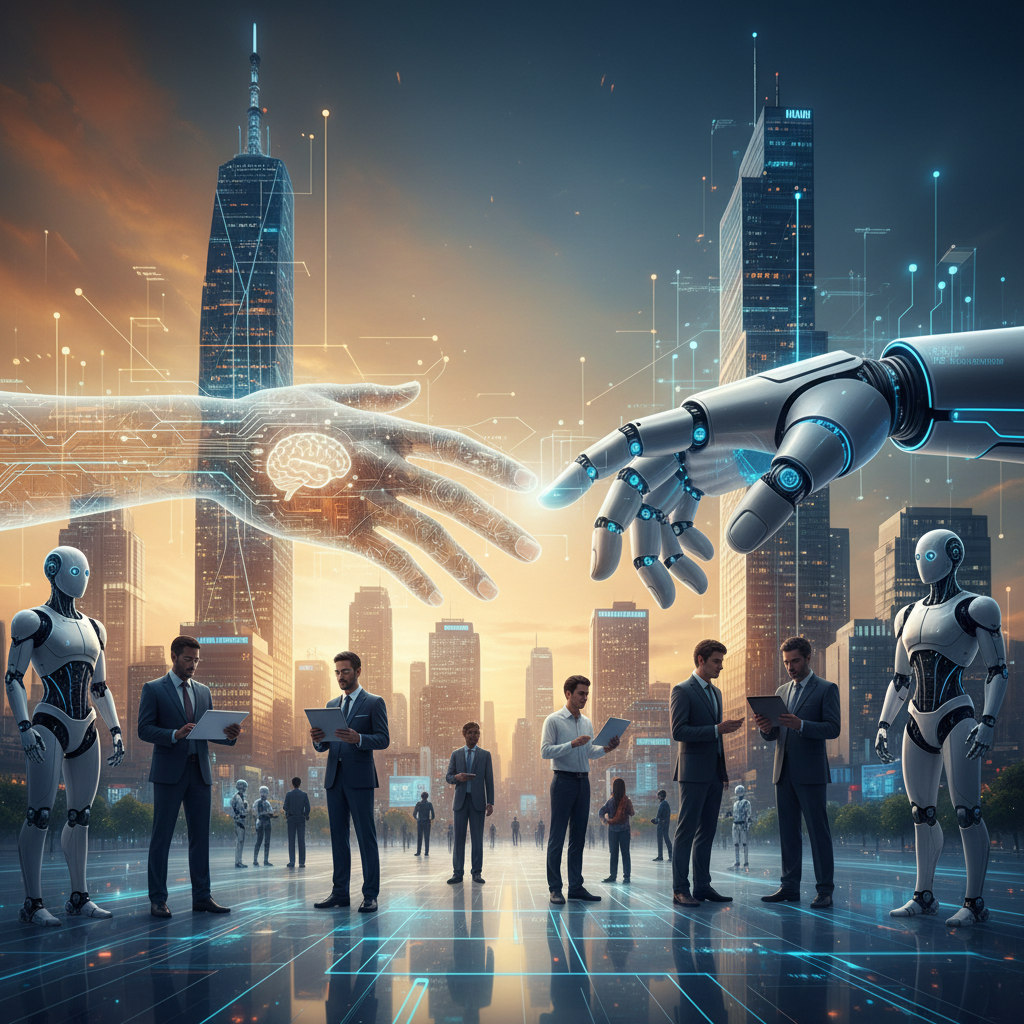
The news broke like a thunderclap: Figure AI, the company making these astonishing human-like robots, secured a colossal $2.6 billion in funding, with giants like Microsoft, OpenAI, and NVIDIA throwing their weight behind them. This massive investment isn't just a vote of confidence in a startup; it is a clear declaration that the world is ready, or at least preparing, for a future where humanoid robots work side by side with us, particularly in physically demanding environments like manufacturing and logistics. The goal is clear: to augment, and in some cases, replace human labor in tasks that are repetitive, dangerous, or simply less efficient for people.
But what does this mean for us, the humans, the beating hearts and thinking minds behind the operations? This is where my curiosity truly ignites. It is not just about the robots' capabilities; it is about our cognitive and emotional responses to them. How will our brains adapt? What new behaviors will emerge? And how will our relationships, both with our human colleagues and with these new robotic coworkers, evolve?
Psychological research has already given us some fascinating glimpses. Studies on human-robot interaction, even with simpler industrial robots, show a complex range of reactions. Initially, there is often apprehension, a natural human wariness towards the unknown. People worry about job displacement, certainly, but also about safety, about understanding these new entities, and about maintaining their own sense of value and purpose. Dr. Lê Thị Mai, a cognitive psychologist at the Vietnam National University, Ho Chi Minh City, shared her insights with me. “The initial reaction is often fear and curiosity, a primal response to something new and powerful,” she explained. “But what we see over time, with proper integration and training, is a remarkable capacity for adaptation. Humans are incredibly resilient, and our social cognition is surprisingly flexible.”
Indeed, the human brain is a marvel of adaptability. We are wired to understand and interact with our environment, and that includes new tools and even new 'beings.' When the first industrial robots entered factories decades ago, there were similar concerns. Yet, workers learned to collaborate, to trust, and to integrate these machines into their workflows. The difference now is the humanoid form. Figure 01, with its bipedal movement and human-like dexterity, is designed to operate in environments built for people. This familiarity could ease integration, but it could also trigger deeper psychological responses, perhaps even a sense of uncanny valley, where the robot is almost human, but not quite, causing discomfort.
Consider the concept of 'anthropomorphism,' our tendency to attribute human characteristics to non-human entities. We do it with pets, with cars, even with our phones. With a humanoid robot, this tendency will be amplified. Will warehouse workers start giving Figure 01 a name? Will they talk to it, even if they know it cannot truly understand? Research from institutions like MIT has shown that people tend to be more cooperative and even empathetic towards robots that exhibit human-like traits or vulnerabilities. This could foster a sense of teamwork, but it also raises ethical questions about our emotional investment in machines that are, ultimately, tools.
“The key is in the design of the interaction, not just the robot itself,” says Dr. Nguyễn Văn Hùng, a leading expert in human-computer interaction at FPT University. “If the robot is seen as a helpful assistant, an extension of the team, rather than a replacement, the psychological integration is far smoother. Transparency in its capabilities and limitations is crucial for building trust.” This is where companies like Figure AI, and their partners, have a massive responsibility. It is not enough to build a technically brilliant robot; they must also design for human psychology.
For Vietnam, this revolution holds immense potential. Our manufacturing and logistics sectors are booming, and Vietnam is the dark horse of AI, ready to embrace technologies that can boost productivity and global competitiveness. The adoption of humanoid robots could alleviate labor shortages in certain sectors, improve workplace safety by taking on hazardous tasks, and allow human workers to upskill into more supervisory, analytical, or creative roles. Imagine Mr. Long, no longer lifting heavy boxes, but instead optimizing robot workflows, troubleshooting minor glitches, and training new human and robotic team members. This is a profound shift in the nature of work itself.
However, we must also address the potential downsides. The fear of job displacement is real, and it is a valid concern that needs proactive solutions. Governments, educational institutions, and businesses must collaborate to provide retraining programs, ensuring that our workforce is equipped for the jobs of tomorrow. We need to focus on skills that robots cannot easily replicate: critical thinking, complex problem-solving, creativity, emotional intelligence, and interpersonal communication. These uniquely human attributes will become even more valuable.
Another fascinating area is the impact on our cognitive load and decision-making. When a robot handles routine tasks, will humans become less vigilant? Will our attention spans shift? Will we rely too heavily on the robot's 'judgment'? These are questions that psychological research will need to explore as these robots become more ubiquitous. The balance between automation and human oversight will be delicate, requiring careful design and continuous evaluation.
Practical advice for readers, especially those in industries facing this change, is to embrace continuous learning. Upskill, reskill, and understand that your value will increasingly come from your uniquely human capabilities. For businesses, invest not just in the technology, but in your people. Train them, involve them in the transition, and foster a culture of collaboration where humans and robots are seen as complementary forces. Create clear communication channels and establish protocols for human-robot interaction.
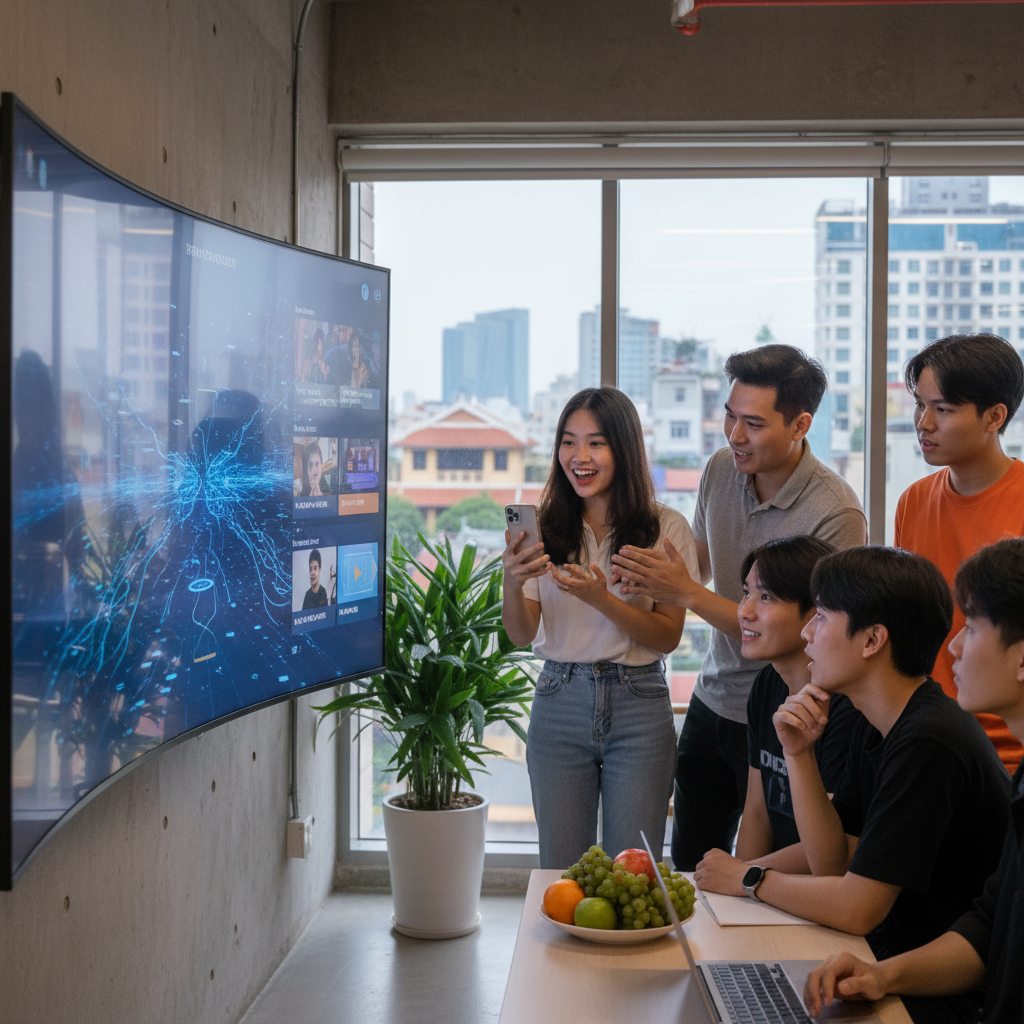
Ho Chi Minh City never sleeps, especially its coders, and I have no doubt that our brilliant minds here are already thinking about these challenges and opportunities. Local startups are exploring AI solutions for everything from smart logistics to personalized education, and this influx of advanced robotics will only accelerate that innovation. We are not just consumers of technology; we are increasingly creators and adaptors, shaping the future with our own unique Vietnamese spirit.
The arrival of Figure AI's humanoids is more than an industrial upgrade; it is a societal experiment on a grand scale. It will challenge our perceptions of work, value, and even what it means to be human in an increasingly automated world. But if there is one thing I know about our people, it is our incredible capacity for innovation and adaptation. We will not just survive this future; we will thrive in it, shaping it with our ingenuity and our resilient spirit. The journey ahead is exhilarating, and I, for one, cannot wait to see what new wonders unfold. You can read more about the broader implications of AI in industry on TechCrunch's AI section or explore the ethical considerations on Wired's AI coverage. The future is here, my friends, and it is absolutely magnificent!