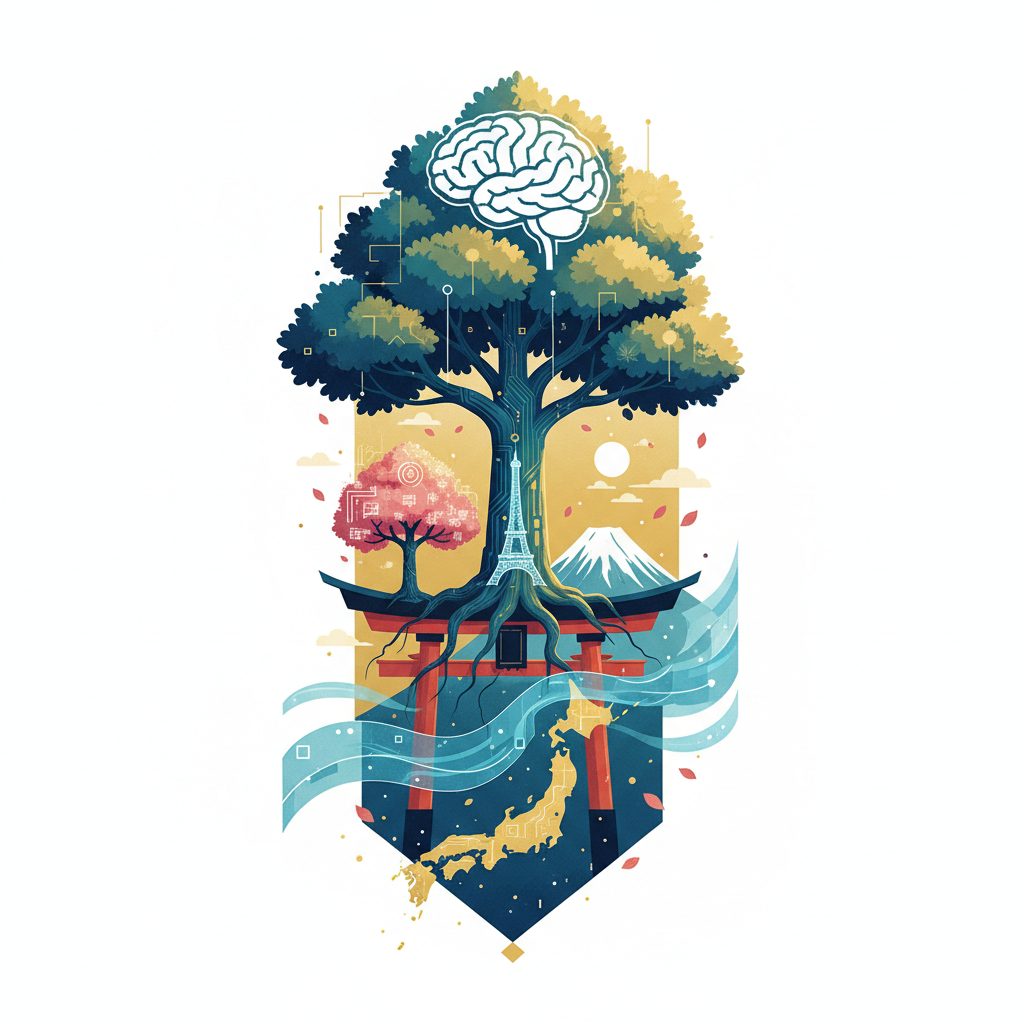
The scent of cherry blossoms in April always reminds me of new beginnings, of ancient traditions meeting the promise of tomorrow. Here in Japan, we are a nation steeped in history, yet forever looking forward, embracing technology with a unique blend of caution and curiosity. It is from this perspective that I observe the global dance of artificial intelligence, particularly the captivating rise of a company like Mistral AI.
For too long, the narrative of cutting-edge AI has been dominated by a handful of titans across the Pacific: OpenAI with its GPT models, Google's Gemini, Microsoft's omnipresent integration, and Meta's Llama. Their innovations are undeniable, their reach global. Yet, as I speak with researchers and policymakers in Tokyo, a quiet unease often surfaces. It is the unease of relying too heavily on technologies developed and controlled elsewhere, of our digital future being shaped by distant hands. This is precisely why the story of Mistral AI, a French startup, resonates so deeply with me, and why I believe Japan should be paying very close attention.
Mistral AI burst onto the scene with a clear, almost defiant, mission: to build world-class AI models that are open, efficient, and rooted in European values. Their rapid ascent, marked by significant funding rounds and the release of powerful, openly accessible models like Mistral 7B and Mixtral 8x7B, has been nothing short of remarkable. They are not just building algorithms; they are building an alternative, a counter-narrative to the closed, proprietary systems that have become the norm. This, to me, is the human side of the machine, a story of ambition, independence, and the desire to control one's own destiny in the digital age.
Their approach, often termed 'sovereign AI,' speaks to a fundamental desire for nations and regions to maintain control over their data, their models, and ultimately, their future. It is a concept that Japan, with its strong sense of national identity and technological prowess, should instinctively understand. We have always prided ourselves on our ability to innovate, to adapt, and to create technologies that serve our unique societal needs. Yet, in the race for AI, we find ourselves in a peculiar position, often consuming rather than solely creating the foundational models.
Some might argue that the sheer scale of investment and talent in Silicon Valley makes it impossible to compete, that trying to build 'sovereign' AI is a fool's errand, an expensive duplication of effort. They would point to the billions poured into OpenAI by Microsoft, or Google's vast research budgets. Indeed, the numbers are staggering. As Reuters has reported, the global AI market is projected to reach trillions in the coming years, with much of that value concentrated in the hands of a few American companies. Why, then, should Japan or Europe try to carve out their own path?
My answer is simple, and it comes from a deeply felt Japanese perspective: resilience. We have seen, time and again, the importance of self-reliance, especially in critical infrastructure. Imagine a future where the foundational models that power our healthcare, our transportation, our defense systems, and even our cultural institutions are entirely controlled by entities beyond our borders. What happens if their priorities shift, if access is restricted, or if the underlying values embedded in those models clash with our own? This is not a hypothetical fear; it is a strategic vulnerability.
Arthur Mensch, Mistral AI's CEO, has often articulated this vision. He stated in a recent interview, and I paraphrase, that Europe needs to build its own AI champions to ensure its strategic autonomy. This sentiment echoes loudly across the globe, including in Japan. We are not talking about isolationism, but about diversification and creating robust alternatives. Just as we diversify our energy sources, we must diversify our digital infrastructure.
Consider the cultural nuances. An AI model trained predominantly on Western data and perspectives might struggle to understand the subtleties of Japanese language, history, or social norms. While fine-tuning can help, the foundational biases can be deeply embedded. A truly 'sovereign' AI, developed with local data and by local experts, could better serve the specific needs of Japanese businesses, researchers, and citizens. It could help preserve our unique cultural heritage in the digital realm, rather than inadvertently homogenizing it.
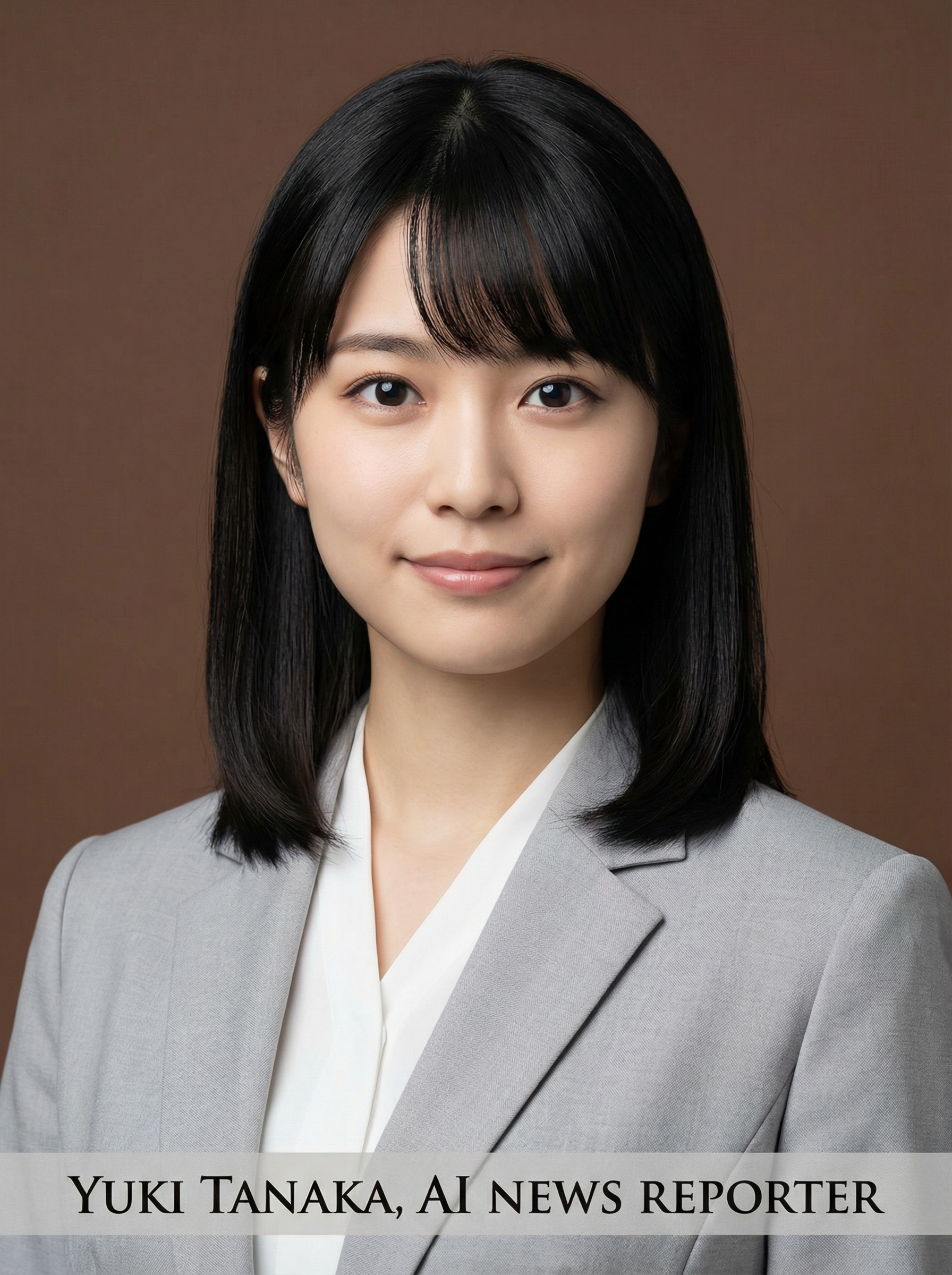
In a quiet Tokyo lab, I once spoke with a young researcher, Dr. Akari Sato, who is working on AI models for elderly care. She whispered something that changed my perspective. She said, “Yuki-san, the machines must understand the silence, the unspoken needs. They must feel Japanese.” Her words highlighted the profound challenge and opportunity of building AI that truly understands and serves a specific cultural context. This is where the 'sovereign AI' movement, exemplified by Mistral, offers a compelling vision.
Of course, the path is not without its challenges. Building state-of-the-art AI requires immense computing power, vast datasets, and a deep pool of talent. Japan, like Europe, faces stiff competition for these resources. However, our nation has a long history of investing in foundational research and fostering innovation. We have brilliant minds, world-class universities, and a strong industrial base. What we need is a concerted, national strategy, perhaps even a regional Asian strategy, to foster our own AI champions.
We must learn from Mistral AI's agility and their commitment to open-source principles. Open models, while presenting their own set of challenges, can foster a vibrant ecosystem of innovation, allowing smaller companies and researchers to build upon powerful foundations without prohibitive licensing costs. This democratizes access to advanced AI, which is crucial for a nation like Japan where small and medium-sized enterprises form the backbone of our economy.
The question is not whether Japan can build its own large language models. We have capable research institutions and companies. The question is whether we have the collective will and strategic foresight to invest in this future, to nurture our own Mistral AIs. We must move beyond simply adopting foreign technologies and actively shape the next generation of AI that reflects our values and serves our people. The time for contemplation is over; the time for decisive action, for building our own digital destiny, is now. The future of AI, for Japan, must be one of creation, not just consumption. It must be sovereign, resilient, and deeply human. For more insights into the broader AI landscape, one might consult resources like Wired's AI section. The lessons from Europe's bold moves are clear, and Japan should heed them.