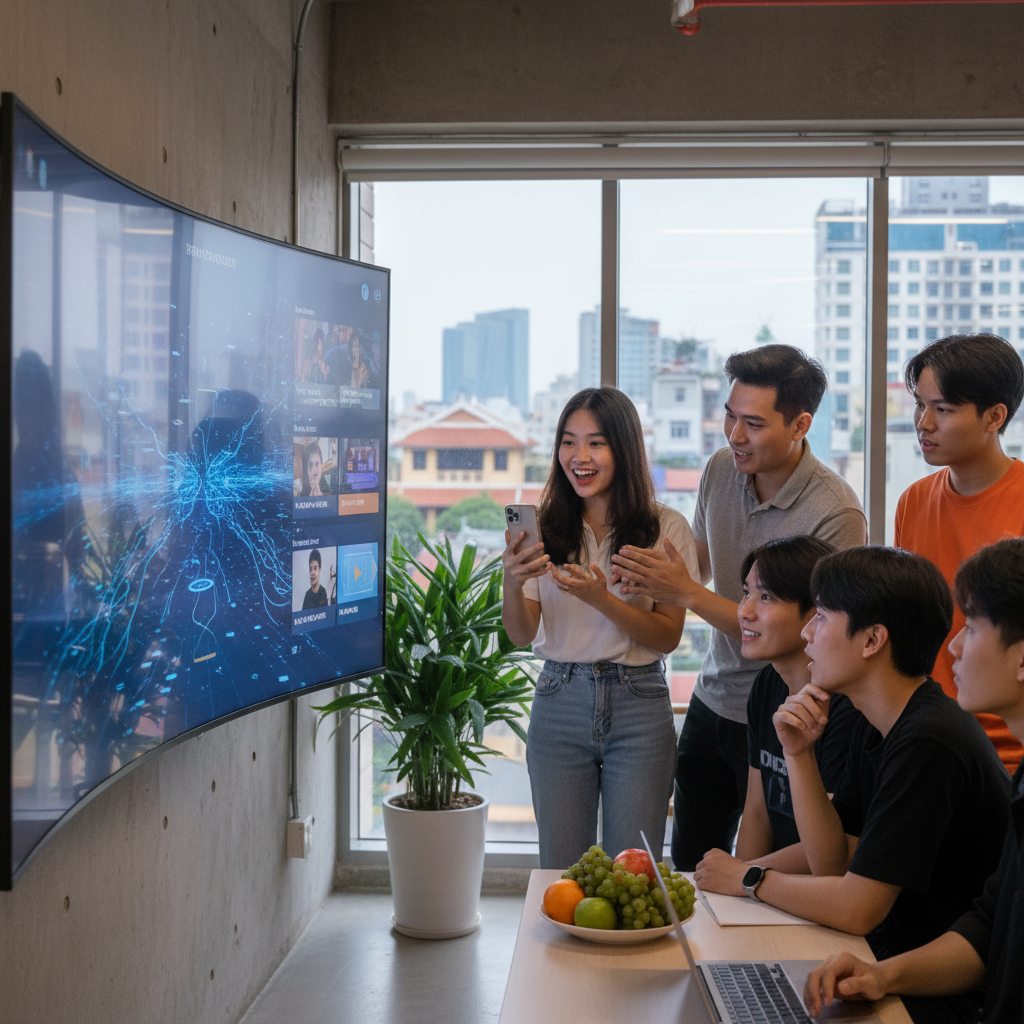

Chao bạn! Have you ever scrolled through your feed, maybe on TikTok or Facebook, and thought, 'Wow, that video is amazing, but how did they even make it?' For years, high-quality video production felt like a secret club, reserved for those with expensive cameras, fancy software, and a whole team. But let me tell you, that club is about to throw its doors wide open, and the bouncer is an AI named Pika Labs.
This isn't just another tech trend; this is a full-blown creative explosion, and Pika Labs is right at the epicenter, racing to become the YouTube, or perhaps more accurately, the TikTok, of AI-generated video content. And believe me, from the bustling streets of Ho Chi Minh City to the quiet rice paddies, people should be paying very close attention.
Why Most People Are Ignoring It: The Silent Revolution
Many still see AI as something abstract, something for scientists in labs or for generating text. They might have played with an AI image generator once or twice, but video? That feels too complex, too far off. They are still thinking in terms of traditional production pipelines, where every second of footage requires meticulous planning, shooting, and editing. They don't realize that the barrier to entry for compelling video creation is dissolving faster than ice cream on a Saigon summer day.
Companies like Pika Labs, along with competitors such as Runway ML and Stability AI, are building tools that allow anyone, literally anyone, to describe a scene with a few words, click a button, and watch as a dynamic, moving video comes to life. It’s still early, yes, but the progress is astonishingly rapid. What was once a jerky, abstract animation just months ago is now approaching photorealistic quality, complete with consistent characters and camera movements. The attention gap is real: while the world is still debating the ethics of AI art, the next frontier of AI video is already here, reshaping the creative landscape.
How It Affects YOU: Your Stories, Your Business, Your Future
Imagine you are a small business owner in Hanoi, selling beautiful handmade lanterns. Traditionally, creating a captivating video advertisement would mean hiring a videographer, models, finding locations, and spending a small fortune. Now, with tools like Pika, you could simply type: 'A serene video of a woman gently placing a glowing lantern on a lotus pond at dusk, cinematic style, 4K.' And boom, you have a professional-looking ad ready for your social media channels. This dramatically levels the playing field, making high-quality marketing accessible to everyone.
For content creators, this is a game changer. No longer limited by budget or equipment, a single individual can become a mini-studio. Think about the educational content, the personal vlogs, the short films, the music videos. The sheer volume and diversity of content that will emerge will be staggering. It means new opportunities for storytellers, artists, and marketers to express themselves and connect with audiences in ways previously unimaginable. It means that the next viral sensation could come from anywhere, created by anyone, without needing a massive production budget.
The Bigger Picture: Societal, Economic, and Political Implications
The economic implications are enormous. The global video content market is already massive, estimated to be worth hundreds of billions of dollars, and AI is about to supercharge it. We will see new industries emerge around AI video prompt engineering, AI video editing, and specialized AI content platforms. Traditional media houses will need to adapt quickly, integrating these tools into their workflows or risk being outmaneuvered by agile, AI-powered competitors. This shift could democratize media production on a global scale, empowering voices from regions often underrepresented in mainstream media.
However, we must also address the challenges. The rise of AI-generated video brings complex questions about authenticity, deepfakes, and intellectual property. How do we distinguish between real and AI-generated content? How do we protect artists whose styles might be replicated? Governments and tech companies will need to collaborate to establish clear guidelines and ethical frameworks. In Vietnam, where digital literacy is rapidly expanding, educating the public about AI-generated content will be crucial to maintaining trust and preventing misinformation. This is not just a technological race, it is a societal challenge that demands thoughtful consideration.