
Let's be frank, most of you reading this are probably thinking about your next AI-powered smartphone or how ChatGPT can write your emails faster. You're focused on the shiny, consumer-facing side of artificial intelligence, and who can blame you? The headlines are full of it. But while you're busy debating the merits of the latest large language model, a far more profound, and frankly, terrifying, revolution is unfolding in the shadows: the weaponization of AI.
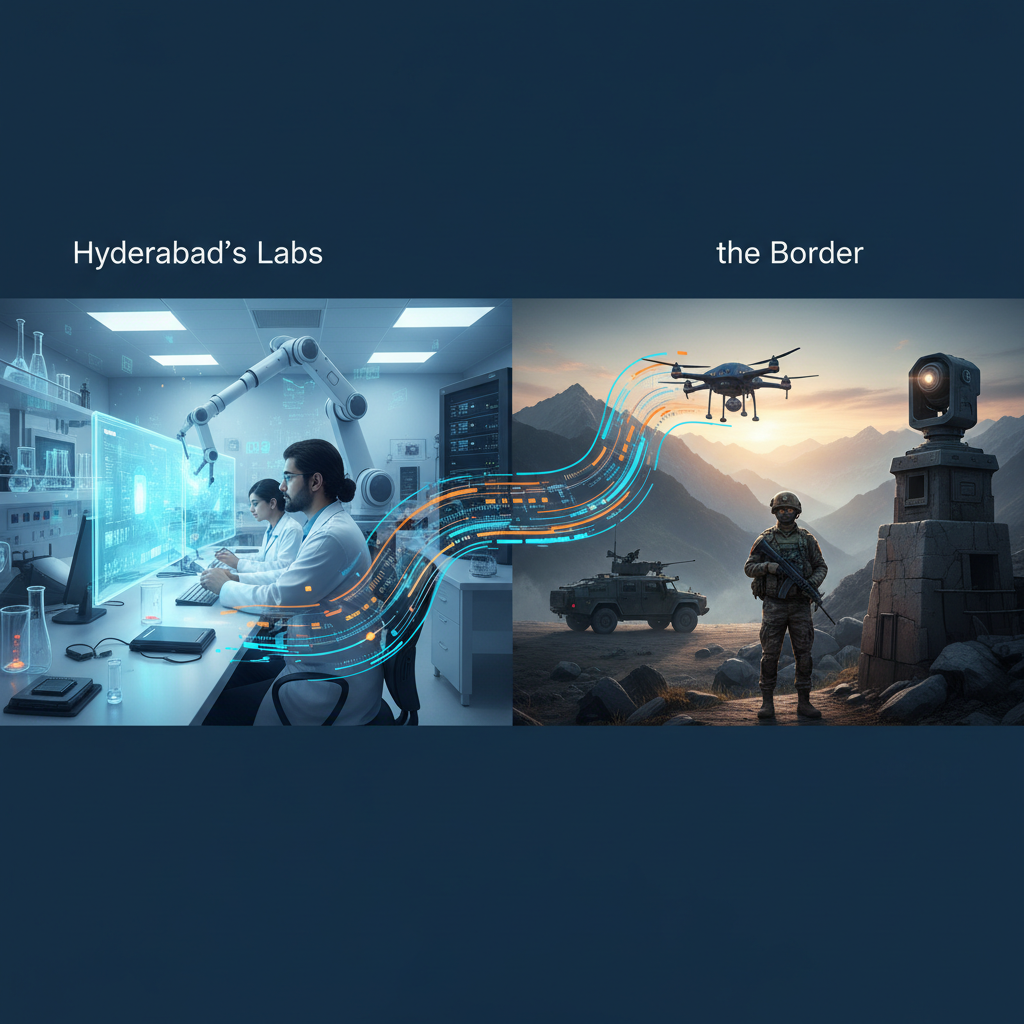
We're talking about AI in the military, autonomous weapons, drone warfare, and the ethical boundaries that are being redrawn, or perhaps erased, with every new algorithm. This isn't science fiction anymore, my friends. This is the inflection point. Forget Silicon Valley, look at Hyderabad, look at Bengaluru, look at the quiet labs where brilliant minds are grappling with code that could decide the fate of nations. India will own the next decade of AI, but only if we wake up to the strategic imperative of defense AI.
Why Most People Are Ignoring It
It's easy to ignore something so abstract, so distant from daily life. Autonomous weapons conjure images of Terminator movies, and most people assume such things are years, if not decades, away. The public discourse is dominated by generative AI, by deepfakes, by the job market anxieties caused by automation. Military AI feels like a niche concern, something for generals and defense contractors to worry about. Besides, the development is often shrouded in secrecy, making it harder for the average citizen to grasp its immediate reality. Governments, including our own, aren't exactly holding public forums on the latest advancements in AI-powered targeting systems. This information gap creates a dangerous complacency.
How It Affects YOU
Think about it for a moment. If you live in a border region, if you have family serving in the armed forces, or if you simply believe in national sovereignty, this affects you directly. The nature of conflict is changing. A soldier's life, a civilian's safety, even the economic stability of a region, could soon be determined by algorithms making decisions at speeds no human can match. Imagine a future where drone swarms, coordinated by AI, can identify, track, and engage targets with minimal human intervention. This isn't just about advanced weaponry, it's about shifting the balance of power, creating new vulnerabilities, and demanding a completely new approach to national security. Your taxes, your peace of mind, your children's future, all hinge on how nations, including India, navigate this treacherous new landscape.
The Bigger Picture: A Geopolitical Chess Match
Globally, the race is on. Major powers are investing billions. The United States, China, Russia, and increasingly, European nations are pouring resources into developing AI-driven defense capabilities. This isn't just about building better bombs, it's about intelligence gathering, logistics optimization, cyber warfare, and decision support systems that can analyze vast amounts of data in real time. The nation that masters military AI gains a profound strategic advantage, potentially rendering traditional military might obsolete. For India, a nation with complex geopolitical realities and long, contested borders, this is not merely an arms race, it's a survival imperative. Our ability to protect our people, our economic interests, and our strategic autonomy depends on our prowess in this domain. We cannot afford to be a consumer of foreign military AI, we must be a producer and an innovator.
What Experts Are Saying
Experts across the spectrum are sounding the alarm, or championing the cause, depending on their perspective. Dr. S. Christopher, former Chairman of India's Defence Research and Development Organisation (drdo), has often emphasized the need for self-reliance in defense technology. He stated,