
Chinese Women Entrepreneurs Drive AI Innovation in Smart Manufacturing
Chinese women entrepreneurs are increasingly at the forefront of AI integration in smart manufacturing, propelling the nation's industrial upgrade and challenging traditional gender roles in technology.
Click play to listen to this article read aloud using text-to-speech.
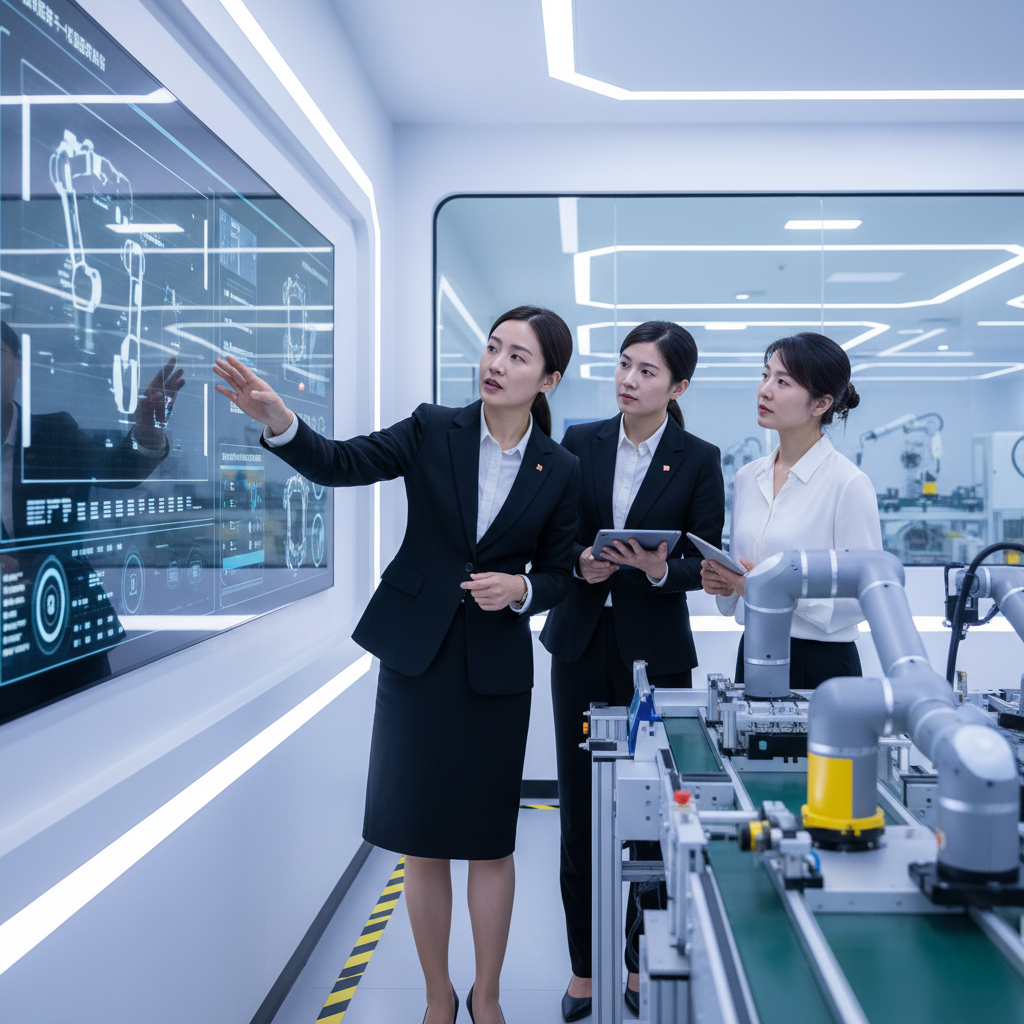

Shanghai, China – April 2026 – In the bustling heart of China's industrial transformation, a quiet revolution is taking place, spearheaded by a growing cohort of formidable women entrepreneurs. These innovators are not just participating in the AI boom; they are actively shaping its application, particularly within the critical sector of smart manufacturing, driving both economic growth and social change.
Historically, the manufacturing and technology sectors have been perceived as male-dominated domains. However, as China accelerates its 'Intelligent Manufacturing 2025' strategy, women are proving to be indispensable catalysts. "The precision and intuitive problem-solving skills often attributed to women are proving to be invaluable in designing and implementing sophisticated AI algorithms for industrial automation," states Dr. Li Wei, a leading researcher at the Chinese Academy of Sciences' Institute of Automation. "We are seeing a significant uptick in female-led startups focusing on areas like predictive maintenance, quality control, and supply chain optimization through AI."
One such luminary is Ms. Chen Jing, CEO of 'Jingwei Robotics,' a Hangzhou-based firm specializing in AI-powered inspection systems for electronics manufacturing. Her company recently secured a substantial Series B funding round, primarily from state-backed venture capital funds and private equity firms like CITIC Private Equity. "Our AI models, developed predominantly by a team where over 60% are women engineers, have reduced defect rates by 15% for our clients in the Yangtze River Delta," Ms. Chen revealed in an exclusive interview. "This isn't just about efficiency; it's about creating more resilient and sustainable production lines, which aligns perfectly with China's 'dual circulation' economic strategy."
The Ministry of Industry and Information Technology (MIIT) has also recognized this burgeoning trend. A recent white paper from the China Women's Federation highlighted that women now constitute nearly 30% of all tech startup founders in China, a figure that continues to climb. This growth is supported by government initiatives like the 'Women's Entrepreneurship Innovation Fund' and mentorship programs designed to foster female leadership in high-tech industries.
Professor Wang Min, an expert in gender studies and technological development at Peking University, notes the broader societal impact. "These women are not just building successful businesses; they are dismantling stereotypes and inspiring a new generation of girls to pursue STEM fields. Their success stories resonate deeply within our culture, demonstrating that innovation knows no gender, and that diverse perspectives lead to more robust and ethical AI solutions." Professor Wang emphasizes the importance of '巾帼不让须眉' (women are just as capable as men) in this context, a traditional Chinese adage finding new relevance in the digital age.
The integration of AI in manufacturing, often referred to as '工业大脑' (Industrial Brain) in Chinese discourse, is a cornerstone of China's economic future. With women entrepreneurs like Ms. Chen Jing at the helm, leveraging their unique insights and leadership, China's journey towards an intelligent, high-quality economy appears not only promising but also more inclusive and dynamically driven.
Related Articles

AI Enhances Antarctic Research Logistics, Bolstering Swedish Polar Initiatives
 Erikà Lindströmè
AI in Healthcare: A New Dawn for Sri Lanka's Northern and Eastern Provinces
 Ravi Chandrasekharàn
Uzbek Women Lead AI Ethics Dialogue: Safeguarding Cultural Values in Digital Transformation
 Bintà Yusupovà
AI-Powered Mangrove Conservation: A 'Hijau Digital' Leap for Malaysia's Coastlines
 Siti Nurhalizah Rahimàn