
AI-Powered Mangrove Conservation: A 'Hijau Digital' Leap for Malaysia's Coastlines
Malaysia harnesses AI to safeguard its vital mangrove ecosystems, introducing a 'Hijau Digital' initiative that blends traditional knowledge with cutting-edge technology for climate resilience.
Click play to listen to this article read aloud using text-to-speech.
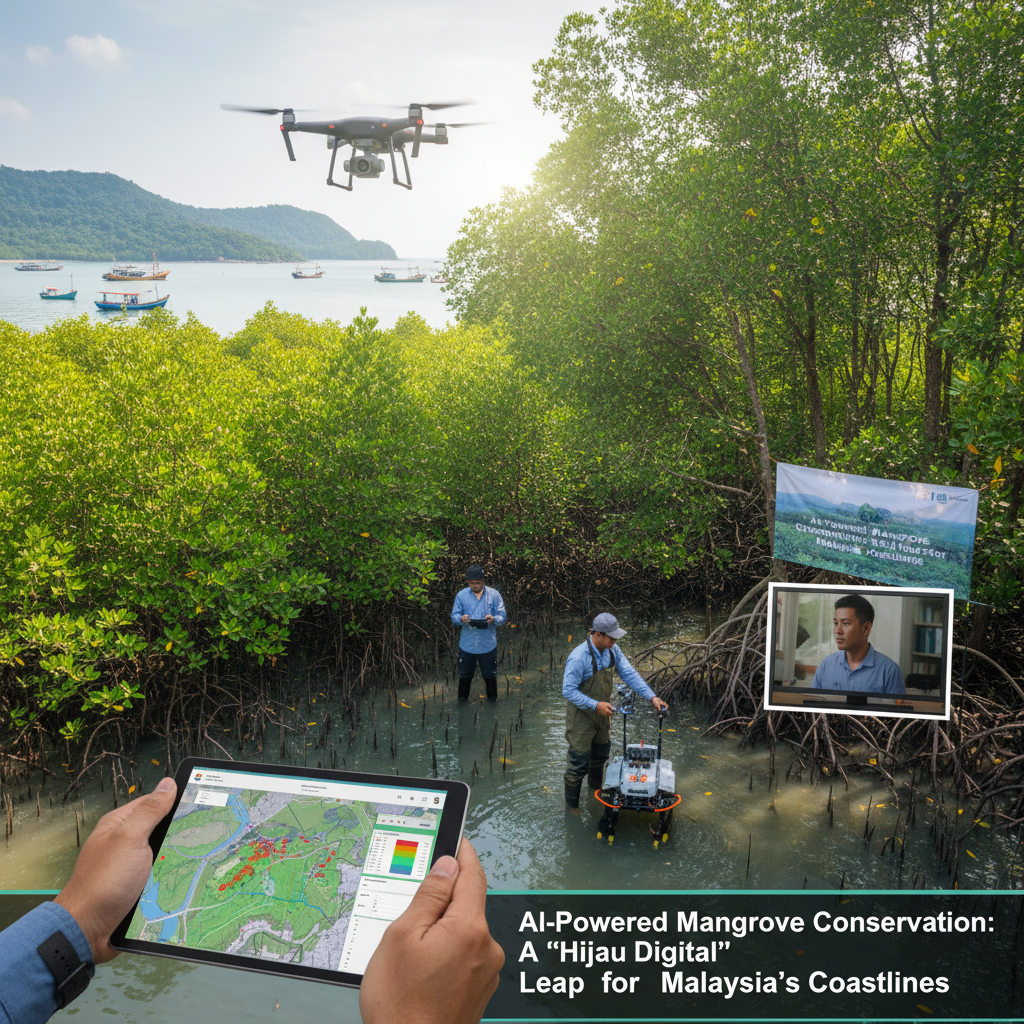

KUALA LUMPUR, April 2026 – Malaysia is embarking on a pioneering initiative, leveraging artificial intelligence (AI) to bolster its mangrove conservation efforts, a critical step in climate change adaptation and biodiversity preservation. This 'Hijau Digital' (Digital Green) approach, as it's being termed by local experts, integrates advanced AI analytics with traditional ecological knowledge, offering a robust framework to protect the nation's precious coastal ecosystems.
For generations, Malay women in coastal communities, often referred to as 'Wanita Pesisir', have been the silent guardians of mangrove forests, understanding their intricate role in protecting shorelines and nurturing marine life. Their deep-rooted connection to the environment, passed down through oral traditions and practical experience, is now finding a powerful ally in modern technology.
“Our mangroves are not just trees; they are the lungs of our coastlines, our first line of defense against rising sea levels and storm surges,” stated Dr. Fatimah Zaharah binti Abdullah, a senior researcher at Universiti Malaya’s Institute of Ocean and Earth Sciences. “The challenge has always been monitoring vast, often inaccessible areas. This is where AI truly shines. We’re deploying drone-based imaging and satellite data, processed by machine learning algorithms, to detect early signs of deforestation, disease, and even illegal encroachment with unprecedented accuracy.”
The initiative, spearheaded by the Ministry of Natural Resources and Environmental Sustainability (NRES) in collaboration with the Malaysia Digital Economy Corporation (MDEC), focuses on several key areas. AI models are being trained on historical data, including traditional ecological calendars and observations from local communities, to predict optimal planting seasons and identify vulnerable areas. Furthermore, real-time data from sensors embedded within selected mangrove sites can monitor water quality, salinity, and tidal patterns, providing crucial insights for adaptive management.
“This isn't just about technology; it’s about empowering our communities, especially the Wanita Pesisir, with better tools and data,” explained Puan Sri Hajah Aminah binti Kassim, Director-General of the Department of Environment. “Imagine a fisherwoman, armed with a simple smartphone app, receiving alerts about potential threats to a nearby mangrove area. This 'gotong-royong' (communal cooperation) approach, enhanced by AI, ensures that conservation is a collective, informed effort.”
The project has already seen pilot successes in areas like Kuala Selangor and the Matang Mangrove Forest Reserve in Perak. Early reports indicate a significant reduction in response times to environmental threats and a more efficient allocation of resources for restoration projects. The data gathered is also invaluable for policy-making, providing empirical evidence for stricter enforcement against environmental degradation.
As Malaysia navigates the complexities of climate change, the 'Hijau Digital' initiative stands as a testament to the nation’s commitment to sustainable development. It beautifully intertwines the wisdom of its people, particularly the enduring spirit of Malay women, with the transformative power of AI, charting a course towards a more resilient and 'lestari' (sustainable) future for its natural heritage.
Related Articles
Jaffna's AI Leap: Tamil Startups Drive Ethical Innovation in Language Tech
 Ravi Chandrasekharàn
AI's Tamil Tongue: Preserving Heritage in a Digital Age, Sri Lankan Perspectives
Ravi Chandrasekharàn
AI's Outback Advantage: Drone Tech Tackles Invasive Species Down Under
 Lachlaneè Mitchèll
Azerbaijani Women Drive AI Integration in SME Sector, Boosting National Economy
 Aynurè Abdullayevà