
AI's Outback Advantage: Drone Tech Tackles Invasive Species Down Under
Australian boffins are deploying AI-powered drones to combat invasive species across the vast, rugged outback, offering a fair dinkum solution to a long-standing environmental headache. This tech is a game-changer for protecting our unique biodiversity.
Click play to listen to this article read aloud using text-to-speech.

AI's Outback Advantage: Drone Tech Tackles Invasive Species Down Under
CANBERRA, ACT – April 2026 – The great Australian outdoors, a place where a bloke can truly find himself, is under constant threat from introduced species. But now, cutting-edge artificial intelligence, paired with drone technology, is offering a fair dinkum Aussie solution to this age-old problem, particularly in the vast, untamed expanses of the Outback.
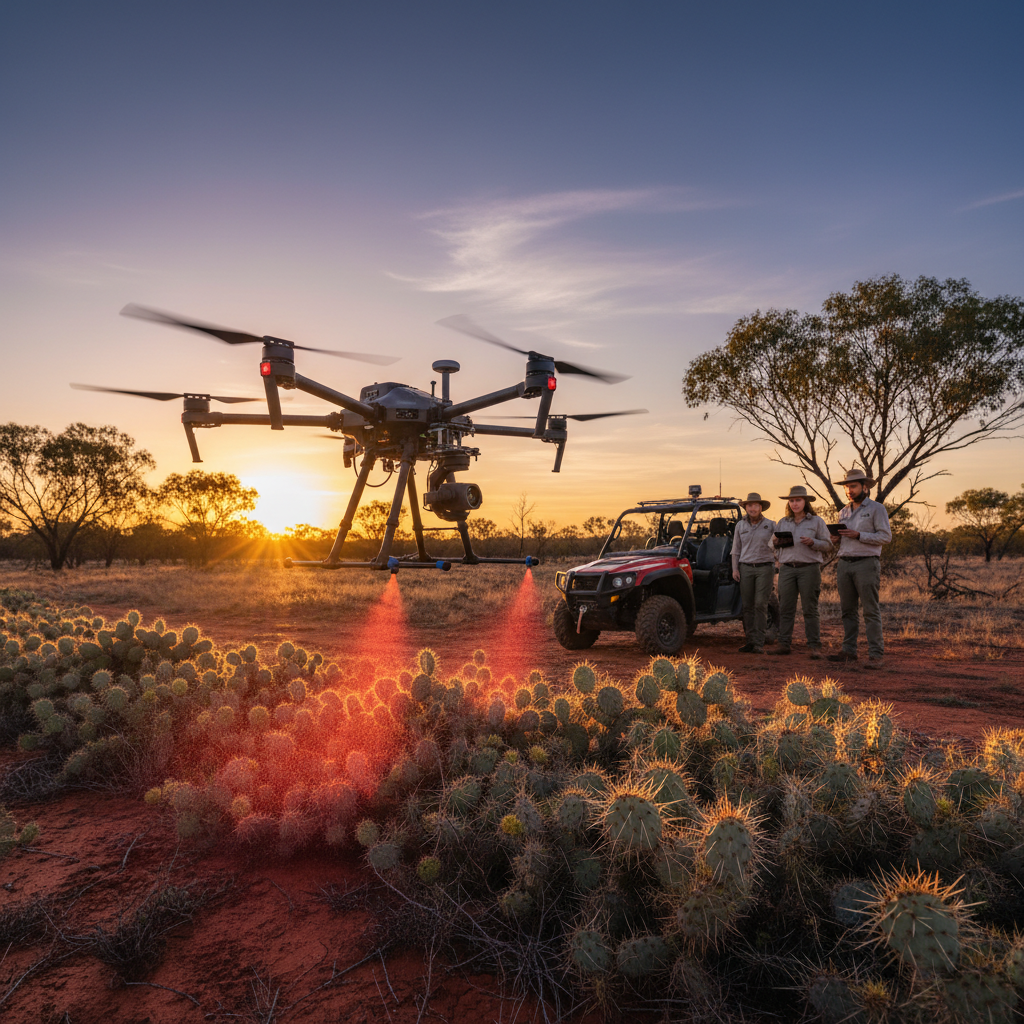
Researchers from the CSIRO, Australia's national science agency, have been trialling AI-powered drones that can autonomously identify and track invasive plants and animals, from the notorious prickly pear to feral pigs, with unprecedented accuracy. This isn't just about a bit of fancy tech; it's about protecting our unique biodiversity, a core part of the Australian identity.
“For years, we’ve been playing whack-a-mole with these blighters, often in country so remote you’d need a four-wheel drive and a week’s rations just to get there,” explains Dr. Marcus 'Mick' O'Connell, lead environmental AI specialist at CSIRO's Land and Water division. “Now, these drones, fitted with hyperspectral cameras and running advanced machine learning algorithms, can cover massive tracts of land, pinpointing infestations that would take dozens of boots on the ground months to find. It’s a ripper of a development for our environmental custodians.”
The technology works by analysing subtle spectral signatures, allowing the AI to differentiate between native flora and invasive weeds, or to spot the heat signatures and movement patterns of feral animals even in dense scrub. Once identified, the data is mapped, allowing for targeted eradication efforts, whether by ground teams or, in some trials, by drones equipped for precision spraying of herbicides or even targeted bait drops.
This innovative approach is already showing promising results in pilot programs across Queensland's Channel Country and parts of the Northern Territory. “We’re talking about saving millions in resources and, more importantly, turning the tide on environmental degradation,” says O’Connell, a man who knows a thing or two about the challenges of the Australian landscape. “It means our grandkids will still get to see the same stunning, untouched bushland we cherish today, not some foreign scrub taking over.”
The initiative isn't without its challenges, of course. Ensuring the AI models are robust enough to handle the sheer diversity of Australian environments, from arid deserts to tropical rainforests, requires constant refinement. There are also ongoing discussions with local Indigenous communities to ensure the technology respects traditional land management practices and knowledge.
“It’s about striking a balance, isn’t it? Using the best of human ingenuity – and that’s what AI is, really – to protect what’s quintessentially Australian,” O’Connell muses. “This isn't just about tech for tech's sake; it’s about giving our environment a fair go, and ensuring the spirit of the Australian man, and his connection to the land, endures for generations to come.” The future of conservation Down Under, it seems, is looking a whole lot smarter.
Related Articles

AI's Baoré: Burkina Faso Fights Desertification with Digital Wisdom
 Idrissà Ouédraogò
AI-Powered 'Smart Grids' Revolutionize Japan's Energy Future Amidst Climate Imperatives
 Hiroshì Yamadà
AI's Promise for Maternal Health in Fiji: A Digital Leap for Our 'Marama'
 Merelaisà Tuivagà
AI's Green Revolution: Gujarat's Farmers Embrace Tech for Climate Resilience
 Divyà Mehtà