
AI's Promise for Maternal Health in Fiji: A Digital Leap for Our 'Marama'
Fiji is exploring AI-driven solutions to enhance maternal health outcomes, aiming to bridge geographical gaps and empower 'marama' (women) with better prenatal care and early intervention, a critical step for our island nation.
Click play to listen to this article read aloud using text-to-speech.
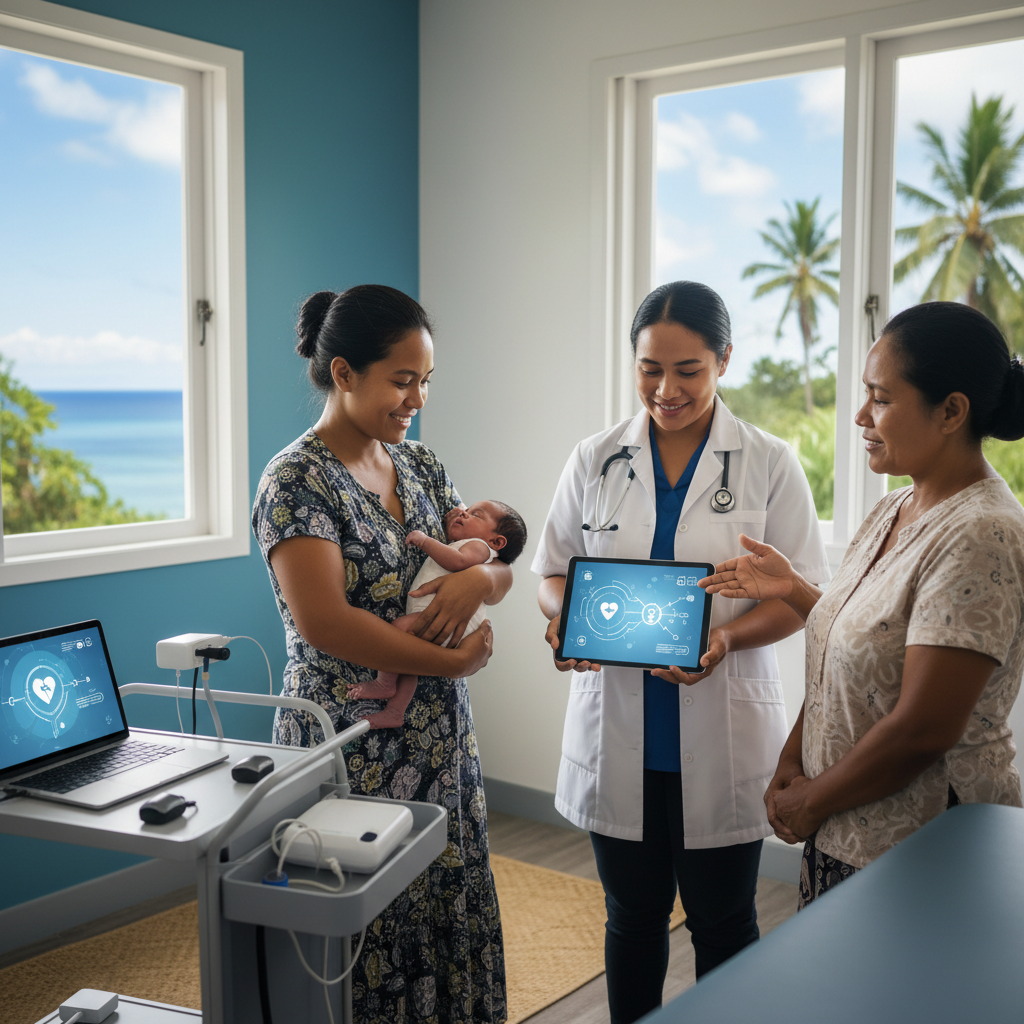

SUVA, FIJI – In an era where digital transformation is reshaping global landscapes, Fiji is proactively exploring how Artificial Intelligence (AI) can serve its most vulnerable and vital population: its 'marama' (women), particularly in the realm of maternal health. As a Fijian woman reporter, I see this not just as a technological advancement, but as a profound commitment to the wellbeing of our mothers and the future of our 'vanua' (land/people).
Recent discussions at the Pacific Digital Health Forum 2026, held right here in Suva, highlighted the immense potential of AI in overcoming geographical barriers and resource constraints that often challenge healthcare delivery in our scattered island communities. Dr. Adi Mereoni Qasevakatini, Head of Obstetrics and Gynaecology at the Colonial War Memorial Hospital (CWMH) and a vocal advocate for women's health, emphasized this during her keynote address. "For too long, our sisters in remote villages, our 'kai colo' (people from the interior), have faced disproportionate challenges in accessing consistent prenatal care," she stated. "AI offers us a chance to revolutionize this, providing predictive analytics for high-risk pregnancies and even facilitating remote diagnostics through smart devices, ensuring no 'marama' is left behind."
One promising initiative, still in its pilot phase, is the 'VitiCare AI' project. Developed in collaboration with the University of the South Pacific's (USP) School of Computing, Information and Mathematical Sciences and the Ministry of Health and Medical Services, it aims to deploy AI-powered mobile applications for community health workers. These apps, leveraging machine learning, can analyze symptom data, identify potential complications early, and guide health workers on immediate next steps, including referral pathways to larger health centers. This is particularly crucial for conditions like gestational diabetes or pre-eclampsia, which, if undetected, can have devastating consequences for both mother and child.
Ms. Salote Naulu, a software engineer leading the USP team, shared her vision. "Our goal is to create culturally sensitive AI tools that augment, not replace, our dedicated healthcare professionals. Imagine a 'dauveiqaravi ni bula' (health worker) in Kadavu, equipped with an AI assistant that helps them prioritize visits based on risk factors, or provides instant access to up-to-date medical protocols tailored for our Fijian context. This empowers them to deliver more effective care, ultimately saving lives and fostering healthier families."
However, the path forward is not without its 'veibuli' (challenges). Data privacy, ethical considerations in AI deployment, and ensuring digital literacy across all communities are paramount. The Fijian government, through the Fiji National Digital Transformation Strategy, is committed to addressing these, ensuring that AI integration is equitable and beneficial for all citizens. As Merelaisà Tuivagà, I believe that by embracing these technologies with our unique Fijian values of 'solesolevaki' (collective effort) and 'veiwekani' (kinship), we can truly harness AI's power to uplift our 'marama' and build a healthier, more resilient Fiji.
Related Articles
AI in Maternal Health: A New Dawn for Yoruba Women and Beyond in Nigeria
 Nkirukà Ezenwà
AI in Women's Health: Norwegian Experts Call for Ethical Frameworks and Data Equity
 Ingridè Hansèn
AI in Northern Health: Bridging Gaps for Indigenous Communities in Canada
 Ingridè Bjornssòn
AI Diagnóstico: Mexico's Bet on AI for Public Health in Rural Areas
 Alejandroó Riveràs