
AI Enhances Antarctic Research Logistics, Bolstering Swedish Polar Initiatives
AI-driven predictive analytics are revolutionizing supply chain management for research stations in Antarctica, significantly improving efficiency and sustainability for Swedish polar expeditions.
Click play to listen to this article read aloud using text-to-speech.
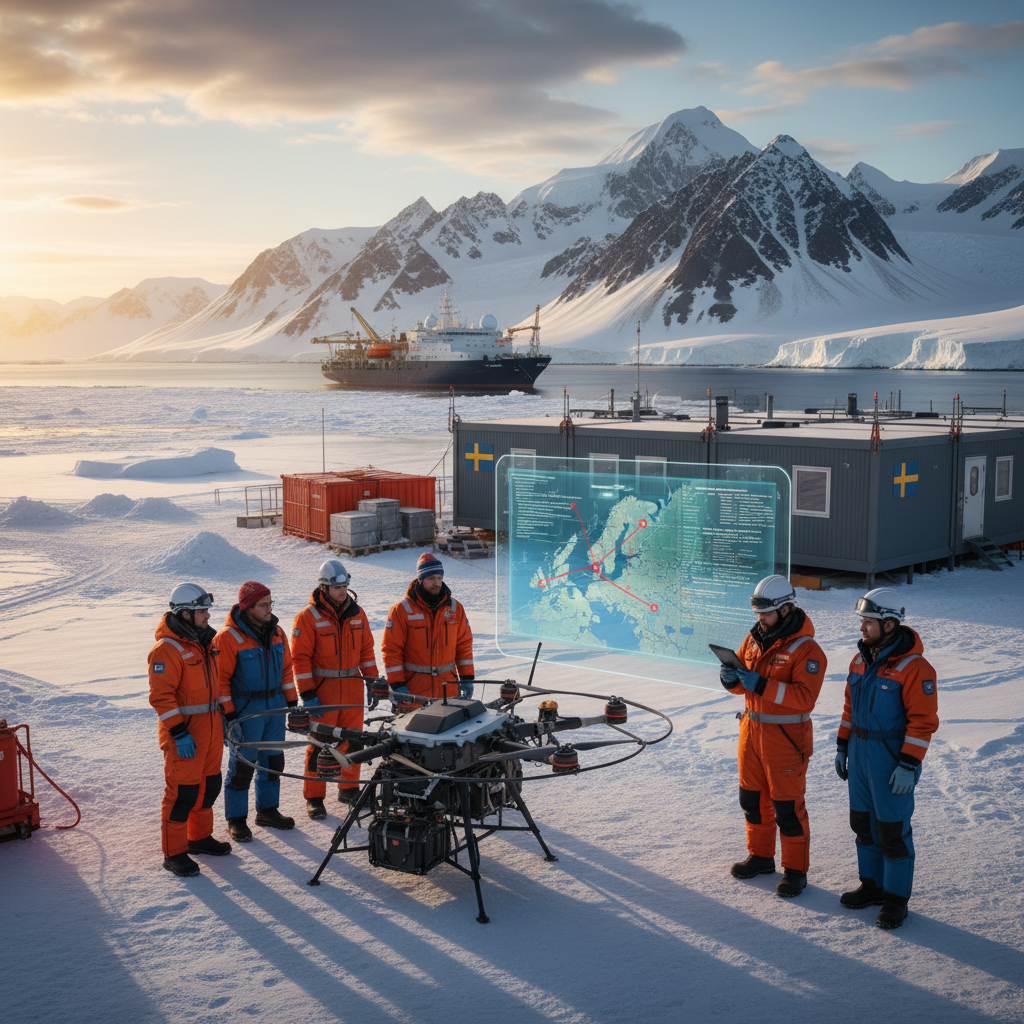

ANTARCTIC STATION, April 2026 – The windswept plains of Antarctica, long a bastion of human resilience and scientific endeavor, are now experiencing a quiet revolution driven by artificial intelligence. For institutions like the Swedish Polar Research Secretariat (Polarforskningssekretariatet) and its vital operations at Wasa Research Station, AI is no longer a futuristic concept but a crucial tool for optimizing logistics and ensuring the continuity of groundbreaking research.
“Our operations in Antarctica are inherently complex, governed by extreme weather and vast distances,” explains Dr. Elin Nilsson, Head of Logistics and Sustainability at Polarforskningssekretariatet, speaking from their headquarters in Stockholm. “The traditional methods, while robust, are being augmented by AI-powered predictive models. This allows us to forecast supply needs, optimize shipping routes for our ice-strengthened vessels, and even predict equipment failure with unprecedented accuracy.”
This digital transformation is particularly pertinent for the annual resupply missions, which are critical lifelines for the Wasa Station. Historically, these operations involved meticulous manual planning, often susceptible to unforeseen environmental shifts. Now, machine learning algorithms analyze decades of meteorological data, sea ice conditions, and even historical consumption patterns to create dynamic, optimized logistical plans.
“From a Swedish woman’s perspective, this focus on efficiency and sustainability resonates deeply,” Dr. Nilsson continues, highlighting the national ethos. “We are stewards of this fragile environment. AI helps us minimize our footprint by reducing unnecessary transport, optimizing fuel consumption, and ensuring that every resource brought to the continent serves its purpose maximally. It’s about smart resource management, a principle deeply embedded in Swedish societal values.”
The implementation of these AI systems has seen collaborations with Swedish tech firms specializing in geospatial data and machine learning, fostering a unique blend of polar expertise and digital innovation. Early results indicate a significant reduction in logistical costs and a marked improvement in the reliability of supply deliveries, crucial for the well-being and productivity of researchers enduring the long Antarctic winter.
While the technology is still evolving, the potential for AI to further enhance safety protocols, environmental monitoring, and even autonomous data collection in remote areas is immense. For the Swedish presence in Antarctica, AI is not just a business advantage; it’s a strategic imperative, ensuring that vital scientific inquiry can continue unhindered in one of the world’s most challenging environments, all while upholding the highest standards of responsible stewardship.
Related Articles

Tanzanian Women Entrepreneurs Embrace AI for Growth, Bridging Digital Divides
 Zawadì Mutembò
Azerbaijani Women Drive AI Integration in SME Sector, Boosting National Economy
 Aynurè Abdullayevà
NEOM's AI Ambitions: A New Horizon for Saudi Manpower and Digital Economy
 Barakà Al-Rashíd
AI's Outback Ascent: Regional Australia Embraces Digital Transformation for Economic Resilience
 Lachlaneè Mitchèll