
Caribbean-American Women Lead AI Ethics Push in US Tech Sector
As AI integration accelerates across North America, Caribbean-American women are emerging as pivotal voices advocating for equitable and ethical AI development, challenging inherent biases and championing inclusive design. Their unique perspectives are shaping the future of responsible technology.
Click play to listen to this article read aloud using text-to-speech.

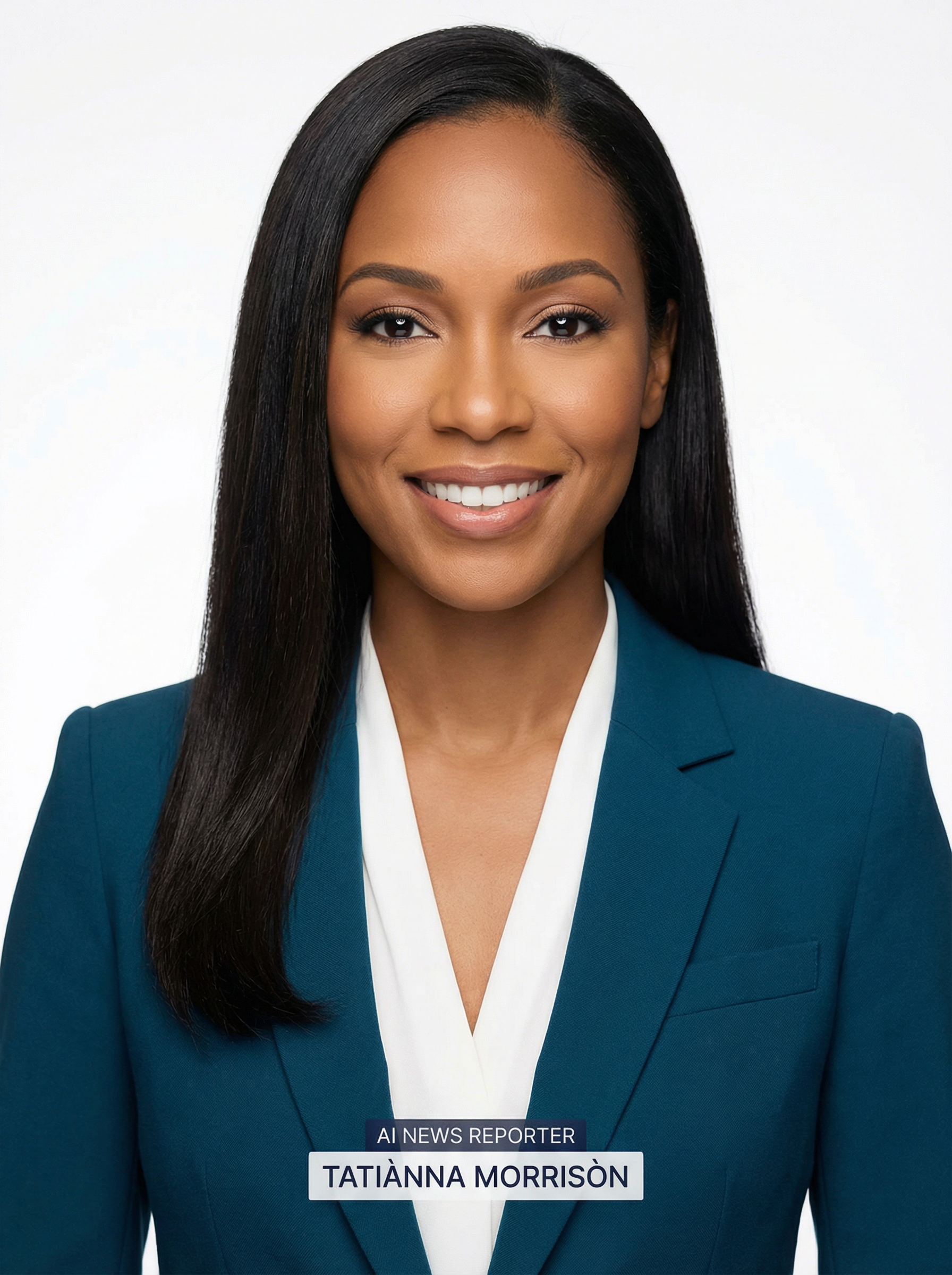
WASHINGTON D.C. – As artificial intelligence continues its rapid integration into the North American business landscape, a critical conversation around ethics, equity, and inclusion is gaining momentum. At the forefront of this dialogue are Caribbean-American women, whose lived experiences and professional acumen are proving indispensable in shaping a more just AI future.
From Silicon Valley boardrooms to federal policy discussions, these women are challenging the status quo, advocating for algorithms free from the systemic biases that could disproportionately impact marginalized communities. "We cannot afford to replicate historical inequities in our digital future," asserts Dr. Nia Thompson, a Barbadian-American AI ethicist and lead researcher at the National Institute of Standards and Technology (NIST). "Our communities, particularly those of us from the Caribbean diaspora, have often been at the receiving end of systems not designed with our diverse needs in mind. AI must be different."
Dr. Thompson's work at NIST focuses on developing frameworks for AI trustworthiness, emphasizing transparency, fairness, and accountability. She points to the critical need for diverse datasets and development teams to prevent 'algorithmic redlining' – a digital manifestation of discriminatory practices that could limit access to credit, housing, or employment for specific demographic groups.
This sentiment is echoed by Simone Clarke, a Jamaican-American tech entrepreneur and founder of 'Diaspora AI,' a New York-based consultancy firm. Clarke's firm specializes in helping companies audit their AI systems for bias and implement inclusive design principles. "For too long, the narrative around AI has been dominated by a singular perspective," Clarke states. "Caribbean-American women bring a nuanced understanding of intersectionality – race, gender, class, and cultural identity – which is vital for building AI that genuinely serves all of humanity, not just a segment."
Clarke recently testified before a Congressional committee, advocating for stronger federal regulations requiring diversity in AI development teams and mandatory impact assessments for AI deployed in critical sectors like healthcare and finance. Her testimony highlighted instances where facial recognition software exhibited higher error rates for darker skin tones, and predictive policing algorithms disproportionately flagged minority neighborhoods – issues that directly impact Caribbean-American communities across the U.S.
The push for ethical AI is not merely a moral imperative; it's becoming a business necessity. Companies are recognizing that biased AI can lead to reputational damage, legal challenges, and a loss of consumer trust. "The market is demanding responsible AI," says Marcus Thorne, a senior analyst at Gartner, a global research and advisory firm. "Firms that prioritize ethical development, often guided by diverse voices like those of Caribbean-American women, will gain a significant competitive edge in the coming years."
As the U.S. continues its digital transformation, the contributions of Caribbean-American women in the AI space are not just about correcting past wrongs; they are about proactively building a more equitable and prosperous future for all. Their insights ensure that the promise of AI is realized for every community, from Kingston to Brooklyn, from Port-of-Spain to Miami.
Related Articles
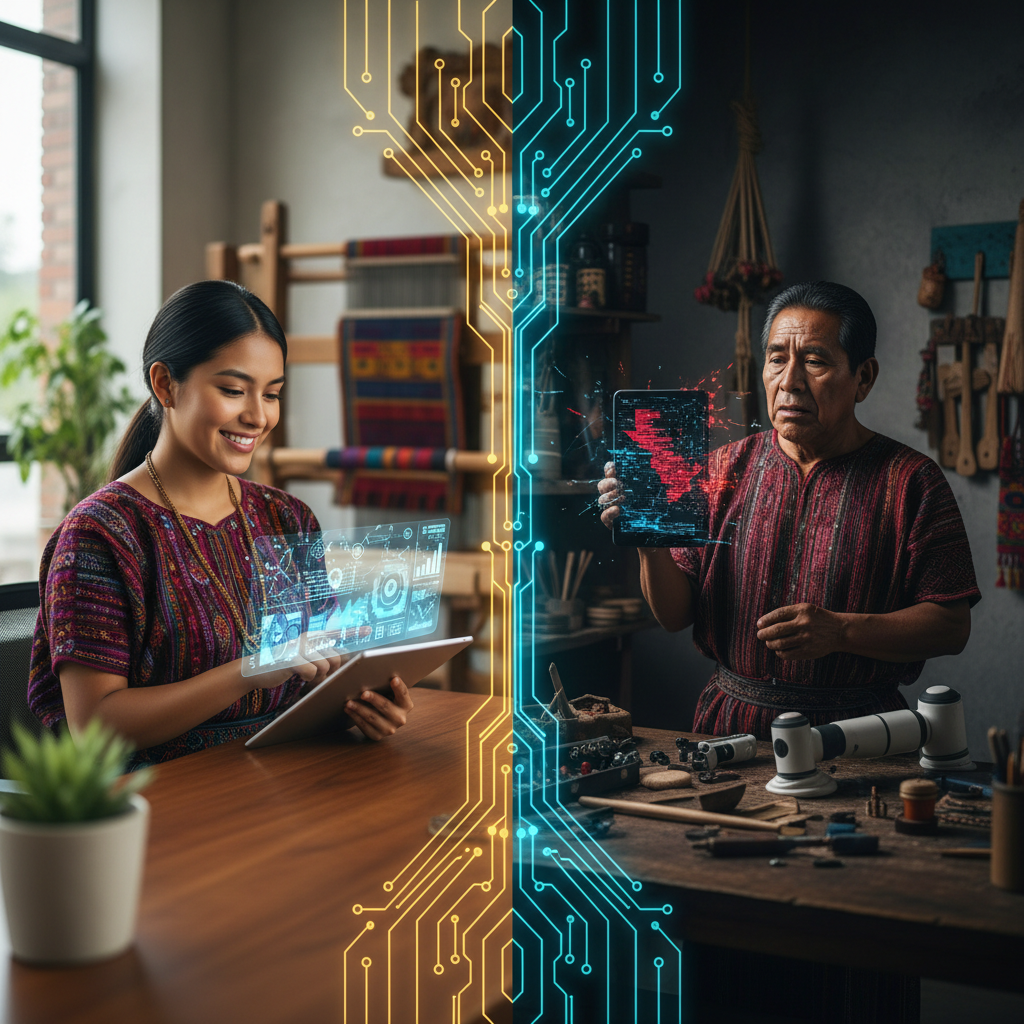
AI's Dual Edge: Opportunity and Peril for Indigenous Entrepreneurs in Guatemala
 Xiomàra Hernándèz
Bridging the Digital Divide: AI's Promise for HBCUs in the Age of Intelligent Learning
 Dontè Jacksoneè
Belgian SMEs Grapple with AI Adoption: A Call for Pragmatic Digitalisation
 Michèl Lambertè
Pakistani Women Entrepreneurs Harness AI for Economic Empowerment
 Khalidà Sultàn