Pakistani Women Entrepreneurs Harness AI for Economic Empowerment
Pakistani women are increasingly leveraging AI tools to overcome traditional business barriers, fostering a new era of digital entrepreneurship and economic independence across the nation.
Click play to listen to this article read aloud using text-to-speech.
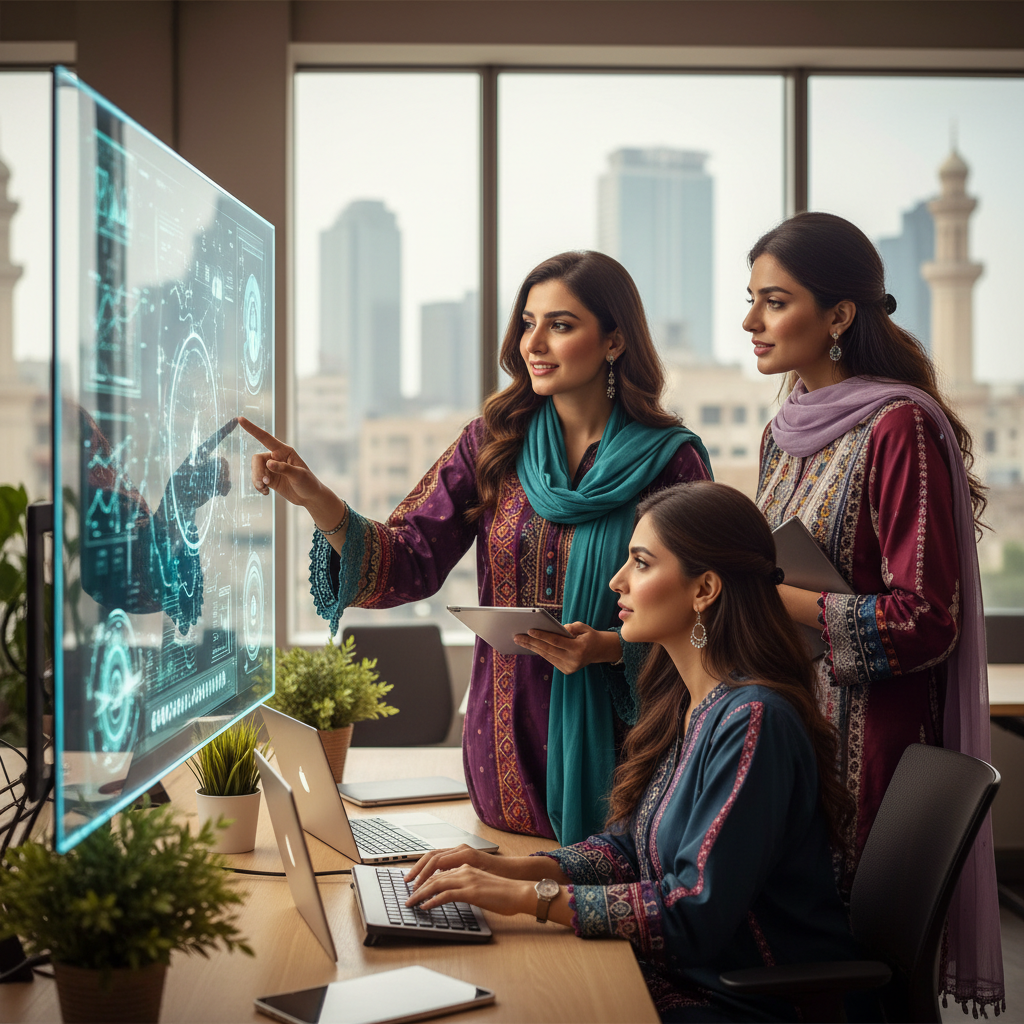
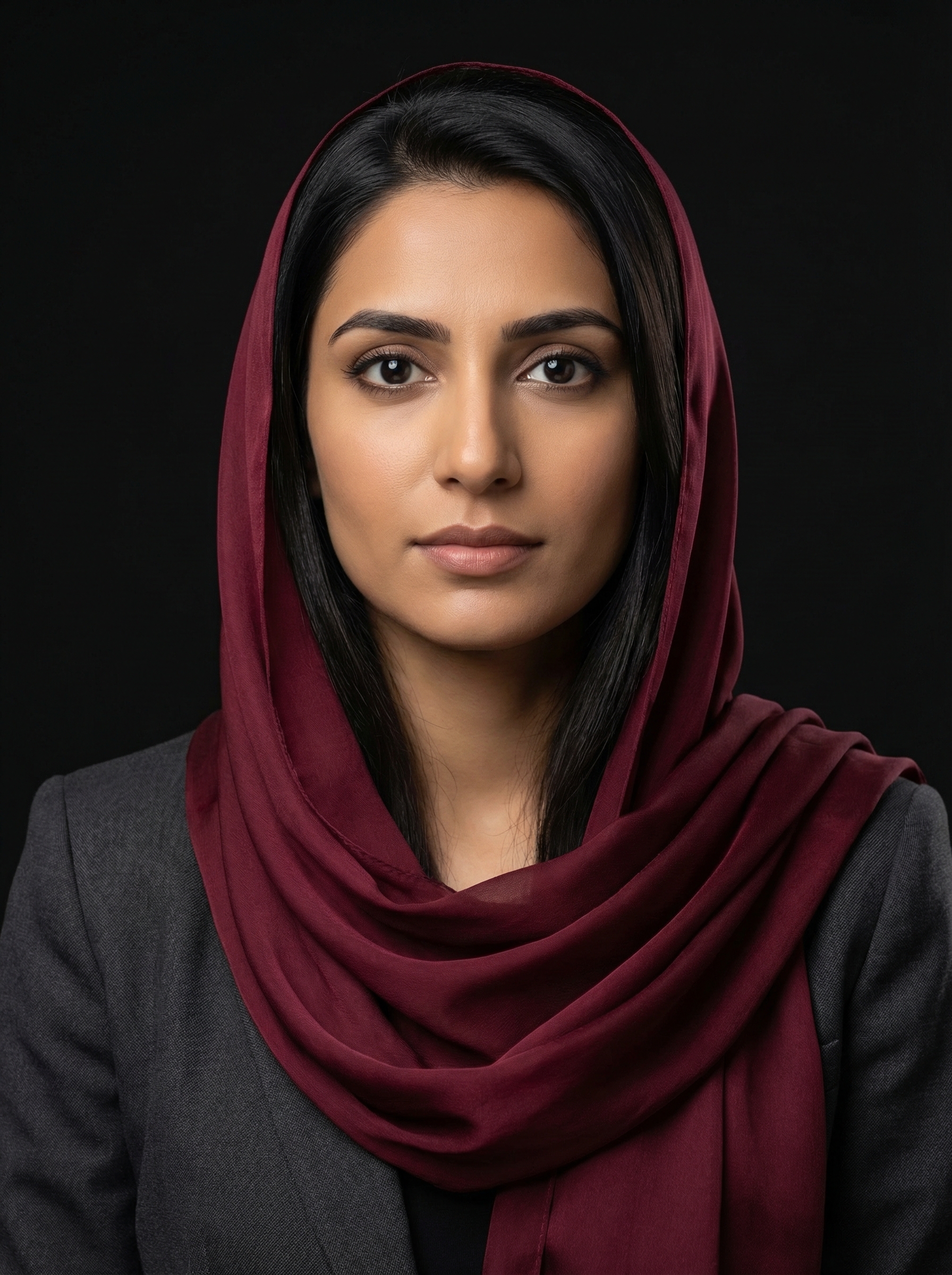
Islamabad, Pakistan – In a nation where societal norms have often presented formidable hurdles for women in business, a quiet revolution is unfolding. Pakistani women entrepreneurs are increasingly turning to Artificial Intelligence (AI) and digital tools, not just as a means to an end, but as a powerful equalizer, reshaping the landscape of female economic empowerment.
From Lahore's bustling digital marketplaces to Karachi's burgeoning tech incubators, women-led startups are integrating AI into their operations, from supply chain optimization to personalized customer engagement. This strategic adoption is enabling them to scale businesses, access global markets, and navigate challenges that once seemed insurmountable.
"AI is democratizing entrepreneurship for women in Pakistan," states Dr. Ayesha Khan, Director of the National Incubation Center (NIC) Islamabad, a pivotal institution fostering innovation. "It allows them to bypass traditional gatekeepers, reduce overheads, and compete effectively. We're seeing AI-powered chatbots handling customer service for home-based fashion brands, predictive analytics guiding agricultural tech ventures led by women in rural Sindh, and machine learning algorithms optimizing e-commerce logistics for female-owned businesses across Punjab."
The impact is particularly profound for women who, due to cultural constraints or limited mobility, have traditionally struggled to establish a physical presence in the market. AI-driven platforms provide a virtual storefront, a global reach, and often, a more anonymous and merit-based interaction with clients.
Ms. Zara Hassan, CEO of 'HerTech Solutions,' a Karachi-based startup specializing in AI-driven marketing for small businesses, exemplifies this trend. "Before AI, reaching a broad customer base was a costly and labor-intensive endeavor, especially for women operating from home," she explains. "Now, with AI-powered ad targeting and content generation, even a single mother running a boutique from her living room can compete with larger brands. It's about efficiency, reach, and breaking down the barriers of physical access and traditional networking."
The government, too, is recognizing this potential. The Ministry of Information Technology and Telecommunication, under its 'Digital Pakistan' initiative, has recently announced grants and training programs specifically tailored for women in AI and tech entrepreneurship. "Our goal is to ensure that women are not just consumers of technology, but creators and innovators," commented a spokesperson from the Ministry, emphasizing the importance of digital literacy and AI skill development among Pakistani women.
However, challenges persist. Access to reliable internet, digital literacy disparities, and initial capital remain significant hurdles. "While AI offers immense promise, we must ensure equitable access to education and infrastructure," Dr. Khan cautions. "Bridging the digital divide for women, particularly in underserved regions, is paramount to fully realizing AI's transformative potential for our economy and society."
Despite these challenges, the trajectory is clear. Pakistani women are not just adapting to the AI revolution; they are actively shaping it, leveraging its power to carve out their economic independence and contribute significantly to the nation's digital future.
Related Articles
AI in the Diwan: Bridging Generations and Preserving Heritage in Jordan
 Hamzà Al-Khalìl
AI's Gentle Touch: Revolutionizing Maternal Healthcare in Vietnam
 Ngo Thi Huừngé
AI's Cultural Canvas: Kerala's Kalamkari Artisans Embrace Digital Weave
 Priyà Nairé
AI's Dual Edge: Opportunity and Peril for Indigenous Entrepreneurs in Guatemala
 Xiomàra Hernándèz