
AI's 'Digital Dombyra': Preserving Kazakh Cultural Heritage Through Generative Art
Kazakhstan embraces AI to safeguard its rich cultural tapestry, from traditional music to intricate patterns, ensuring its legacy thrives in the digital age. This initiative, championed by women in tech, promises a vibrant future for national identity.
Click play to listen to this article read aloud using text-to-speech.


ALMATY, KAZAKHSTAN – In an era where digital transformation sweeps across Central Asia, Kazakhstan is pioneering innovative approaches to cultural preservation, leveraging artificial intelligence to safeguard its unique heritage. This initiative, often dubbed the 'Digital Dombyra' project by local enthusiasts, is particularly resonant for Kazakh women who have historically been the custodians of our nation's rich traditions.
At the forefront of this movement is the 'Qazaq Órnek' (Kazakh Pattern) AI, a generative adversarial network (GAN) developed by the Astana Hub's 'TechKyzy' (Tech Girl) incubator. This AI is being trained on vast datasets of traditional Kazakh ornamental art, from intricate carpet designs to the delicate embroidery found on national costumes like the kimeshek and saukele. Its goal is not to replace human artistry, but to provide a powerful tool for cataloging, analyzing, and even generating new patterns that adhere to traditional aesthetic principles, ensuring their continuity for future generations.
"For centuries, the ana (mother) and apa (grandmother) passed down these patterns, these stories, through their hands," explains Dr. Aigul Serikkyzy, a leading ethnographer and AI ethics specialist at Nazarbayev University. "Now, AI can help us understand the mathematical and artistic grammar of these designs, making them accessible to a wider audience and preventing their dilution or loss. It's about empowering our cultural narrative in a digital space."
The project extends beyond visual arts. Researchers at the Kazakh National Conservatory are experimenting with AI to analyze and even compose new melodies in the traditional küi (instrumental piece) style, using algorithms trained on thousands of hours of dombyra and kobyz performances. The aim is to identify the core structures and improvisational techniques that define Kazakh folk music, offering new avenues for performance and education.
"The dombyra is the soul of our people, and its melodies carry our history," states Gulnar Zhaksylyk, a senior developer at 'TechKyzy' and a passionate advocate for women in STEM. "Our AI isn't composing küi to replace the küishi (performer), but to be a learning companion, a digital mentor that can help young musicians grasp the nuances of our complex musical heritage. It’s about ensuring our cultural voice remains strong and clear in a globalized world."
Critics occasionally raise concerns about authenticity and the potential for AI to homogenize artistic expression. However, proponents emphasize that the technology serves as an assistant, a digital archivist, and an educational tool, rather than a replacement for human creativity. The focus remains on empowering Kazakh artists and cultural institutions to leverage these tools responsibly.
As Kazakhstan continues its journey towards a digitally advanced future, initiatives like the 'Digital Dombyra' demonstrate a profound commitment to preserving its unique cultural identity. By embracing AI, the nation, particularly through the vision and dedication of its women in technology and academia, is ensuring that the rich tapestry of Kazakh heritage not only endures but flourishes in the 21st century.
Related Articles

Chinese Women Entrepreneurs Drive AI Innovation in Smart Manufacturing
 Mei-Líng Zhāng
AI-Driven Aquaculture: Japan's Blue Economy Embraces Smart Solutions for Sustainability
 Hiroshì Yamadà
AI in Kimono: Bridging Tradition and Tech for Japan's Aging Workforce
 Yuki Tanakà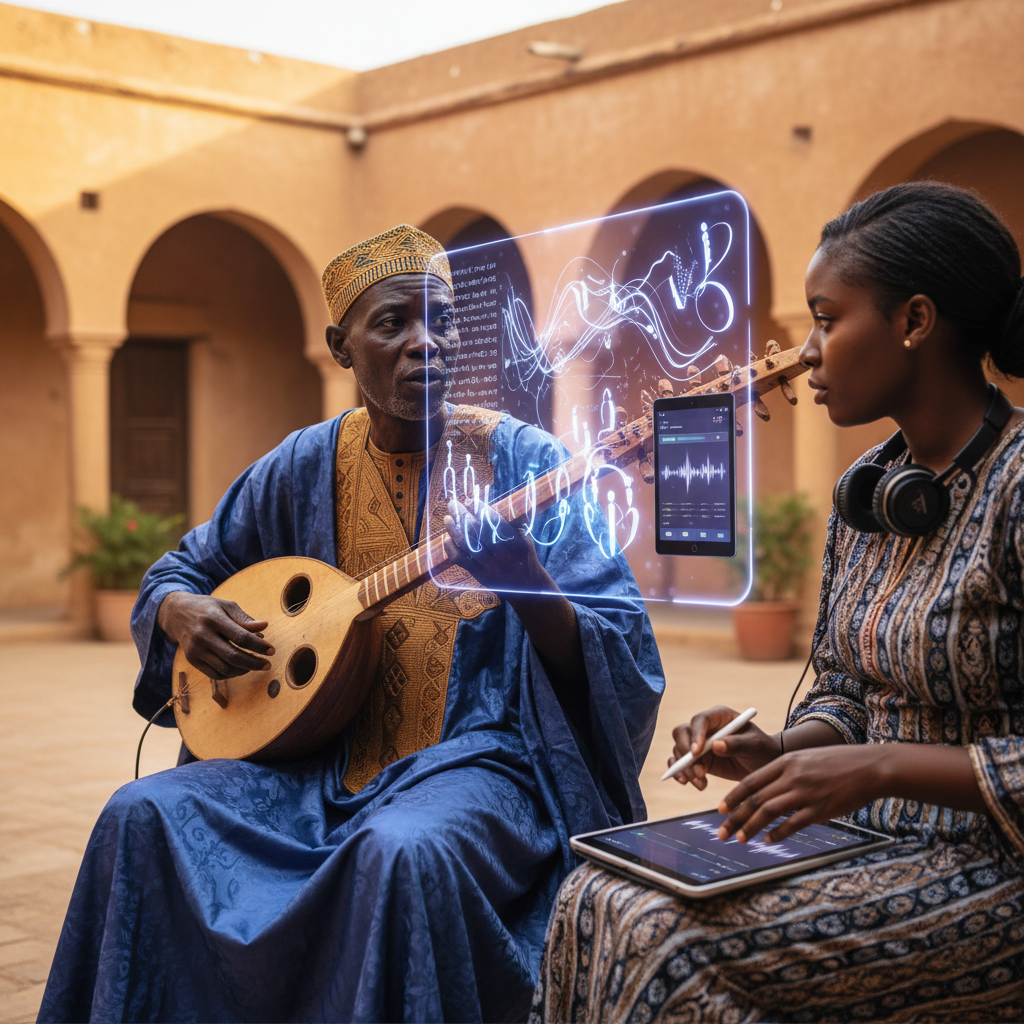
AI's Griot: Preserving Wolof Oral Traditions with Digital Narratives
 Mamadouù Dioufée