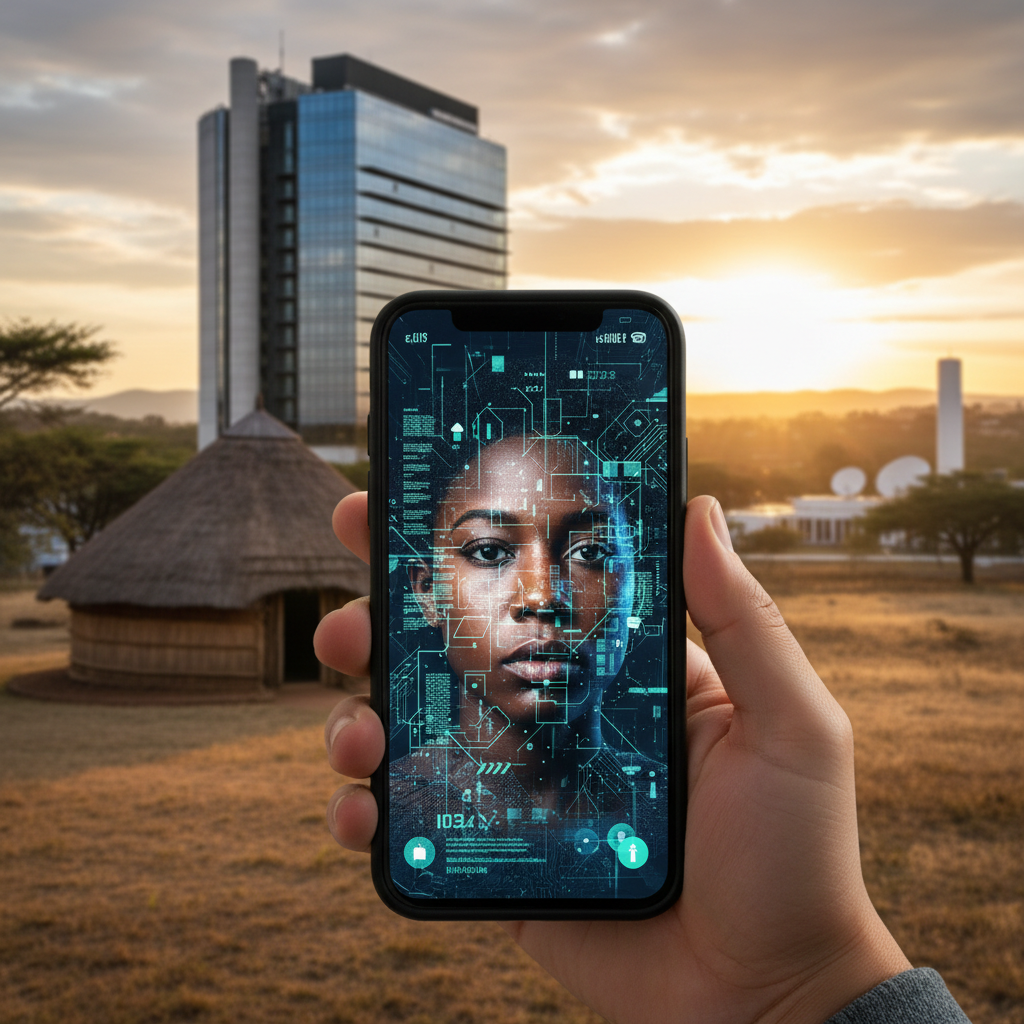
The sun was just beginning to paint the eastern sky with hues of orange and pink, a familiar sight from my grandmother's homestead in rural Eswatini. The air was cool, carrying the scent of morning dew and woodsmoke. My gogo, bless her heart, was already up, tending to her small garden. She often tells me stories of how things used to be, when a person's word was their bond, and knowing who you were speaking with was as natural as breathing. Today, in our digital world, that simple truth is becoming surprisingly complex, and it is a complexity that reaches even our quiet corners of the globe.
We are talking about something called AI transparency laws, a mouthful of words that might sound like something only for the tech giants in Silicon Valley or the bureaucrats in Brussels. Yet, these laws, which are spreading globally, aim to answer a fundamental question: do you have the right to know if you are talking to an artificial intelligence, and not a human being? For many, this might seem like a niche concern, a problem for tech enthusiasts or those working directly with advanced AI. They might shrug, saying, "Who cares, as long as it gets the job done?" This is the attention gap, a chasm between the abstract world of policy and the concrete realities of daily life.
But let me tell you, this matters. It matters to you, to me, and to every single person in Eswatini and beyond. Imagine calling your bank, the one you trust with your hard-earned emalangeni, and you are trying to understand a new loan product. You speak to a friendly voice, articulate and helpful. Is it a person, or is it an AI designed to sound just like one? What if you are seeking advice on a health issue through an online portal, or perhaps applying for a job, and the feedback you receive comes from an algorithm, not a human recruiter? The difference is not just academic, it is fundamental to how we perceive trust, responsibility, and even empathy in our interactions.
In Eswatini, we say 'umuntu ngumuntu ngabantu', which means 'a person is a person through other people'. AI should learn this lesson. Our culture is built on relationships, on knowing the person behind the voice, the face behind the advice. When that person is replaced by a machine, even a very clever one, without our knowledge, it erodes a foundational pillar of our society: trust. It affects our jobs, too. If an AI is making hiring decisions or evaluating performance without clear disclosure, how do we challenge it? How do we appeal? What recourse do we have when the decision maker is a black box?
Consider the bigger picture. Globally, governments are grappling with this. The European Union, for example, has been at the forefront with its AI Act, which includes provisions for transparency regarding AI systems. Here in Africa, countries are watching closely, understanding that what starts as a whisper in a tech hub can soon become a roar across continents. The stakes are immense, touching on consumer protection, data privacy, and even national security. If we cannot distinguish between human and machine, how do we verify information, especially in an age where misinformation can spread like wildfire? How do we maintain the integrity of our democratic processes if political campaigns can deploy undisclosed AI agents to influence public opinion?
Experts from around the world are echoing these concerns. "Transparency is not just a nice-to-have, it's a non-negotiable," stated Dr. Rumman Chowdhury, a leading voice in ethical AI and former responsible AI lead at Twitter, in a recent interview. "Without it, we lose accountability, and without accountability, we cannot govern these powerful technologies effectively." Her words resonate deeply. Similarly, Professor Mthunzi Mkhonta, a computer science lecturer at the University of Eswatini, often emphasizes the need for local context. "While global regulations provide a framework, we must adapt them to our cultural nuances. Our people need to understand the implications, not just be told what to do." He highlights that the digital divide means many might not even be aware of AI's presence in their daily lives, let alone its potential to mislead. Even tech leaders like Microsoft's President Brad Smith have acknowledged the need for guardrails, stating that "we need to ensure that AI is developed and deployed in a way that respects fundamental rights and democratic values." This sentiment is echoed by many, including Sam Altman of OpenAI, who has spoken about the importance of societal alignment for advanced AI systems.
So, what can you do about it? First, be aware. When you interact with a customer service chatbot, an online assistant, or even a voice on the phone, ask yourself: is this a human? If you are unsure, it is perfectly reasonable to ask directly, "Am I speaking with an AI or a human?" Demand clarity. Second, support policies and regulations that advocate for AI transparency. Engage with discussions in your community about how technology impacts our lives. This tiny kingdom has big ideas about technology, and our voices, when united, can influence the global conversation. Third, educate yourself and those around you. Understanding how AI works, its capabilities, and its limitations, empowers you to navigate the digital world more safely and consciously. Resources like Wired's AI section or MIT Technology Review can be excellent starting points to stay informed.
The bottom line is this: in five years, the line between human and artificial intelligence will be even blurrier than it is today. AI will be integrated into nearly every facet of our lives, from how we bank to how we learn, how we receive healthcare, and even how we form relationships. Without clear, enforceable laws demanding transparency, we risk a future where deception is normalized, trust is eroded, and human agency is diminished. The right to know if you are talking to an AI is not just a technicality; it is a fundamental human right in the digital age. It is about preserving the authenticity of our interactions and ensuring that technology serves humanity, rather than the other way around. It is about ensuring that even as technology advances, the spirit of 'umuntu ngumuntu ngabantu' continues to guide our path. We need to remember that sometimes the smallest countries have the biggest vision, and Eswatini's emphasis on human connection offers a powerful lesson for the global AI community.