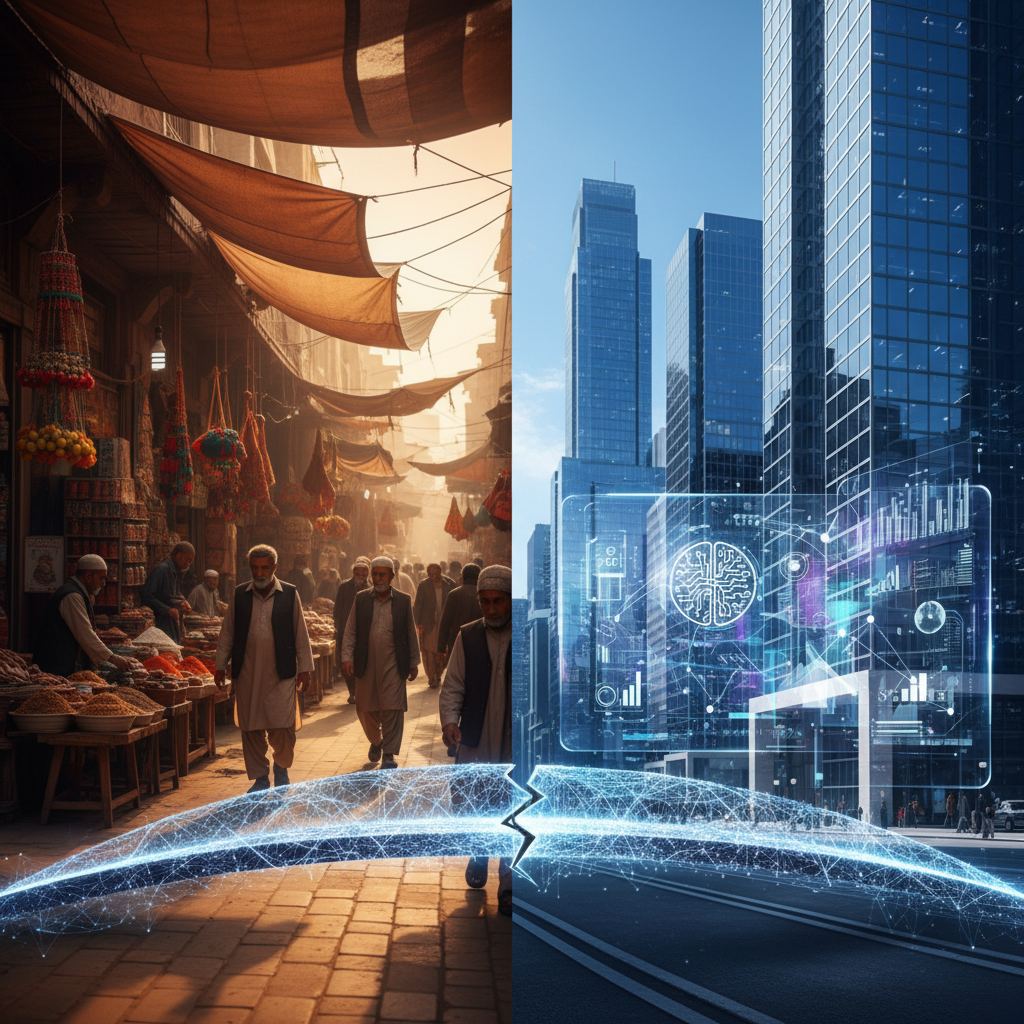

The ancient city of Kabul, with its bustling bazaars and resilient spirit, has witnessed countless shifts in power and progress. Yet, even here, the whispers of artificial intelligence are beginning to stir, not in grand government halls, but in the quiet calculations of property and possibility. Across the world, from the gleaming towers of Dubai to the sprawling suburbs of London, AI is rapidly reshaping the real estate sector. It promises unprecedented efficiency in property valuation, immersive virtual tours that transcend physical boundaries, and predictive analytics that claim to foresee market shifts with startling accuracy. This technological tide, however, brings with it a complex interplay of opportunity and challenge, especially for nations like Afghanistan, where foundational infrastructure and data ecosystems are still evolving.
The Headline Development: AI's Quiet Invasion of Real Estate
In the last two years, artificial intelligence has moved beyond niche applications to become a foundational layer in the global real estate industry. Companies like Zillow and Redfin in the United States have long leveraged machine learning for their Zestimates and Redfin Estimates, providing instant property valuations that have become household names. Now, this capability is becoming more sophisticated, incorporating vast datasets including satellite imagery, local amenities, crime rates, and even social media sentiment to refine predictions. Virtual tours, once a novelty, are now powered by generative AI, creating hyper-realistic digital walkthroughs that can even simulate different furniture arrangements or seasons. Market prediction models, fueled by deep learning algorithms, are analyzing macroeconomic indicators, geopolitical events, and hyperlocal trends to forecast property values and investment hotspots years in advance. This is not merely an incremental improvement; it is a fundamental shift in how properties are bought, sold, and valued.
Why Most People Are Ignoring It: The Attention Gap
For many in the developed world, AI in real estate might seem like a convenient upgrade, a tool for agents or a feature on a property website. For those in regions grappling with more immediate concerns, such as food security, political stability, or basic infrastructure, the intricacies of AI powered property valuation can feel distant, even irrelevant. The daily struggle for survival often overshadows discussions of algorithmic efficiency. In Afghanistan, where land ownership records can be fragmented, informal transactions are common, and internet penetration remains low in many areas, the idea of AI driven market predictions might seem like a luxury, a concern for another world. This attention gap is dangerous, however, because the global nature of capital markets means that these AI advancements will inevitably influence investment decisions that affect every corner of the planet, whether we are actively participating or not.
How It Affects YOU: Personal Impact on Readers
Even if you are not directly buying or selling property in a tech forward market, the implications of AI in real estate are far reaching. Consider the accuracy of property valuations. If an AI system consistently undervalues properties in certain neighborhoods due to biased historical data, it can perpetuate systemic inequalities, making it harder for residents in those areas to secure loans or build generational wealth. This is about dignity, about the fair assessment of one's assets. For those seeking housing, virtual tours offer unprecedented access, potentially reducing the need for costly travel, a boon for refugees or displaced persons seeking new homes in unfamiliar territories. However, if these virtual spaces are not accessible to all, or if the underlying data used to create them is incomplete or discriminatory, they can become another barrier. For investors, AI promises to identify opportunities and risks, but this also centralizes power, potentially favoring those with access to the most sophisticated tools and data. The digital divide, therefore, translates directly into an economic divide.
The Bigger Picture: Societal, Economic, or Political Implications
On a societal level, the widespread adoption of AI in real estate could exacerbate existing inequalities. If property valuation algorithms are trained on data from stable, well documented markets, they may struggle to accurately assess properties in informal settlements or regions with volatile political landscapes. This could lead to a lack of investment in areas that need it most, or conversely, to predatory practices by those who can exploit algorithmic blind spots. Economically, AI could streamline transactions, reduce fraud, and increase market transparency, but only if the underlying data is robust and unbiased. Politically, the control over such powerful data and algorithms could become a significant point of leverage. Imagine a scenario where foreign investment is steered away from a region not because of on the ground realities, but because an AI model, trained on insufficient or skewed data, flags it as high risk. Behind every algorithm is a human story, and in real estate, that story often involves homes, livelihoods, and the very fabric of communities. The potential for AI to be a tool for economic development and stability, particularly in post conflict regions, is immense, but it requires careful, ethical implementation.
What Experts Are Saying: Voices from the Field
Experts are keenly aware of both the promise and the peril. Dr. Sarah Masud, a leading urban planner and data scientist at the American University of Afghanistan, has often spoken about the need for localized data. "Global AI models, however sophisticated, often fail to capture the nuances of our unique urban landscapes and property dynamics," she stated in a recent forum. "We must invest in collecting and digitizing our own data, ensuring it reflects our realities, not just those of Silicon Valley." This sentiment is echoed by Dr. Ali Safi, a real estate economist based in Dubai, who notes the dual nature of these tools. "AI can democratize access to information, allowing smaller investors to compete with larger firms, but it also creates a new form of digital literacy requirement," he told Reuters. "Those without the skills or infrastructure to engage with these platforms will be left behind." Meanwhile, Satya Nadella, CEO of Microsoft, has consistently emphasized the importance of responsible AI development. "We must ensure that AI serves humanity, not the other way around," Nadella remarked at a recent tech conference, a sentiment that resonates deeply when considering the impact on vulnerable populations. "This includes building AI systems that are fair, transparent, and accountable, especially in sectors as fundamental as housing." These perspectives underscore a critical truth: technology should serve the most vulnerable, not further marginalize them.
What You Can Do About It: Actionable Takeaways
For individuals, understanding how AI influences property markets is the first step. If you are considering buying or selling, research the tools your agents or lenders are using. Ask questions about the data sources and algorithms. Advocate for transparency and fairness in local property assessments. For policymakers in developing nations, the imperative is clear: invest in digital infrastructure, promote digital literacy, and develop robust, localized data governance frameworks. Collaborations with international organizations and technology firms can help in building these foundational elements. For instance, initiatives to digitize land records, like those underway in parts of Afghanistan with support from the World Bank, are crucial. These efforts not only improve transparency but also create the data necessary for ethical AI development. Supporting local tech initiatives that focus on culturally relevant AI solutions, rather than simply importing global models, is also vital. This is not just about technology; it is about empowering communities to shape their own digital future.
The Bottom Line: Why This Will Matter in 5 Years
In five years, AI will not merely be a tool in real estate; it will be an intrinsic part of its infrastructure. The speed and accuracy of transactions will increase dramatically, potentially making real estate markets more liquid and efficient globally. However, without proactive and ethical considerations, this efficiency could come at a steep cost for equity and access. The gap between data rich and data poor regions will widen, potentially creating a two tiered global real estate market. The decisions made today regarding data collection, algorithmic bias, and digital inclusion will determine whether AI becomes a force for broad based prosperity or a mechanism that entrenches existing disparities. For Afghanistan, and for many other nations striving for stability and growth, the future of real estate, and by extension, economic opportunity, hinges on our collective ability to harness AI responsibly, ensuring that its benefits are shared by all, not just a privileged few. The path forward demands vigilance, collaboration, and an unwavering commitment to justice in the digital age. More insights into the broader implications of AI can be found on platforms like MIT Technology Review. The stakes are too high to ignore.