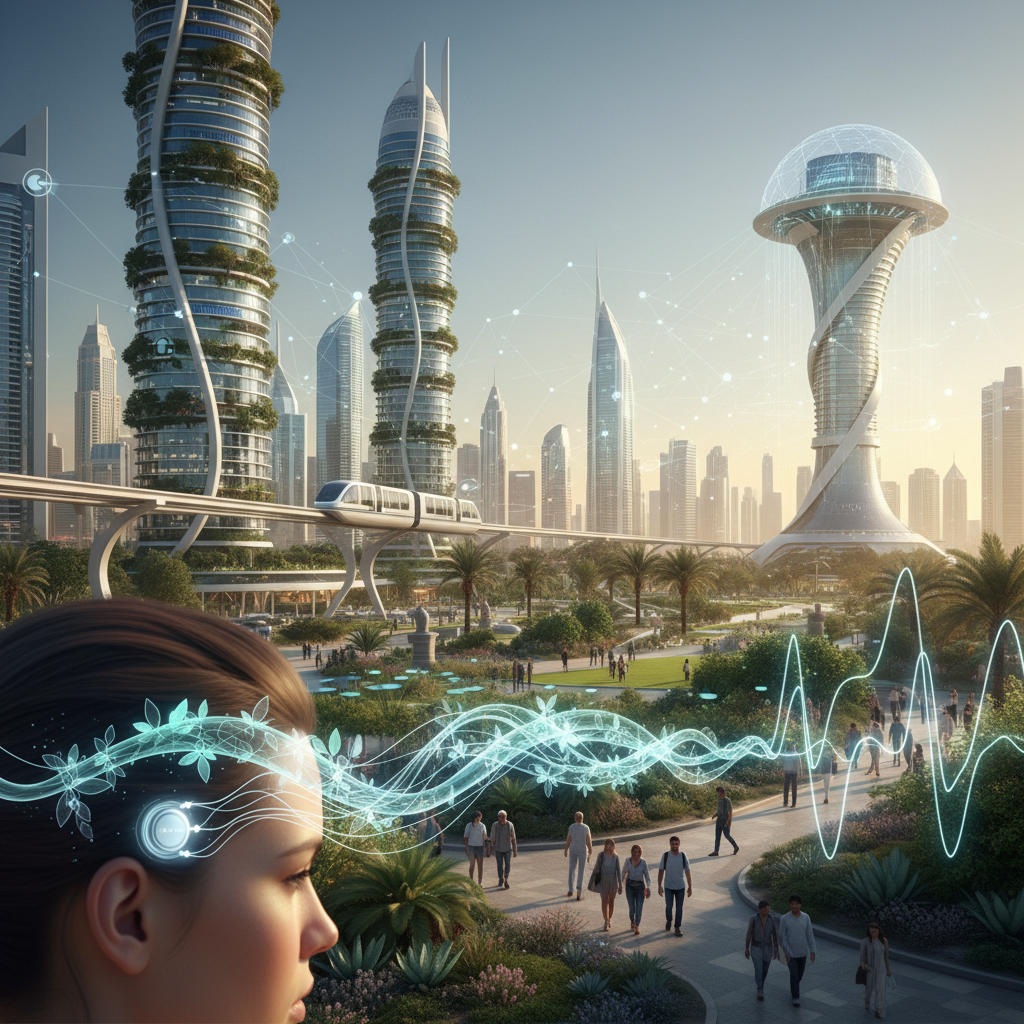

In the annals of human endeavor, few frontiers hold as much promise and ethical complexity as the direct interface between the human brain and artificial intelligence. For decades, the concept of restoring sight, speech, and movement to those who have lost it remained largely within the realm of science fiction. Today, in April 2026, it is a rapidly accelerating reality, driven by breakthroughs in AI, neuroscience, and micro-engineering. This is not merely about incremental improvements; it is about a fundamental redefinition of human capability, a vision that resonates deeply with the forward-thinking ethos of the United Arab Emirates.
The global race to perfect brain-computer interfaces, or BCIs, is intensifying. Companies like Elon Musk's Neuralink continue to capture headlines with their ambitious claims and demonstrations of direct neural integration. While the initial focus has been on restoring lost functions, the long-term implications extend to cognitive augmentation, a prospect that ignites both excitement and profound ethical debate. The core of this revolution lies in AI's ability to decipher the intricate electrical signals of the brain, translate them into actionable commands, and even generate sensory feedback. This sophisticated pattern recognition, powered by advanced deep learning algorithms, is what transforms raw neural data into a meaningful bridge between mind and machine.
Consider the recent advancements in restoring motor function. Researchers at Stanford University, for instance, have demonstrated AI-powered BCIs that allow individuals with paralysis to type at speeds approaching that of able-bodied people using a keyboard, simply by imagining the movements. This is achieved through sophisticated neural decoders that learn to interpret the user's intended movements from brain activity. Similarly, in the realm of speech, breakthroughs from institutions like the University of California, San Francisco, have shown AI models reconstructing intelligible speech from brain signals in real time, offering a voice to those rendered silent by neurological conditions. These are not isolated experiments; they represent a concerted global push, backed by significant investment and collaborative research.
“The ability of AI to learn and adapt to the unique neural signatures of each individual is the true game-changer,” stated Dr. Sarah R. Lisanby, Director of the Division of Translational Research at the National Institute of Mental Health, in a recent interview. “Without these advanced algorithms, the raw brain data would be just noise. AI provides the intelligence to unlock its potential.” Her sentiments underscore the indispensable role of AI in making these interfaces functional and personalized.
In the UAE, the vision for such transformative technologies is not just observed, it is actively cultivated. The nation’s strategic investment in AI and advanced technology infrastructure positions it as a significant player in this nascent field. Dubai doesn't just adopt the future, it builds it. The Dubai Future Foundation, through initiatives like the Dubai Future Labs and the Museum of the Future, consistently champions disruptive technologies, including neurotechnology. The emphasis is on creating an ecosystem that attracts top talent, fosters research, and facilitates the ethical deployment of these innovations. This is what ambition looks like, translated into tangible policy and investment.
Data from various market analyses project the global BCI market to reach over $5 billion by 2030, with a compound annual growth rate exceeding 15%. While a significant portion of this growth is currently driven by North American and European research, the UAE is rapidly increasing its share through targeted investments in healthcare AI and smart city initiatives. The Mohammed Bin Rashid University of Medicine and Health Sciences, for example, is exploring partnerships with international neurotech firms, aiming to establish specialized research centers focused on AI-driven neurological rehabilitation.
One of the most compelling applications lies in restoring vision. Companies like Second Sight, though facing challenges, have paved the way for retinal implants that use external cameras and AI processing to stimulate the optic nerve, providing rudimentary sight. Newer approaches, however, are exploring direct cortical stimulation, bypassing damaged eyes entirely. Here, AI plays a crucial role in processing visual data from cameras, translating it into patterns of electrical impulses that the visual cortex can interpret. The complexity of this task, essentially teaching the brain to