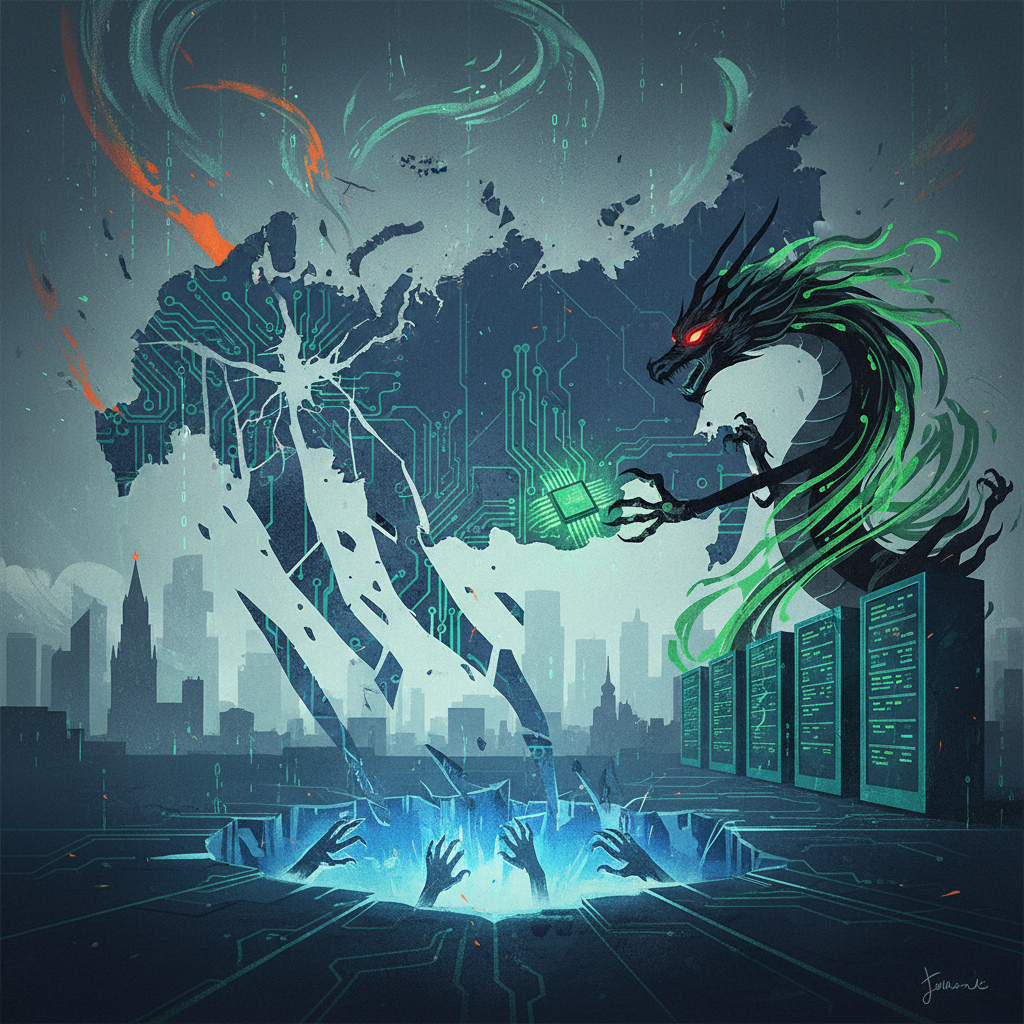
The intricate dance of global commerce, once characterized by open borders and interdependent supply chains, has devolved into a geopolitical ballet of sanctions and strategic decoupling. For Russia, a nation often at the epicenter of such shifts, the implications for its technological sovereignty, particularly in artificial intelligence, are profound and increasingly dire. We are witnessing not merely economic shifts, but a fundamental reordering of the digital world, with silicon becoming the new oil, and access to it, a matter of national security.
The official story doesn't add up for those who believe Russia can simply pivot to domestic production or readily available alternatives. The reality on the ground, for those of us observing the scientific and industrial landscape, is far more complex. The core issue lies in advanced semiconductor manufacturing, a domain dominated by a handful of players, primarily Tsmc in Taiwan, with critical intellectual property and equipment controlled by American and European firms. When the taps for these vital components are tightened or shut off, the ripple effect through an economy reliant on digital infrastructure is immediate and devastating.
Consider the fundamental building blocks of modern AI: graphics processing units, or GPUs. Companies like NVIDIA, AMD, and Intel, all subject to export controls, produce the high-performance chips essential for training large language models, powering data centers, and developing sophisticated AI applications. Without access to these, or comparable alternatives, Russia's ability to compete in the global AI race is severely hampered. This is not merely about consumer electronics; it is about the foundational infrastructure for future innovation, from advanced robotics to cybersecurity systems.
Dr. Elena Rybakova, a leading economist specializing in technology and trade at the Russian Academy of Sciences, articulated this challenge succinctly in a recent private seminar. "The notion that a nation can independently replicate decades of specialized semiconductor research and manufacturing within a few years, particularly under sanctions, is a fantasy," she stated. "The capital investment, the specialized knowledge, the global network of suppliers for even basic components, all are incredibly difficult to reconstruct in isolation. We are talking about billions of dollars and generations of expertise." Her assessment, often delivered with a pragmatic bluntness, underscores the immense hurdle.
The expert debate on this matter is bifurcated, often along predictable geopolitical lines. In the West, analysts frequently highlight Russia's increasing reliance on gray markets and parallel imports, often involving intermediaries in countries not participating in sanctions regimes. This provides a temporary, albeit expensive and unreliable, workaround. However, such channels are inherently limited in scale and often involve older generation technology, unsuitable for cutting-edge AI development. As reported by Reuters, the cost of acquiring components through these means can inflate prices by 50 percent or more, rendering many projects economically unviable or technologically obsolete before they even begin.
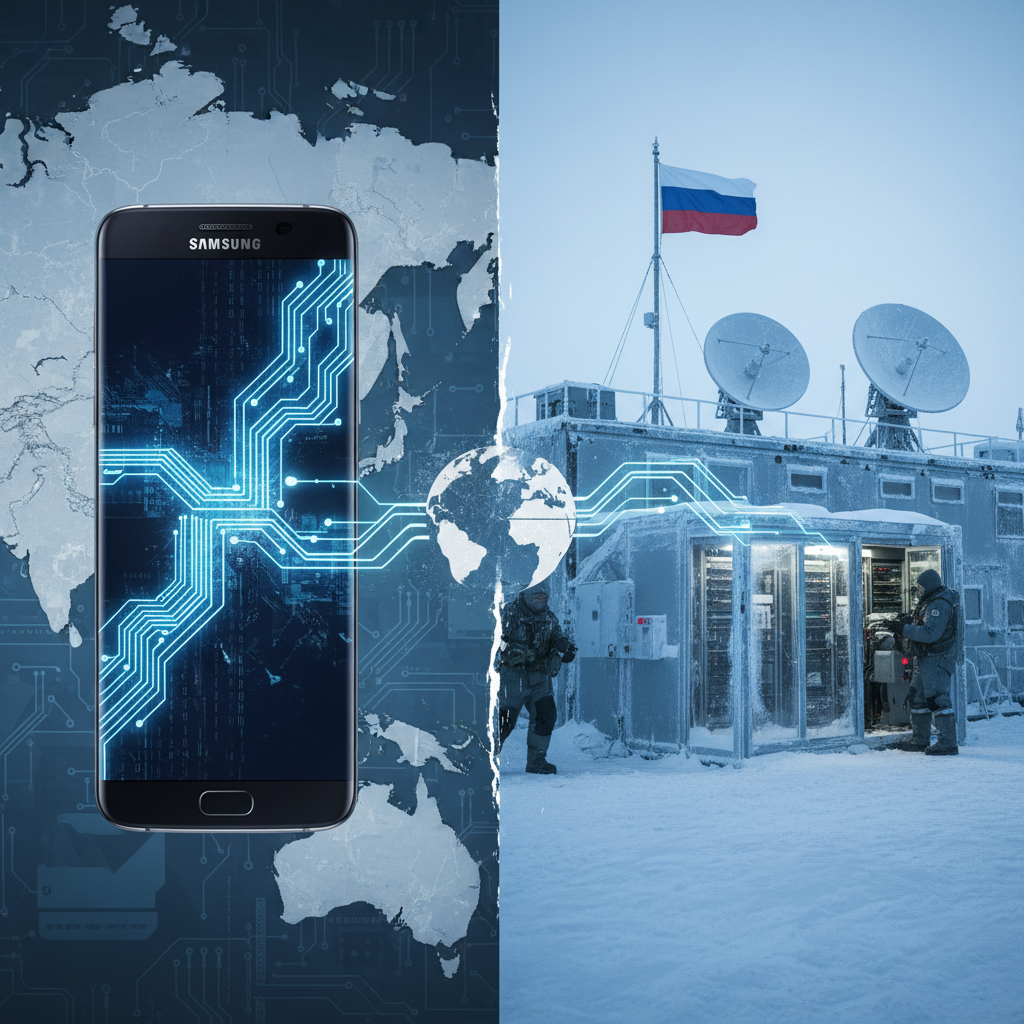
Conversely, some Russian officials and state-affiliated media present a narrative of resilience, emphasizing domestic development and cooperation with friendly nations. The focus often shifts to companies like Huawei, which itself has faced severe US sanctions, as a potential partner. Huawei's significant investments in its own chip design capabilities, particularly through its HiSilicon division, and its expertise in telecommunications infrastructure, present an attractive, if complex, alternative. Yet, even Huawei relies on a global supply chain for manufacturing and advanced tooling, a dependency that remains vulnerable to Western pressure. The idea that Huawei can fully insulate itself, and by extension, its partners, from this global web is optimistic at best.