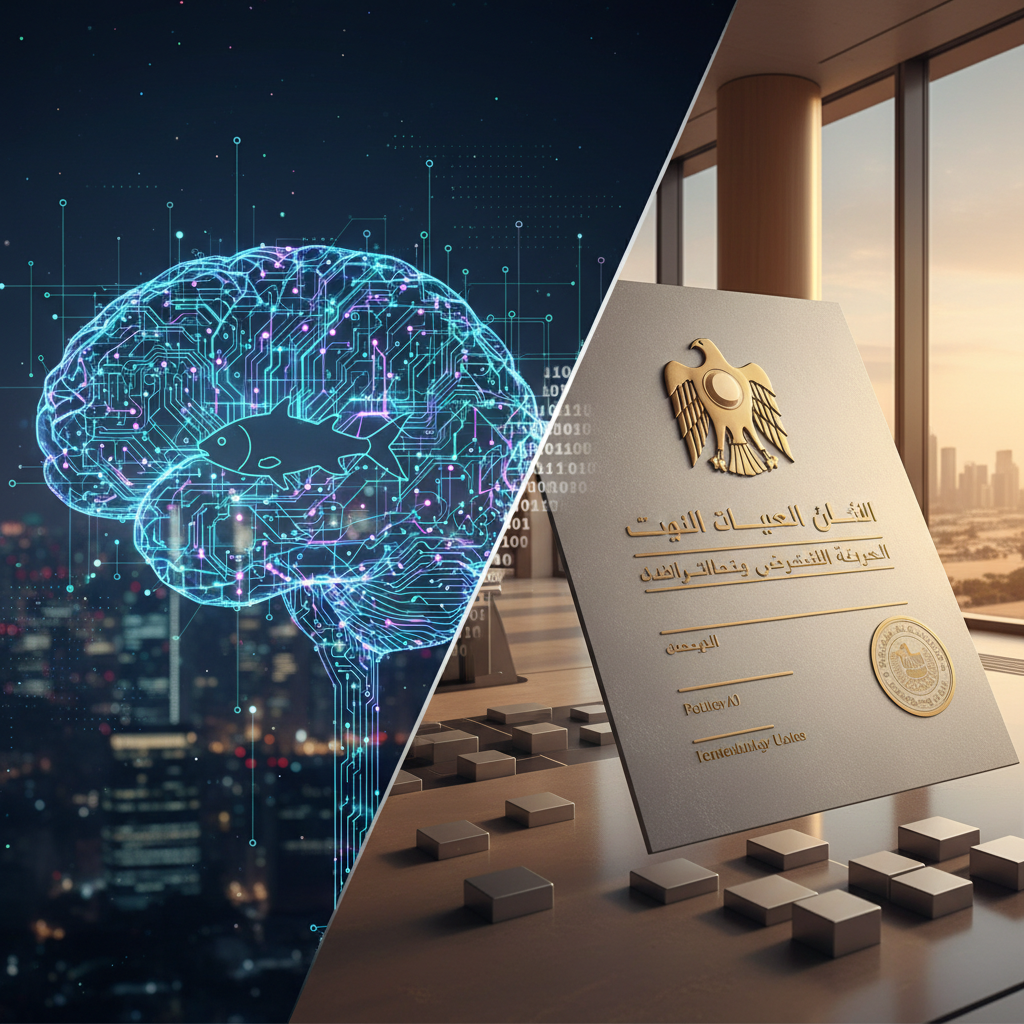

The global race for artificial intelligence supremacy is not merely about computational power or data volume; it is increasingly about the very methods by which AI is created and refined. In this evolving landscape, a Tokyo-based startup, Sakana AI, has emerged as a significant player, championing the use of evolutionary algorithms to 'breed' better AI models. This novel approach, which mimics natural selection to optimize AI architectures and parameters, presents both profound opportunities and complex governance questions, particularly for nations like the United Arab Emirates that are aggressively charting a course as a global AI hub.
The UAE's commitment to AI is not a fleeting trend; it is a foundational pillar of its long-term vision. With initiatives like the UAE National AI Strategy 2031 and significant investments in smart city infrastructure, the Emirates has consistently demonstrated a proactive stance on technological adoption and governance. The advent of techniques like those employed by Sakana AI, which allow for the autonomous generation and refinement of AI systems, compels a deeper examination of existing regulatory frameworks. The question is not if these advanced methods will arrive on our shores, but how we will integrate them responsibly.
The Policy Move: Adapting Governance to Autonomous AI Creation
The core challenge lies in governing AI systems that are not explicitly designed by human engineers in a traditional sense, but rather evolved through iterative, self-optimizing processes. Traditional AI governance often focuses on data input, model transparency, and human oversight in deployment. Evolutionary AI, however, introduces a layer of emergent complexity. How do you regulate an AI whose very architecture was not pre-determined, but rather discovered by another AI? This is the crux of the policy dilemma.
Recognizing this, the UAE's Ministry of Artificial Intelligence, Digital Economy, and Remote Work Applications, alongside entities like the Dubai Future Foundation, has initiated a series of consultations. These discussions aim to understand the implications of evolutionary AI and to formulate adaptive regulatory principles. The focus is on establishing guardrails that ensure safety, ethical alignment, and accountability, even as AI systems become more autonomous in their development. This proactive engagement reflects the nation's ethos; Dubai doesn't just adopt the future, it builds it.
Who's Behind It and Why: A Vision for Responsible Innovation
Behind this regulatory foresight are key figures within the UAE government and its burgeoning AI ecosystem. His Excellency Omar Sultan Al Olama, Minister of State for Artificial Intelligence, Digital Economy, and Remote Work Applications, has been a vocal proponent of balancing innovation with ethical considerations. In a recent address, he emphasized, “Our objective is not to stifle innovation, but to cultivate a fertile ground where advanced AI can flourish responsibly. We must anticipate the challenges posed by emergent AI paradigms, such as evolutionary algorithms, and integrate proactive governance into our national strategy.” This sentiment underscores a broader governmental consensus that technological leadership must be paired with robust ethical frameworks.
Industry leaders and academic institutions within the UAE are also deeply involved. The Mohamed bin Zayed University of Artificial Intelligence (mbzuai), for instance, is actively researching the interpretability and control of autonomously generated AI models. Dr. Eric Xing, President of Mbzuai, noted, “The black box problem intensifies when the black box itself is a product of an evolutionary process. Our research focuses on developing methodologies to understand, predict, and ultimately steer the behavior of such systems, providing critical insights for policymakers.” Their involvement ensures that policy is informed by cutting-edge scientific understanding.
What It Means in Practice: A New Regulatory Lens
For companies developing or deploying AI in the UAE, the evolving regulatory landscape will likely introduce new requirements. These may include: enhanced documentation of the evolutionary process itself, not just the final model; stress testing for emergent behaviors; and mechanisms for human intervention at various stages of an AI's evolution. The goal is to ensure that even self-optimizing systems adhere to national standards for data privacy, bias mitigation, and safety.
Consider a scenario where an evolutionary algorithm designs an AI for optimizing traffic flow in a smart city like Masdar. The regulatory framework would need to ensure that the evolved AI does not inadvertently create discriminatory patterns in traffic management or exhibit unpredictable behaviors that could compromise public safety. This necessitates a shift from regulating static AI models to governing dynamic, adaptive AI systems. This is what ambition looks like: preparing for scenarios that are still on the horizon for many other nations.
Industry Reaction: A Mix of Optimism and Caution
The industry's reaction to these nascent regulatory discussions has been varied. Many, particularly those operating within the UAE's innovation zones, appreciate the government's proactive approach. “The clarity provided by a well-defined regulatory environment is crucial for attracting and retaining top AI talent and investment,” stated a senior executive from a prominent Dubai-based AI firm, who preferred to remain anonymous due to ongoing consultations. “Uncertainty is the greatest impediment to innovation. The UAE’s willingness to tackle these complex issues head-on gives us confidence.”
However, some international players express concerns about potential over-regulation. There is a delicate balance between fostering innovation and imposing burdensome compliance requirements. Sakana AI, for its part, has been engaged in dialogues with various global regulatory bodies. Their co-founder, David Ha, has often spoken about the need for adaptable governance that understands the nuances of evolutionary AI. According to TechCrunch, companies like Sakana AI recognize that their methods necessitate new forms of oversight.
Civil Society Perspective: Ensuring Ethical Evolution
Civil society organizations and ethical AI advocates within the UAE are closely monitoring these developments. Their primary concern revolves around accountability and transparency. When an AI system evolves autonomously, attributing responsibility for its unintended consequences becomes more complex. “We must ensure that the human element of accountability is never lost, regardless of how sophisticated the AI becomes,” urged a representative from a local digital rights advocacy group. “The public needs assurance that these systems, however they are created, serve the common good and uphold fundamental rights.”
There is also a strong emphasis on preventing algorithmic bias. If an evolutionary algorithm is trained on biased data or given biased fitness functions, it could amplify existing societal inequalities. The UAE's diverse population makes this a particularly salient concern, necessitating robust mechanisms for fairness and equity in AI development and deployment. The MIT Technology Review has extensively covered the challenges of bias in AI, a problem exacerbated by emergent systems.
Will It Work? The UAE's Unique Position
Whether the UAE's approach to governing evolutionary AI will succeed depends on several factors. The nation's centralized governance structure, coupled with its long-term strategic vision and significant financial resources, provides a unique advantage. The UAE's AI strategy is decades ahead, allowing for a more cohesive and comprehensive regulatory response compared to more fragmented jurisdictions. The ability to rapidly pilot new regulations in free zones and special economic areas also offers a valuable testing ground.
Success will hinge on continuous dialogue between policymakers, industry, academia, and civil society. The regulatory framework must be agile enough to adapt as evolutionary AI techniques mature. Furthermore, international collaboration will be vital. As AI development transcends national borders, a harmonized approach to governance will ultimately benefit all. The UAE, with its global outlook and strategic partnerships, is well-positioned to contribute significantly to this global conversation. The journey to govern AI that learns to learn is just beginning, and the Emirates is determined to lead responsibly. For further insights into the global regulatory landscape, Reuters provides ongoing coverage of international AI policy developments.