
Let's be real, the numbers flying around in AI right now are wild. We're talking about companies like NVIDIA hitting a $2 trillion market cap faster than you can say 'GPU shortage.' OpenAI, Anthropic, xAI, they're all raising billions at valuations that make your head spin. It's got a lot of folks, especially the old guard, muttering about 'bubble' and 'dot-com bust 2.0.' But I'm here to tell you, from my perch in this great nation, this ain't your daddy's internet bubble. This is something fundamentally different, and its roots are digging deep into American soil, not just Silicon Valley. The future of AI is being built in places you'd never expect.
First, let's talk about the 'bubble' argument. The dot-com crash of the early 2000s was largely fueled by speculation on companies with little to no revenue, undefined business models, and often, just a fancy website. Pets.com, anyone? The infrastructure wasn't there, the user base was nascent, and the core technology, while promising, was still in its infancy. Fast forward to April 2026, and we're looking at AI. This isn't just about flashy websites or speculative clicks. This is about foundational technology, the kind that underpins everything from drug discovery to climate modeling, from personalized education to autonomous vehicles. The demand for AI compute, for instance, is not speculative, it's insatiable. Jensen Huang isn't selling vaporware; he's selling the literal engines of this new economy, and they're in high demand globally. "The underlying technology, the large language models and the compute infrastructure, is demonstrably delivering value today," noted Dr. Fei-Fei Li, co-director of Stanford's Institute for Human-Centered AI, in a recent interview. "This isn't just hype; it's a paradigm shift with tangible applications across every sector." That's a crucial distinction.
Technically speaking, the AI stack is far more robust than the internet infrastructure of the late 90s. We've got massive advancements in algorithms, like transformer architectures that power models like OpenAI's GPT-4 and Google's Gemini. We have unprecedented amounts of data, which these models feed on. And critically, we have the hardware, primarily GPUs from companies like NVIDIA, that can actually train and run these complex systems. The technical explanation for the current boom isn't just investor exuberance; it's a confluence of algorithmic breakthroughs, data availability, and computational power that has finally reached a critical mass. This allows for capabilities previously thought impossible, from generating human-quality text and images to accelerating scientific research. The 'product' isn't just a concept; it's a working, evolving, and increasingly powerful tool.
Now, the expert debate. You've got your permabears, of course. They point to the astronomical valuations, the rapid pace of funding rounds, and the fact that many AI startups are still pre-revenue or operating at a loss. They argue that the market is overestimating the speed of adoption and underestimating the regulatory hurdles and ethical complexities. "We're seeing a classic 'irrational exuberance' scenario," warned economist Nouriel Roubini, known for predicting the 2008 financial crisis, in a recent op-ed. "While AI is transformative, the current valuations reflect future potential discounted at an impossible rate, not present-day realities." He's not entirely wrong to be cautious; history offers plenty of lessons. But then you have folks like Marc Andreessen, who famously declared 'software is eating the world,' and now sees AI as the next, even bigger, wave. He'd tell you this isn't a bubble; it's the early innings of a technological revolution that will dwarf the internet in its impact. My take? It's both. There's undoubtedly froth, particularly in some of the more speculative corners, but the core engine of AI innovation is very, very real.
The real-world implications for the USA are where my optimism really kicks in. Forget the Valley, look at Atlanta, Detroit, Houston. These are the places where AI isn't just a buzzword, it's a tool for revitalization. In Atlanta, historically Black colleges and universities are becoming hubs for AI research and development, training a diverse workforce that will drive innovation. Companies like Google and Microsoft are investing in AI centers in cities like Chicago and Phoenix, creating high-paying jobs and fostering local tech ecosystems. We're seeing AI being deployed in hospitals in rural America to help diagnose diseases faster, in agricultural tech to optimize crop yields in the Midwest, and in urban planning to make our cities smarter and more equitable. This isn't just about big tech getting bigger; it's about democratizing access to powerful tools. Organizations like the National Urban League are exploring how AI can address systemic inequalities, from job placement to access to capital for minority-owned businesses. This is the real AI revolution.
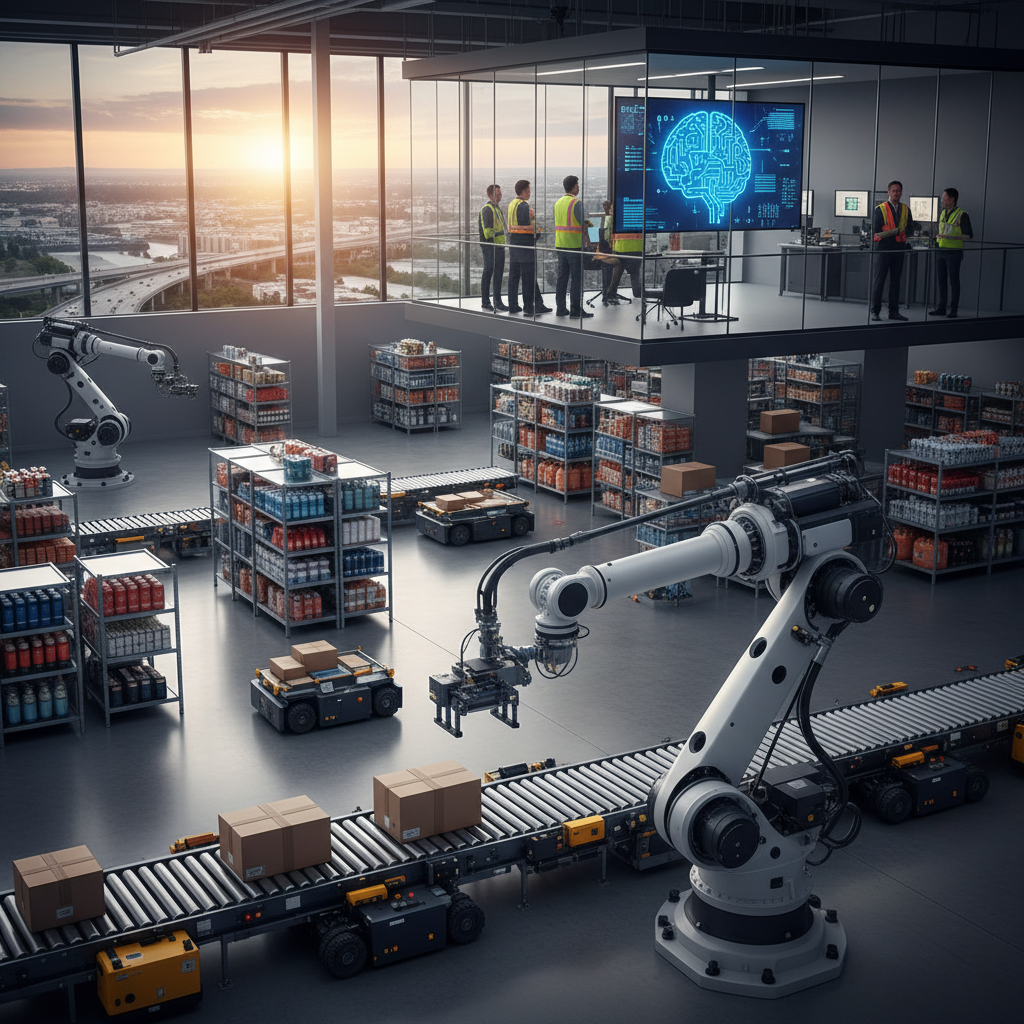
Consider the impact on manufacturing. In places like Detroit, where the auto industry is undergoing a massive transformation, AI is central to developing autonomous vehicles and optimizing production lines. This creates new types of jobs, requiring different skills, but it's a chance for these communities to re-establish themselves as leaders in a new industrial age. The potential for AI to enhance education, particularly in underserved communities, is also immense. Imagine AI tutors providing personalized learning plans for students in inner-city schools, or AI tools helping small businesses in neighborhoods like Harlem or South Central Los Angeles compete on a global scale. This isn't just wishful thinking; pilot programs are already showing promising results. According to a report by MIT Technology Review, investments in AI education initiatives are growing rapidly across the country, aiming to bridge the digital divide.
So, what should be done? First, we need to invest heavily in AI literacy and training across all demographics. This isn't just for computer science majors; it's for everyone. Community colleges, vocational schools, and non-profits need funding to offer accessible AI courses. Second, policymakers need to strike a balance between fostering innovation and ensuring responsible development. The calls for AI safety and ethical guidelines are not just academic; they are crucial for building public trust and preventing potential harms. We need clear, adaptable regulations that protect privacy, combat bias, and ensure accountability, without stifling the incredible potential of this technology. The debates around data governance and algorithmic transparency are vital, and they need to involve a diverse set of voices, not just those in the tech elite. Third, we must actively encourage investment and startup growth outside the traditional tech hubs. State and local governments can offer incentives, create incubators, and build partnerships with universities to cultivate local AI talent and companies. The opportunities are too vast, and the talent too widespread, to be confined to a few coastal cities.
This isn't a simple boom-and-bust cycle. It's a foundational shift, a re-wiring of our economy and society. Yes, there will be volatility. Some companies will fail, and some investments will go south. That's the nature of innovation. But the core technology, its capabilities, and its potential to uplift communities and solve some of our most pressing problems, that's not going anywhere. We're in the early chapters of a very long book, and I believe the story of AI in America, especially in our often-overlooked neighborhoods, is just beginning to unfold. We just need to make sure we're writing it together, with intention and inclusion. For more insights on the evolving AI landscape, check out TechCrunch's AI section. The conversation is moving fast, and we need to be ready to adapt and lead.