
The scent of ackee and saltfish was still lingering in the air from my breakfast, but the digital world was already serving up a fresh plate of absurdity. I was scrolling through Instagram, minding my own business, when I saw it again: a perfectly sculpted, impossibly flawless face hawking some luxury brand. Not a real person, mind you, but an AI creation. Another virtual influencer, with millions of followers, living a life of manufactured glamour that would make even the most seasoned celebrity publicist blush. And it got me thinking, what does this mean for us, for Jamaica, for our vibrant, breathing, sweating, singing, dancing, real creative economy?
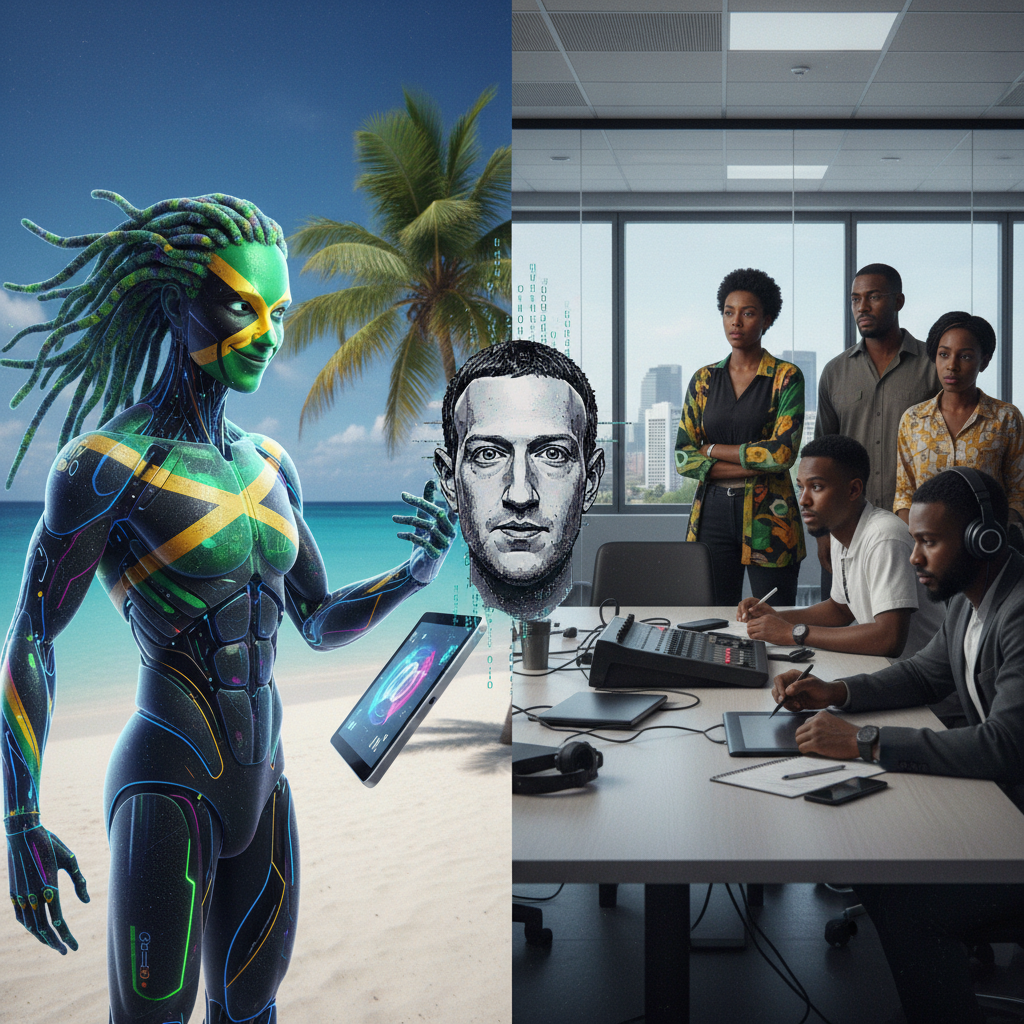
For too long, the tech world has seen the Caribbean as little more than a backdrop for luxury vacations or a source of cheap labor. But the Caribbean has entered the chat, and we're not just here for the sunshine. We're innovators, creators, and cultural powerhouses. Our music, our art, our fashion, our cuisine, these are not just commodities, they are expressions of our soul. So, when I see these AI influencers, these digital duppies, gaining traction and revenue that could, and arguably should, be going to human artists and brands, I get a little vexed.
Globally, the rise of virtual celebrities is no joke. Companies like Brud, the creator of the infamous Lil Miquela, have shown that these digital entities can command serious attention and advertising dollars. Lil Miquela, for instance, reportedly generates millions annually through brand partnerships with giants like Calvin Klein and Prada. Data from Statista indicates that the global virtual influencer market, while still nascent, is projected to grow significantly, with some estimates putting its value in the billions by the end of the decade. This isn't just a quirky trend, it's a burgeoning industry, and it's siphoning off marketing budgets that once went to flesh-and-blood talent.
Here in Jamaica, our creative industries are a vital part of our economy. From reggae and dancehall artists who tour the world, to fashion designers showcasing at international events, to artisans crafting unique pieces, our human talent is our gold. The Ministry of Culture, Gender, Entertainment and Sport has long championed the creative sector as a key driver for economic growth. But how do you compete with an AI that never sleeps, never has a bad hair day, and can be infinitely replicated and adapted to any marketing campaign? It's like trying to out-sing a perfectly tuned auto-tune machine, but with your livelihood on the line.
Take, for example, the local music scene. Our artists, many of whom are independent, rely heavily on brand endorsements and social media presence to connect with fans and secure income. Now imagine a major beverage company, instead of sponsoring a rising dancehall star, decides to create an AI avatar that embodies 'Caribbean cool' and promotes their product. It's cheaper, less risky, and infinitely controllable. The immediate impact on a real artist's bottom line could be devastating. This isn't just about losing a gig; it's about the erosion of opportunities for human expression and economic independence.
Companies like Meta, with its vast reach and investment in AI, are at the forefront of this virtual reality push. Mark Zuckerberg, Meta's CEO, has spoken extensively about the metaverse and the potential for digital identities. While the vision is grand, the ground-level impact on industries like ours needs a closer look. Are these platforms creating new opportunities for Jamaican creatives, or are they inadvertently paving the way for their displacement by synthetic alternatives? It's a question worth asking, especially when we consider the historical power imbalances in global commerce.
Some might argue that AI influencers open new avenues for creativity, allowing artists to design and manage their own virtual personas. And yes, there's a niche for that. But the overwhelming trend is towards corporate-owned, mass-produced digital faces. This isn't about empowering the individual artist; it's about optimizing marketing spend for large corporations. And when those corporations decide to cut out the human middleman, our local talent feels the pinch directly.
I spoke with Dr. Janice Miller, a cultural economist at the University of the West Indies, Mona Campus. She put it plainly: "Jamaica's creative industries thrive on authenticity and human connection. Our artists tell stories, they embody struggles and triumphs, they are real. An AI model, no matter how sophisticated, cannot replicate that lived experience. The danger is not just economic, it's cultural. We risk diluting the very essence of what makes Jamaican creativity so powerful and unique." Her point is well taken. Our culture is not just content; it is a way of life, a history, a spirit.
The data on adoption rates for AI in marketing is telling. A recent report by Reuters indicated that over 60% of marketing executives globally are exploring or actively implementing AI tools in their campaigns, with a significant portion looking at content generation and influencer marketing. While specific figures for AI influencer adoption in Jamaica are scarce, the global trend suggests it's only a matter of time before these digital personas become commonplace in our local advertising landscape. The ROI for brands is often cited as a key driver: lower costs, 24/7 availability, and complete brand message control.
So, what's a small island nation with big ideas to do? We can't put the genie back in the bottle, or rather, the AI back in the server farm. But we can adapt. Our creatives need to leverage AI as a tool, not just fear it as a competitor. Imagine Jamaican artists using AI to enhance their own work, create unique digital experiences, or even develop their own authentic virtual avatars that are extensions of their real-world brand, not replacements. This means investing in digital literacy, providing access to AI tools, and fostering a culture of technological adoption within our creative sectors.
The government and private sector also have a role to play. Policies that protect human intellectual property in the age of AI are crucial. Funding for local tech incubators that focus on creative AI applications could empower our artists. We need to ensure that as the world embraces these virtual entities, our human talent isn't left behind, scrambling for crumbs. Jamaica's tech scene is like reggae, it'll surprise you, and we have the ingenuity to navigate these choppy digital waters.
The conversation isn't about rejecting technology; it's about ensuring that technology serves humanity, not the other way around. It's about preserving the soul of our culture while embracing the tools of the future. Otherwise, we risk a future where the most celebrated voices aren't human, and the most vibrant cultures are just algorithms. And that, my friends, would be a tragedy far greater than any digital duppy could conjure. We must ensure that the rhythm of real life, the beat of our heart, continues to resonate louder than any computer-generated sound byte. The stakes are too high for us to simply watch from the sidelines. We need to shape this future, not just react to it. For more on the broader implications of AI in creative fields, you might want to check out articles on Wired.