
Alright, folks, gather 'round, because I have been out on the road, hitting up some of Amazon's latest fulfillment centers here in the good ol' USA, and what I witnessed is nothing short of mind-blowing. We are talking about a revolution, not just in how we get our next-day delivery, but in the very fabric of American commerce. Forget everything you thought you knew about warehouses, because Amazon, under the visionary leadership of CEO Andy Jassy, is using artificial intelligence and robotics to create something straight out of a sci-fi movie, and it is happening right now, in your backyard.
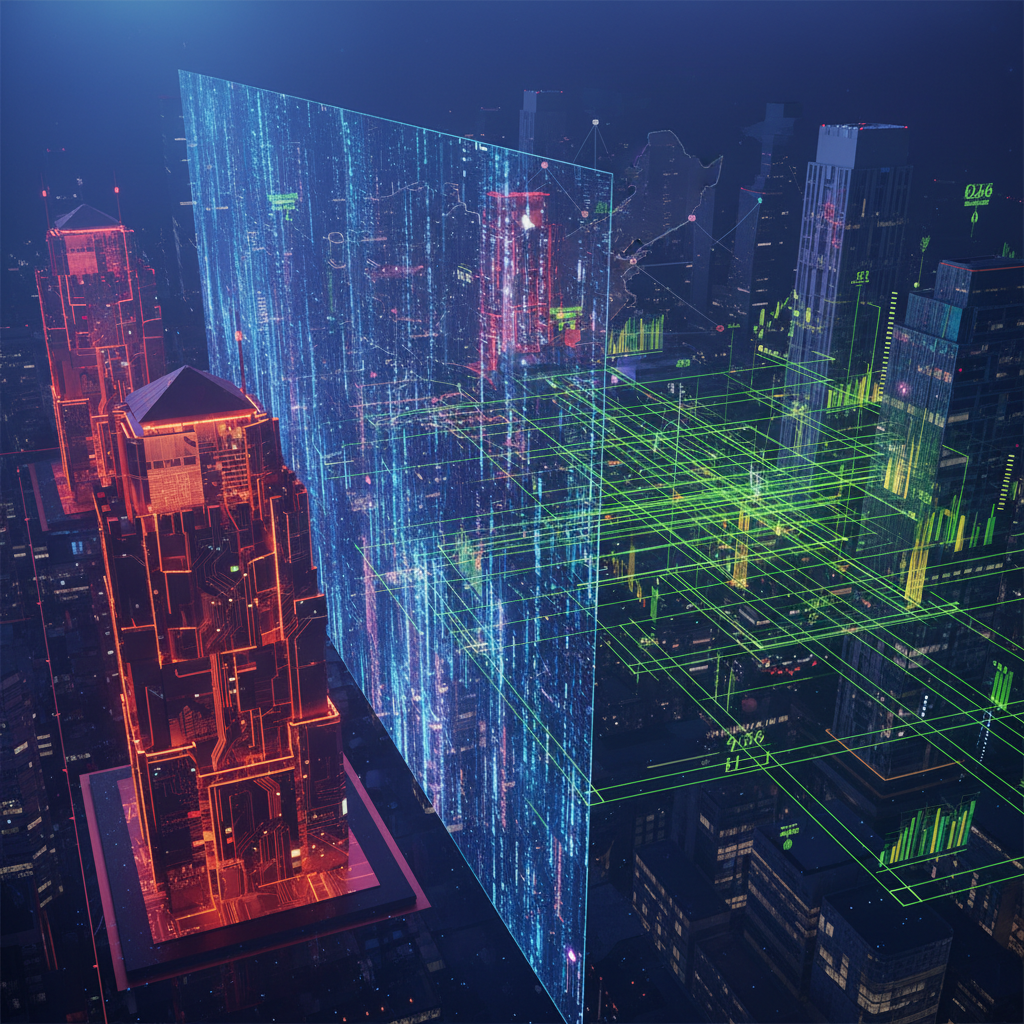
For years, we have heard whispers about automation, about robots taking over jobs. But what Amazon is doing is so much more sophisticated, so much more integrated, than simple automation. They are building an intelligent organism, a sprawling network of AI-powered systems that learn, adapt, and optimize every single step of the supply chain, from the moment a product leaves a factory to the second it lands on your porch. This is going to change everything, and it is a testament to American ingenuity meeting cutting-edge technology.
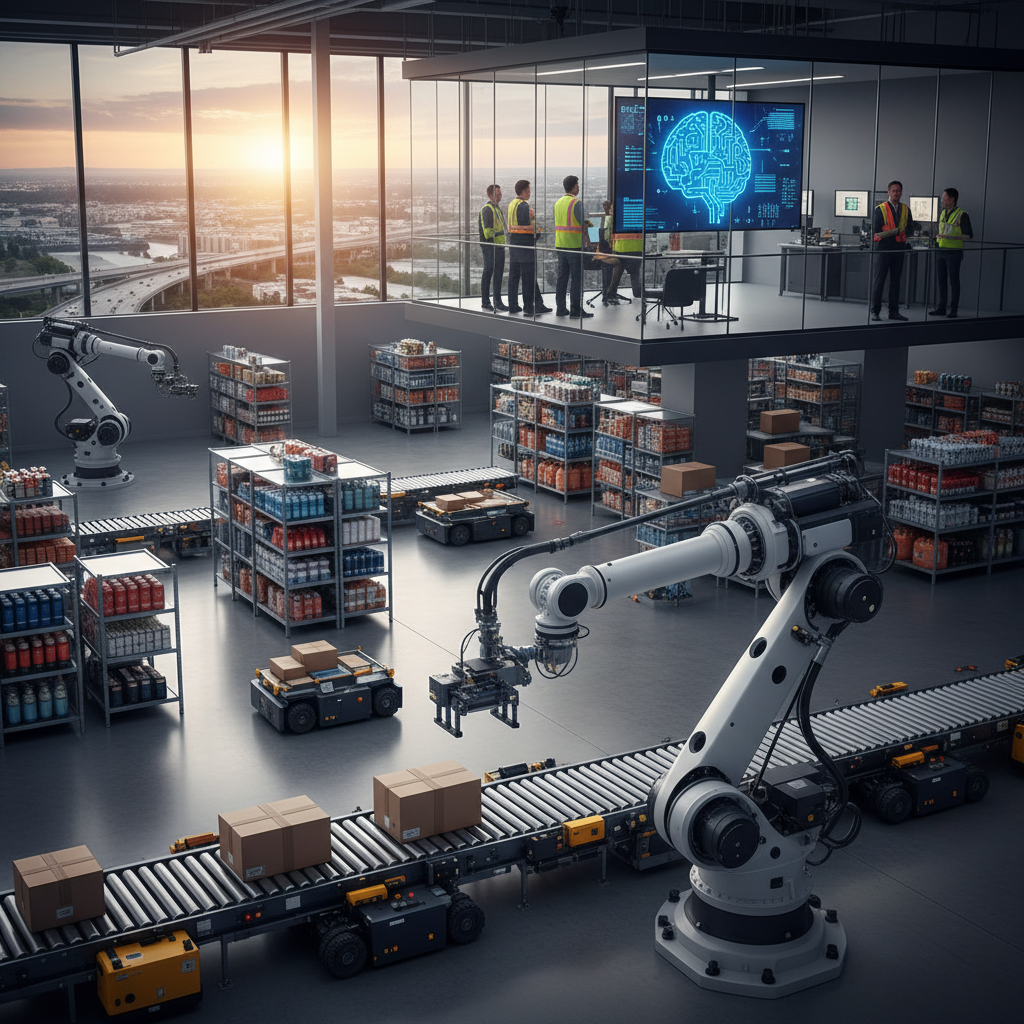
Imagine a massive warehouse, a facility so vast it could swallow a dozen football fields, humming with activity. But it is not just people scurrying around. It is an intricate dance of robotic arms, autonomous mobile robots, and sophisticated AI algorithms making decisions at lightning speed. These aren't just dumb machines following commands; they are intelligent agents, constantly communicating, predicting, and adjusting. They are the unsung heroes making sure your new smart speaker or that last-minute birthday gift arrives precisely when you expect it.
I recently spoke with Dr. Tye Brady, Chief Technologist at Amazon Robotics, and his enthusiasm was infectious. He told me, "Our goal isn't just speed, it's precision and safety. AI allows our systems to anticipate demand, optimize storage, and route packages with an efficiency that was unimaginable a decade ago. It's about augmenting human capability, not replacing it entirely." That really stuck with me. It is not about replacing people with robots, it is about making the entire operation smarter, safer, and more efficient for everyone involved. It is a partnership, a collaboration between human intelligence and artificial intelligence.
One of the most fascinating aspects is how Amazon is deploying a diverse fleet of robots. You have the familiar Kiva robots, now known as Amazon Robotics drives, zipping across floors, bringing shelves of products to human pickers. But now, they are joined by newer models like the Proteus, an autonomous mobile robot designed to handle heavy carts and move them around the facility without human guidance. Then there is the Sparrow robot, a nimble robotic arm that can identify, select, and handle individual items, even delicate ones, with incredible accuracy. And let us not forget the Digit humanoid robot, a bipedal bot from Agility Robotics, which Amazon is piloting to work alongside human employees, performing repetitive tasks like moving empty totes. It is like a whole new ecosystem of mechanical marvels.
This isn't just about cool tech, though. It has real-world implications for consumers across the USA. Think about it: faster delivery times, lower shipping costs, and a more reliable supply chain, especially during peak seasons like the holidays. When I was growing up in the Midwest, waiting a week for a package was normal. Now, if it is not here tomorrow, we are wondering what is up! That expectation shift is powered by this AI and robotics backbone. According to reports, Amazon invested over $1 billion in robotics and AI research and development in 2023 alone, a clear signal of their commitment to this future. Reuters has been tracking these investments closely, noting the competitive edge they provide.
But what about the human element? That is always the big question, right? Amazon says these technologies are creating new types of jobs, roles focused on robotics maintenance, AI supervision, and system optimization. They are investing in training programs to upskill their workforce, preparing them for these new roles. It is a transition, for sure, and one that requires careful management, but the potential for growth and innovation is immense. It is like when the internet first came out; everyone worried about jobs, but it created a whole new economy.
Consider the impact on cities and towns across America. Amazon's fulfillment centers are massive economic engines, bringing jobs and infrastructure. With AI-powered logistics, these centers become even more critical hubs, integrating seamlessly into the national transportation network. From the port of Los Angeles to the distribution centers in Kentucky, and then onto the delivery vans in your neighborhood, AI is the invisible hand guiding the entire operation. It is a complex ballet, and the conductor is artificial intelligence.
This isn't just about Amazon's bottom line, either. The innovations they are pioneering are pushing the entire logistics industry forward. Other companies are watching, learning, and adapting. The competition to deliver faster, more efficiently, and more sustainably is heating up, and that ultimately benefits us, the consumers. It is a rising tide that lifts all boats, or in this case, delivers all packages.
As I walked through one of their facilities in Ohio, seeing the robots glide silently, the robotic arms precisely picking items, and the whole system operating with such seamless efficiency, I could not help but feel a surge of excitement. This is not just a glimpse into the future; it is the future arriving, piece by piece, package by package. The sheer scale and sophistication of it all are truly remarkable. It makes you realize how quickly technology is advancing, and how much potential there is to solve complex problems.
This transformation is not without its challenges, of course. Data privacy, ethical considerations in AI deployment, and ensuring a just transition for workers are all crucial conversations we need to keep having. But the underlying technological advancements are undeniably powerful. The integration of AI and robotics at this level is a game changer, not just for Amazon, but for the entire global supply chain, and particularly for the American economy. MIT Technology Review often highlights the broader societal implications of such large-scale technological shifts, and this is certainly one of them.
So, the next time you click that 'buy now' button and your package shows up at your door almost magically, take a moment to appreciate the incredible, intelligent network of AI and robots that made it happen. It is a testament to human ingenuity, and a thrilling peek into the future of how we live, shop, and connect. The future is here, it is automated, and it is delivering right to you. And honestly, it is pretty darn cool.