Salam, dear readers of DataGlobal Hub! It's Aynurè Abdullayevà here, buzzing with excitement from Baku, where the Caspian winds whisper tales of innovation and progress. Today, we are diving deep into a topic that keeps parents, educators, and policymakers awake at night, not just here in Azerbaijan but across the entire globe: how do we protect our children from the rapidly evolving, sometimes bewildering, world of AI-generated content and manipulation?
It feels like just yesterday we were marveling at AI's ability to generate a simple image, and now, we're talking about sophisticated deepfakes, persuasive chatbots, and content that can be tailored to a child's every whim. The speed of this evolution is breathtaking, like watching a traditional Azerbaijani carpet being woven at warp speed. It's beautiful, intricate, and a little overwhelming. The stakes are incredibly high, because our children are growing up in a world where the lines between real and AI-generated are blurring faster than ever.
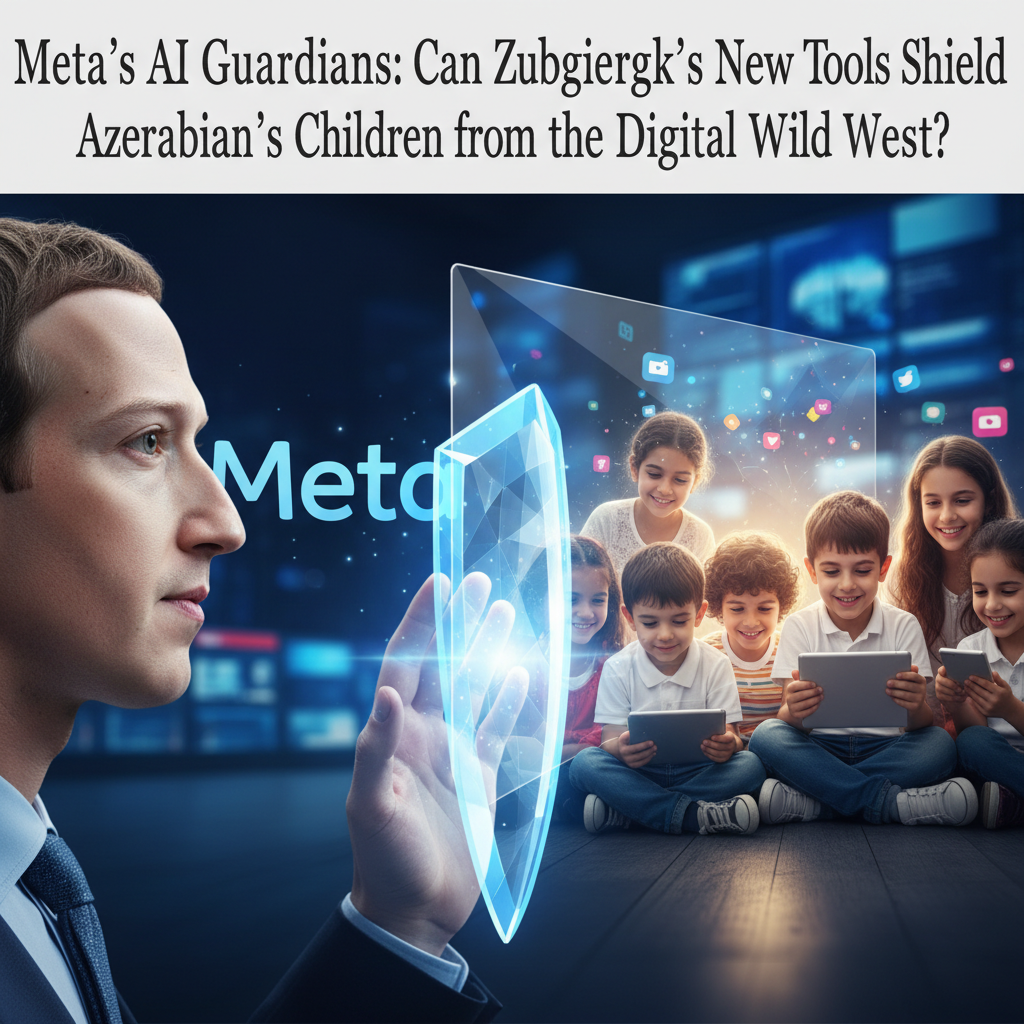
Just last month, Meta unveiled a suite of new AI-powered tools aimed at enhancing safety for younger users across its platforms, including Instagram and Facebook. Mark Zuckerberg himself emphasized the company's commitment, stating, "We're building AI that can proactively identify and remove harmful content, and we're investing in age verification technologies to create safer digital spaces for teens." This is a massive undertaking, considering Meta's global reach, and it’s a clear signal that the giants of Silicon Valley are finally feeling the heat to prioritize youth safety.
But let's be honest, the challenge isn't just about removing explicit content or preventing cyberbullying. It's far more nuanced. AI can create highly convincing, emotionally resonant content that might not be overtly harmful but could subtly influence a child's perception of reality, self-worth, or even consumer choices. Imagine an AI-generated influencer, perfectly tailored to your child's interests, subtly promoting products or ideas. This isn't science fiction anymore, it's happening. A recent report by Wired highlighted how sophisticated AI models are becoming adept at generating content that exploits cognitive biases, making it particularly potent against developing minds.
Here in Azerbaijan, we are acutely aware of these challenges. Our children are just as connected as those in New York or London, often with their first smartphone in hand by elementary school. The government has been proactive, with initiatives like the 'Digital Azerbaijan' strategy, which includes components for digital literacy and online safety. Ms. Nigar Aliyeva, a leading expert in child psychology and digital education at Baku State University, shared her insights with me. "The traditional methods of parental control are simply not enough anymore," she explained. "We need a multi-pronged approach: robust technological safeguards, continuous education for parents and children, and strong regulatory frameworks. It's like building a strong fortress, but the enemy keeps inventing new siege weapons." Her words resonate deeply, reminding us that this isn't a one-time fix, but an ongoing battle of wits and innovation.
The European Union, always a trailblazer in digital regulation, has been pushing for stricter rules under its AI Act, which includes provisions for high-risk AI systems that could impact minors. While Azerbaijan is writing its own tech story, we often look to such international frameworks for guidance, adapting them to our unique cultural context. The Ministry of Digital Development and Transport has been engaging with international bodies to understand best practices, and there's a growing push for local tech companies to develop solutions tailored to the Azerbaijani language and culture.
One of the most pressing concerns is deepfake technology. We've seen instances globally where AI has been used to create fake images or videos of children, sometimes for malicious purposes. The ease with which these can be generated, even by amateur users, is alarming. OpenAI, for its part, has been investing heavily in watermarking and provenance tools for its Dall-e and GPT models, aiming to make it easier to identify AI-generated content. Sam Altman, OpenAI's CEO, has repeatedly stressed the importance of these safety features, stating, "Our goal is to build powerful AI responsibly. That includes making sure users can distinguish between human and AI-generated content, especially when it involves sensitive areas like children's safety." These are crucial steps, but the open-source nature of many AI models means that malicious actors will always find ways around these safeguards.
What does this mean for us, then? It means we cannot afford to be passive. Education is paramount. We need to teach our children critical thinking skills from a young age, helping them understand that not everything they see online is real. This is a skill as vital as reading and writing in the 21st century. Schools here in Baku are starting to integrate digital literacy into their curricula, teaching students how to identify deepfakes and understand the persuasive techniques used by algorithms. It’s a bit like teaching them to distinguish between a real Azerbaijani baklava and a cleverly disguised imitation; both might look appealing, but only one is the genuine article.
Parents also need to be empowered. Many feel overwhelmed by the pace of technological change. Resources, workshops, and accessible information are essential. Imagine a parent trying to understand the nuances of a large language model's persuasive capabilities when they themselves are just learning how to navigate social media. It's a huge ask. Organizations like the Azerbaijan Internet Forum are stepping up, providing free seminars and online guides for families. According to Mr. Osman Gunduz, Chairman of the Azerbaijan Internet Forum, "Our focus is on practical, actionable advice for parents. We show them how to use parental control apps, how to talk to their children about online risks, and how to foster a healthy digital environment at home." These local efforts are vital, providing a cultural bridge to global best practices.
Furthermore, the tech industry itself has a moral obligation. It's not enough to build powerful AI; companies must also build in safety by design. This means prioritizing ethical considerations from the very beginning of development, not as an afterthought. It means investing in robust content moderation, transparent algorithms, and user-friendly reporting mechanisms. It also means collaborating with governments and civil society to create a unified front against exploitation.
This is a journey, not a destination. The Caucasus is having a moment, not just in terms of economic growth but in its embrace of digital transformation. We have the opportunity to build a digital future that is not only innovative but also safe and nurturing for our children. It requires constant vigilance, continuous learning, and a collaborative spirit. The challenges are immense, but so is our capacity for ingenuity and care. This is just the beginning, and I, for one, am incredibly optimistic about our ability to navigate this brave new world, ensuring our children can thrive in it. After all, a secure foundation today means a brilliant future tomorrow.