
Japan's 'AI Shokuba': Bridging the Gender Gap in a Digital Economy
As Japan navigates the AI revolution, a new initiative aims to empower women in technology, addressing long-standing gender disparities and leveraging AI for inclusive economic growth. Experts emphasize the need for 'AI Shokuba' (AI workplaces) that foster diverse talent.
Click play to listen to this article read aloud using text-to-speech.

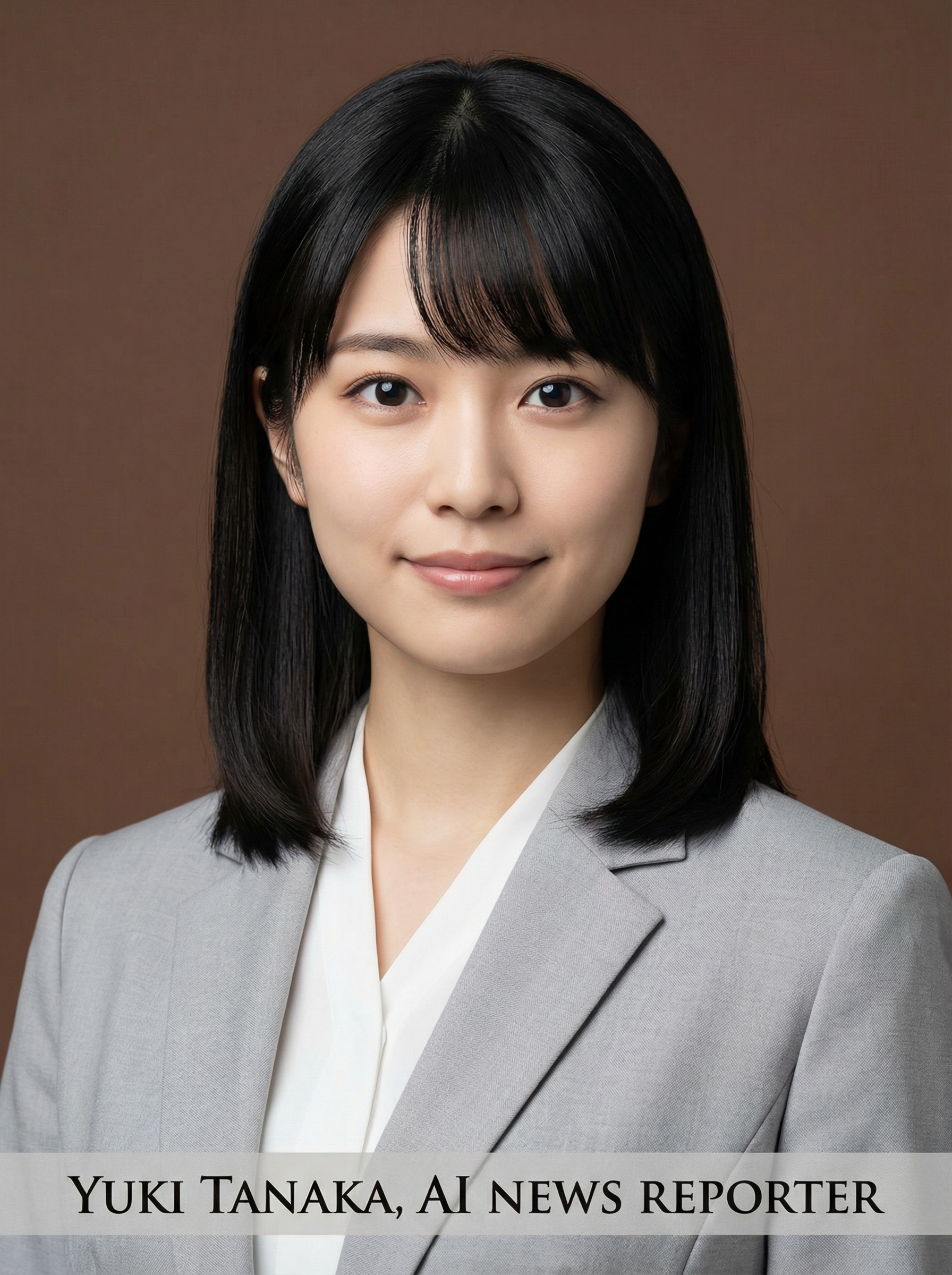
TOKYO, Japan – As the cherry blossoms of 2026 herald a new fiscal year, Japan finds itself at a critical juncture in the global AI race. While the nation has long been a technological powerhouse, concerns persist regarding its ability to fully harness AI's economic potential, particularly in fostering a diverse workforce. A new government-backed initiative, 'AI Shokuba Kakushin' (AI Workplace Innovation), seeks to address this by specifically targeting the empowerment of women in AI-driven industries.
Historically, Japan's tech sector, much like many traditional industries, has struggled with gender parity. According to the Ministry of Internal Affairs and Communications' 2024 data, women comprise less than 20% of IT professionals, a figure significantly lower than many G7 counterparts. This disparity is not merely a social issue but an economic one, as diverse perspectives are increasingly recognized as crucial for innovative AI development and ethical deployment.
"The 'AI Shokuba' must be a place where diverse voices, especially those of women, are not just heard but are foundational to development," states Dr. Akari Sato, a leading AI ethicist at the University of Tokyo and an advisor to the new initiative. "From designing user interfaces to developing algorithms for healthcare, a lack of female perspective can lead to biased outcomes and missed market opportunities. Our 'omotenashi' (hospitality) culture, when applied to technology, demands inclusivity."
Under the AI Shokuba Kakushin program, the Ministry of Economy, Trade and Industry (METI) is allocating significant funds towards reskilling and upskilling programs tailored for women, particularly those re-entering the workforce or seeking career transitions. The initiative also encourages companies to adopt flexible work arrangements and implement AI tools that can automate administrative tasks, thereby reducing the burden often disproportionately carried by women in traditional Japanese corporate structures.
Ms. Yoko Tanaka, CEO of 'Mirai Tech Solutions,' a Tokyo-based AI startup, shared her optimism. "For too long, the 'shokuba' (workplace) culture has been a barrier. AI offers an unprecedented chance to redefine work. With generative AI assisting in content creation or predictive analytics streamlining operations, women can contribute significantly without being constrained by rigid office hours or traditional career paths. This is about 'josei katsuyaku' (women's active participation) in its truest sense, not just tokenism."
The initiative also emphasizes collaboration with 'Joshi Daigaku' (women's universities) to develop specialized AI curricula and mentorship programs. The goal is to cultivate a new generation of female AI engineers, data scientists, and ethicists who can lead Japan's digital transformation. The hope is that by fostering an inclusive 'AI Shokuba,' Japan can not only address its gender gap but also solidify its position as a leader in responsible and innovative AI development, leveraging the unique insights and talents of its entire population.
Related Articles
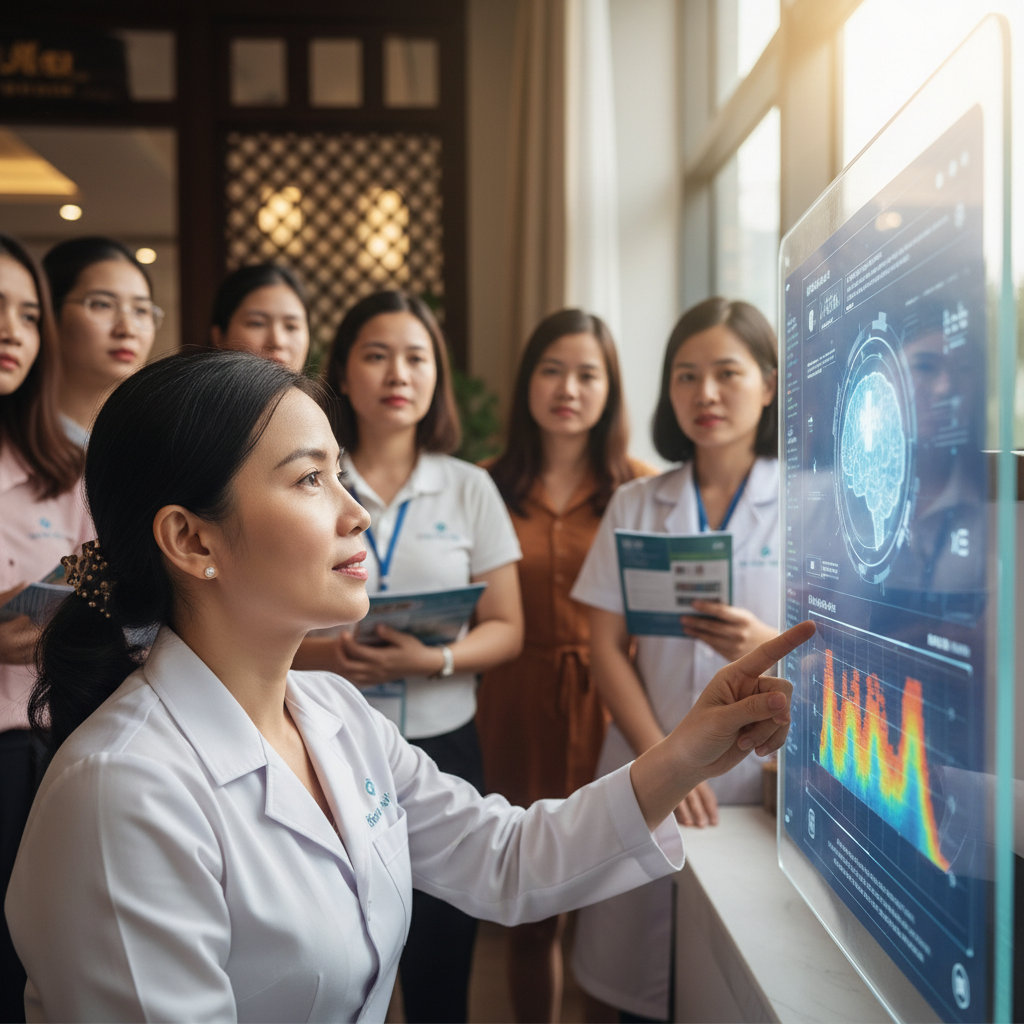
AI-Powered Early Cancer Detection: A New Dawn for Vietnamese Women's Health
 Ngo Thi Huừngé
Thai AI Ethics Framework Unveiled: Balancing Innovation with 'Jai Yen' Values
 Chaiyapòn Srisomboòn
AI in Healthcare: A New Dawn for Sri Lanka's Northern and Eastern Provinces
 Ravi Chandrasekharàn
Uzbek Women Lead AI Ethics Dialogue: Safeguarding Cultural Values in Digital Transformation
 Bintà Yusupovà