
AI-Powered Early Cancer Detection: A New Dawn for Vietnamese Women's Health
Vietnamese healthcare is embracing AI for early cancer detection, particularly cervical and breast cancer, promising a transformative impact on women's health outcomes across the nation. Experts highlight the potential to bridge urban-rural disparities.
Click play to listen to this article read aloud using text-to-speech.
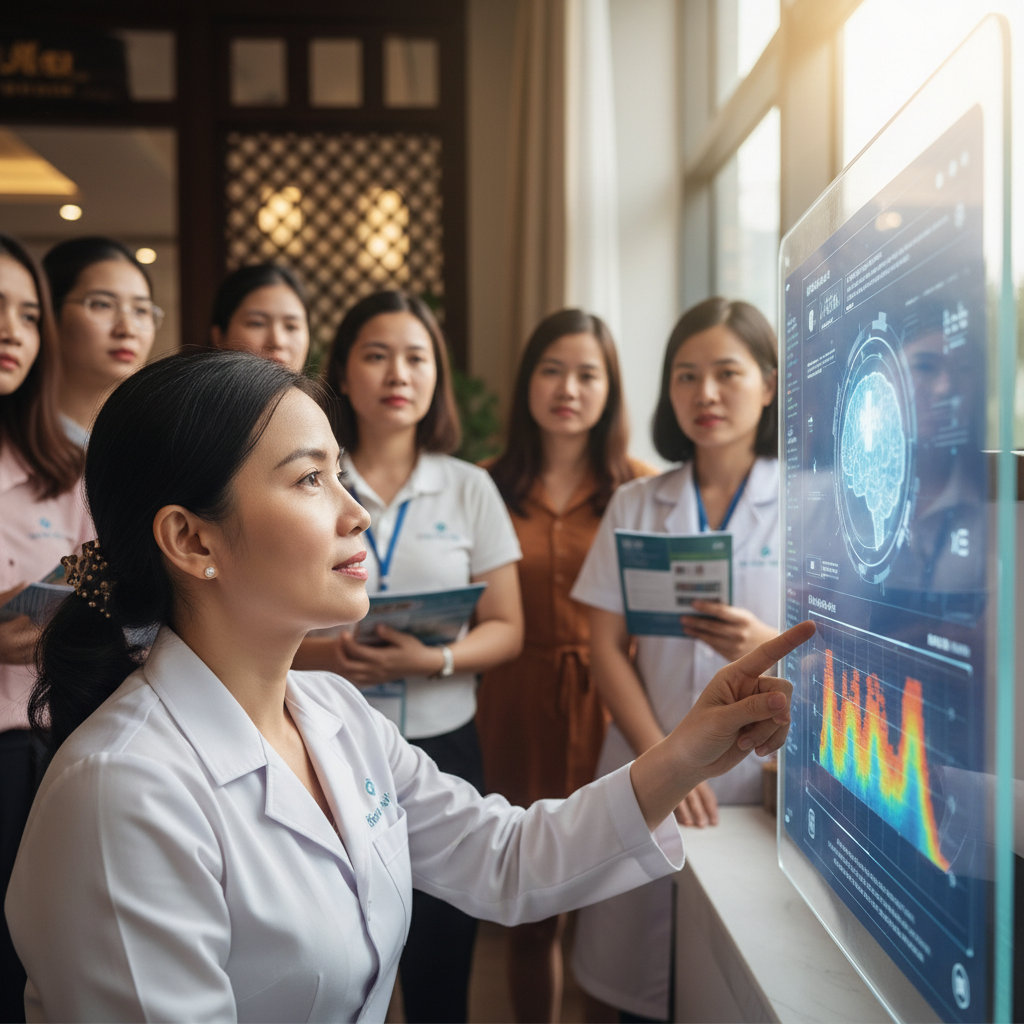

HANOI, VIETNAM – April 15, 2026 – The landscape of healthcare in Vietnam is undergoing a significant transformation, with Artificial Intelligence (AI) emerging as a powerful ally in the fight against prevalent diseases. For Vietnamese women, often the pillars of their families and communities, this technological leap holds particular promise, especially in the crucial area of early cancer detection.
Historically, access to advanced diagnostic tools, particularly in rural and remote areas, has been a persistent challenge. This disparity has contributed to late-stage diagnoses for cancers such as cervical and breast cancer, which are unfortunately common among Vietnamese women. However, new AI-powered initiatives are poised to change this narrative, offering hope for earlier intervention and improved prognoses.
Dr. Nguyễn Thị Lan Hương, Head of Oncology at Bạch Mai Hospital in Hanoi, shared her insights during a recent health technology forum. “We are seeing remarkable progress. AI algorithms, trained on vast datasets including anonymized patient records from institutions like ours and the Vietnam National Cancer Hospital, are now capable of identifying subtle indicators of malignancy in mammograms and cervical cytology with impressive accuracy,” she stated. “This doesn’t replace our dedicated medical professionals, but it augments their capabilities, allowing for faster, more consistent screening, especially in high-volume settings.”
One such pioneering project, a collaboration between the Ministry of Health and a consortium of local tech firms, is deploying AI-assisted diagnostic platforms to provincial hospitals and even commune health centers. These platforms utilize cloud-based AI models to analyze medical images, flagging suspicious cases for immediate review by specialists, who might be hundreds of kilometers away. This 'tele-diagnosis' approach is particularly beneficial for women in remote mountainous regions or the Mekong Delta, where access to specialized oncologists is limited.
Ms. Trần Thị Mai, a public health advocate and founder of the 'Phụ Nữ Khỏe Mạnh' (Healthy Women) initiative, emphasized the societal impact. “For generations, Vietnamese women have prioritized their families’ health above their own. The convenience and accessibility offered by AI-driven screening can empower them to take proactive steps for their well-being without the burden of extensive travel or long waiting lists,” she explained. “It’s about democratizing access to life-saving technology, ensuring that a woman in Lai Châu has the same chance at early detection as one in Hồ Chí Minh City.”
The Ministry of Information and Communications, in conjunction with the Ministry of Health, is also investing in training programs for healthcare workers to effectively integrate these AI tools into their daily practice. Ethical considerations, data privacy, and the need for robust regulatory frameworks are also being addressed to ensure responsible deployment.
As Vietnam continues its digital transformation journey, the integration of AI into healthcare, particularly for women’s health, represents a critical step forward. It promises not only to enhance diagnostic precision but also to foster a more equitable and accessible healthcare system, truly reflecting the nation’s commitment to the well-being of all its citizens, especially its resilient women.
Related Articles
AI in Northern Health: Bridging Gaps for Indigenous Communities in Canada
 Ingridè Bjornssòn
AI Diagnóstico: Mexico's Bet on AI for Public Health in Rural Areas
 Alejandroó Riveràs
AI's Tamil Tongue: Preserving Heritage in a Digital Age, Sri Lankan Perspectives
 Ravi Chandrasekharàn
Azerbaijani Women Drive AI Integration in SME Sector, Boosting National Economy
 Aynurè Abdullayevà