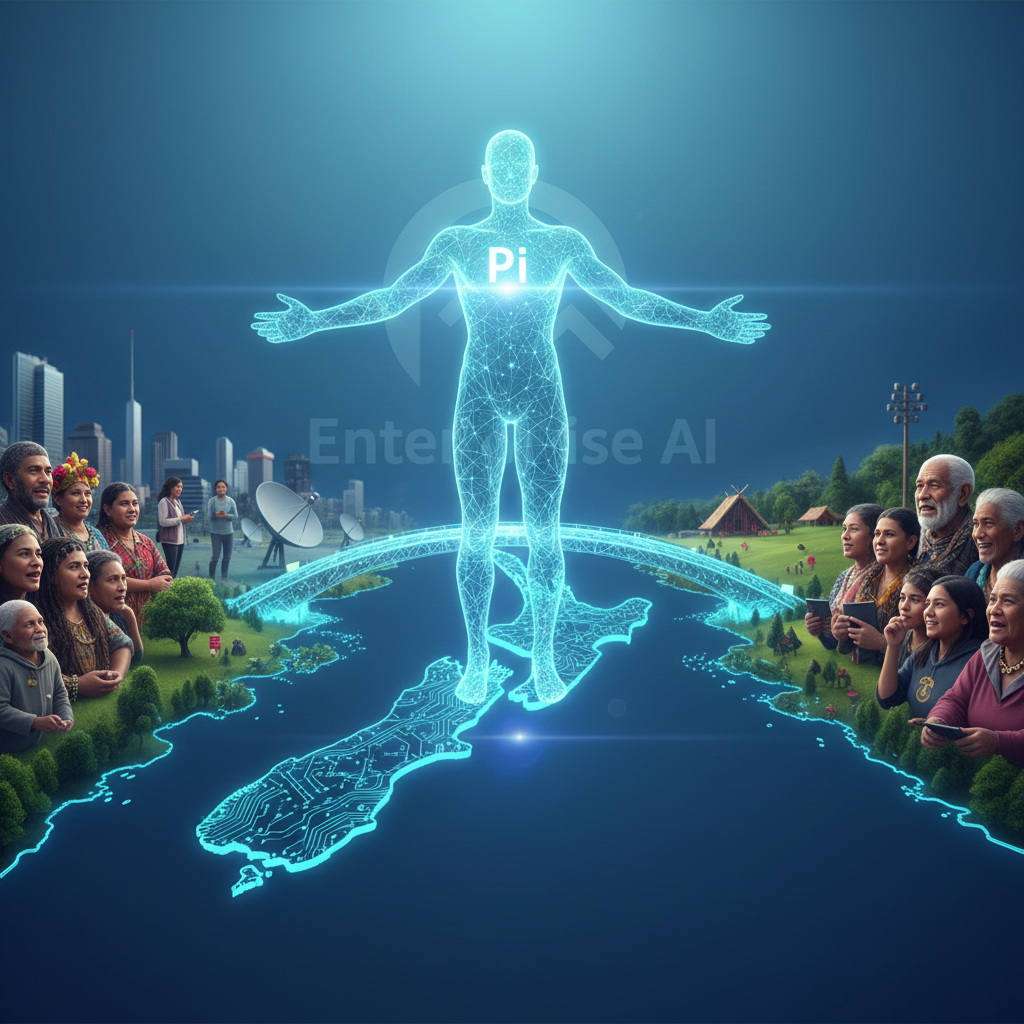

The digital world often feels like a vast, untamed ocean, full of powerful currents and hidden depths. For many, navigating it means grappling with information overload, constant distractions, and the nagging feeling that technology is shaping us, rather than the other way around. This is where the promise of a personal AI assistant, like Inflection AI's Pi, steps onto the stage, offering a guiding hand through the digital maelstrom.
But what exactly is Pi, and how does this intricate digital companion function? More importantly, how can we ensure such powerful tools are built and deployed with the values of equity and access at their core, especially for communities like ours in Aotearoa, New Zealand? In Te Reo Māori, we have a word for this: manaakitanga, which speaks to hospitality, care, and generosity. It is a concept that should underpin all our technological advancements.
The Big Picture: Your Digital Confidant
Imagine an AI that truly knows you, not just your search history, but your aspirations, your challenges, your unique way of thinking. That is the vision behind Inflection AI's Pi, which stands for "personal intelligence." Unlike broader large language models (LLMs) like OpenAI's GPT or Google's Gemini, Pi is designed to be a one-on-one conversational partner. Its primary goal is to be supportive, empathetic, and to offer personalized advice and information, much like a trusted friend or mentor. It is built for sustained, nuanced dialogue, aiming to understand your emotional state and adapt its responses accordingly. Think of it as a digital mirror that helps you reflect, learn, and grow, rather than just a smart search engine.
Mustafa Suleyman, co-founder of Inflection AI and DeepMind, has often spoken about this vision. He believes that "the next generation of AI will be deeply personal, helping individuals with their unique needs and challenges." This focus on individual well-being and personalized interaction sets Pi apart in the crowded AI landscape, where many models are still grappling with factual accuracy and generic responses.
The Building Blocks: A Symphony of Models
At its heart, Pi is powered by a sophisticated large language model, but it is not just one monolithic entity. It is a carefully orchestrated system of several interconnected components, each playing a vital role in creating that personal, empathetic experience. Let us break down its key elements simply:
- The Core Language Model (LLM): This is the brain of Pi, a massive neural network trained on vast amounts of text data from the internet. Its job is to understand human language, generate coherent and contextually relevant responses, and learn patterns of communication. Inflection AI has developed its own proprietary LLMs, optimized for conversational flow and emotional intelligence, rather than just raw factual recall.
- Personalization Layer: This is where the "personal" in Pi truly comes alive. Unlike generic LLMs, Pi incorporates a dynamic memory system that learns from your ongoing conversations. It remembers your preferences, your past questions, your stated goals, and even your conversational style. This layer allows Pi to tailor its responses specifically to you, making each interaction feel unique and meaningful.
- Emotional Intelligence Module: This component is crucial for Pi's empathetic nature. It attempts to detect the emotional tone and sentiment in your messages, allowing Pi to respond with appropriate empathy, encouragement, or concern. This is achieved through advanced natural language processing techniques that analyze word choice, punctuation, and even implied meaning.
- Safety and Alignment Filters: Given its intimate role, safety is paramount. Pi incorporates robust filtering systems designed to prevent it from generating harmful, biased, or inappropriate content. These filters are continuously refined to ensure that Pi remains a positive and supportive presence, aligning with ethical AI principles. This is an area where Aotearoa's approach to AI is rooted in indigenous wisdom, emphasizing collective well-being and harm prevention.
Step by Step: From Your Thought to Pi's Response
Let us trace the journey of a typical interaction with Pi:
- You initiate a conversation: You type or speak a question or a thought into Pi. For example, you might say, "I am feeling overwhelmed with work today, and I am not sure how to prioritize."
- Input Processing: Pi's system first takes your input and processes it. The core language model analyzes the words, grammar, and syntax. Simultaneously, the emotional intelligence module assesses the sentiment, recognizing phrases like "overwhelmed" and "not sure" as indicators of stress or uncertainty.
- Contextual Retrieval and Personalization: This is where Pi consults its memory. It recalls past conversations you have had about work, stress, or your general career goals. It might remember that you previously mentioned a big project deadline or a desire to improve your time management skills. This personalization layer ensures the response is not generic, but tailored to your unique situation.
- Response Generation: Based on the processed input, the emotional context, and your personal history, the core language model generates a draft response. It aims to be empathetic, understanding, and helpful. It might suggest techniques you have discussed before or offer new perspectives.
- Safety Check: Before the response reaches you, it passes through the safety and alignment filters. This quick check ensures the generated text is appropriate, unbiased, and aligns with Pi's supportive persona.
- Pi Responds: You receive Pi's thoughtful and personalized reply, perhaps something like, "It sounds like you are carrying a heavy load right now, and it is completely understandable to feel overwhelmed. We talked about breaking down large tasks into smaller steps before. Would you like to revisit that, or perhaps explore some mindfulness techniques to help manage the stress?"
This entire process happens in milliseconds, creating a seamless and natural conversational flow.
A Worked Example: Navigating Career Choices
Consider a young person in South Auckland, perhaps a recent graduate, feeling uncertain about their career path. They might open Pi and say, "I just finished my degree, but I am not sure what to do next. I feel a lot of pressure to find a 'good job,' but I also want something meaningful."
Pi would process this, recognizing the themes of uncertainty, pressure, and the search for meaning. It would access its understanding of the user's background, perhaps remembering their interests in environmental conservation or community work. It might then respond, "That is a really common and important feeling. Many people grapple with finding a path that aligns with their values. We have talked about your passion for the environment before. Have you considered roles in sustainable development or perhaps local council initiatives that focus on community well-being? We could also explore some self-assessment tools to clarify what 'meaningful' looks like for you."
This is not just a search query; it is a collaborative exploration, guided by an AI that remembers and cares. The user might then ask, "What are some specific organizations in Auckland working in sustainable development?" and Pi, leveraging its knowledge base, would provide relevant, actionable information.
Why It Sometimes Fails: The Limits of Empathy
Despite its sophisticated design, Pi, like all AI, has limitations. It is not a human therapist, and it does not possess genuine consciousness or emotion. Its empathy is simulated, based on patterns learned from data. This means:
- Lack of True Understanding: While it can mimic understanding, it does not truly feel or experience. It cannot fully grasp the nuances of human experience, especially those rooted in specific cultural contexts or personal trauma.
- Data Bias: The training data, however vast, inevitably carries biases from the human world. If the data disproportionately represents certain demographics or perspectives, Pi's responses might inadvertently reflect those biases, potentially failing to serve diverse users effectively.
- Over-Reliance: There is a risk that users might become overly reliant on Pi for emotional support or decision-making, potentially neglecting human connections or critical thinking skills. This is a concern for many, including those in the AI ethics space, as highlighted by discussions on platforms like Wired.
- Hallucinations: Like other LLMs, Pi can sometimes "hallucinate," generating confident but incorrect information, especially when dealing with obscure or rapidly evolving topics. While Inflection AI works to minimize this, it remains an inherent challenge for current AI architectures.
Where This Is Heading: AI as a True Companion
The future of personal AI assistants like Pi is one of increasing sophistication and integration. We can expect these systems to become even more context-aware, capable of interacting across various devices and platforms seamlessly. Imagine your Pi not just chatting with you, but also proactively managing your calendar, filtering information relevant to your goals, and even helping you learn new skills by tailoring educational content.
There is a strong push towards multimodal AI, meaning Pi could soon understand and respond to not just text, but also images, audio, and video, making interactions even richer. The goal is to move beyond mere assistants to true digital companions that augment human capabilities and well-being.
However, as these systems become more integrated into our lives, the ethical considerations become even more critical. Who owns the data generated from these deeply personal interactions? How do we ensure privacy and prevent misuse? These are not just technical questions, but societal ones. As we continue to develop these powerful tools, we must remember that technology must serve the people, not the other way around. Our collective future depends on building AI that reflects our highest aspirations for humanity, not just our technological prowess. The conversation around ethical AI, particularly data sovereignty and cultural preservation, is one that New Zealand is actively engaged in, and it is a crucial part of ensuring these personal AIs benefit everyone, not just a privileged few. We can learn a lot from the ongoing global dialogue, as reported by outlets like Reuters Technology, but our unique perspective must always be heard.