
Icelandic AI: Bridging Language Gaps with Women at the Forefront
Iceland is making significant strides in AI development, particularly in language technologies, with prominent Icelandic women leading initiatives to preserve the unique linguistic heritage amidst global digital transformation.
Click play to listen to this article read aloud using text-to-speech.

REYKJAVÍK, ICELAND – April 22, 2026 – As artificial intelligence continues its rapid integration into daily life across Europe, Iceland finds itself at a crucial juncture, balancing technological advancement with the preservation of its unique cultural and linguistic identity. At the heart of this endeavor are a number of formidable Icelandic women, whose expertise and dedication are shaping the nation’s AI landscape.
Dr. Elín Jónsdóttir, a leading computational linguist and director of the Icelandic Language Technology Centre (Íslensk Máltæknimiðstöð), emphasizes the urgency. “Our language, Íslenska, is a cornerstone of our identity, a living link to our sagas and our history. If it’s not represented in the foundational datasets of global AI models, it risks becoming digitally invisible. This isn't just a technical challenge; it's a cultural imperative,” she stated during a recent conference in Reykjavík.
Her work, often in collaboration with institutions like the University of Iceland and the Árni Magnússon Institute for Icelandic Studies, focuses on developing robust AI models capable of understanding, generating, and translating Icelandic with nuance. This includes everything from speech-to-text for parliamentary proceedings to sophisticated natural language processing tools for everyday use.
The European Union’s push for digital sovereignty and linguistic diversity, as outlined in its 'AI Act' and various digital strategy initiatives, provides a supportive framework. However, smaller languages like Icelandic require bespoke solutions. “We cannot simply rely on larger European languages to pave the way,” explains Guðrún Ólafsdóttir, CEO of 'Rödd', an Icelandic AI startup specializing in voice recognition. “Our phonetics, our grammar – they demand tailored algorithms. And frankly, the perspective of Icelandic women, who often bear the primary responsibility for language transmission within families, is invaluable in ensuring these technologies serve all segments of our society.”
Guðrún's company recently secured a significant grant from the Icelandic Research Fund (Rannís) to expand its dataset, focusing on diverse voices from across the country, including those from rural communities and different age groups. This inclusive approach is crucial, as biases in AI datasets can disproportionately affect marginalized groups, a concern Sigríður Magnúsdóttir, a sociologist specializing in gender and technology at the University of Akureyri, frequently highlights.
“For centuries, Icelandic women have been the custodians of our oral traditions and the primary educators of our children in language. It is only natural that we are now at the forefront of ensuring our language thrives in the digital age,” Dr. Magnúsdóttir commented. “Our approach to AI is not just about technology; it’s about cultural resilience, ensuring that the voices and stories of Icelandic women, and indeed all Icelanders, are heard and understood by the machines that will shape our future.”
The ongoing efforts in Iceland demonstrate a proactive, culturally sensitive approach to AI development, proving that even a small nation can lead the way in safeguarding its heritage while embracing the future.
Related Articles

AI Revolutionizes Portuguese Football: Benfica Leads the Charge with Data Analytics
 Luís Ferreiràs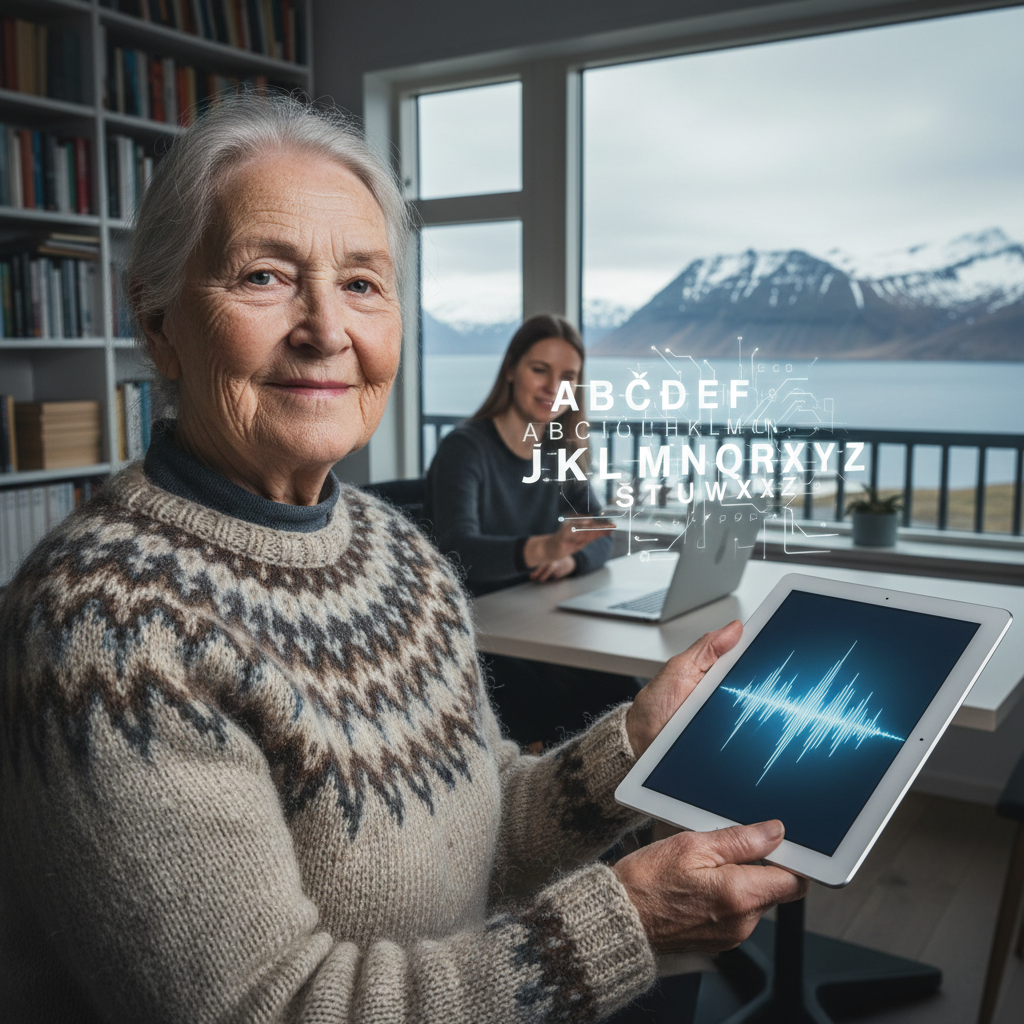
AI's Linguistic Embrace: Safeguarding Icelandic in the Digital Age
Sigríður Björnsdóttìr
Belgian SMEs Grapple with AI Adoption: A Call for Pragmatic Digitalisation
 Michèl Lambertè
Ubuntu AI: South Africa's Indigenous Data Initiative Bridges Tech Divide
 Amahlé Ndlovù