
AI's Linguistic Embrace: Safeguarding Icelandic in the Digital Age
As AI's influence expands across Europe, Iceland faces a critical juncture in preserving its unique linguistic heritage. New initiatives aim to ensure Icelandic thrives amidst global digital transformation, championed by leading women in technology and culture.
Click play to listen to this article read aloud using text-to-speech.
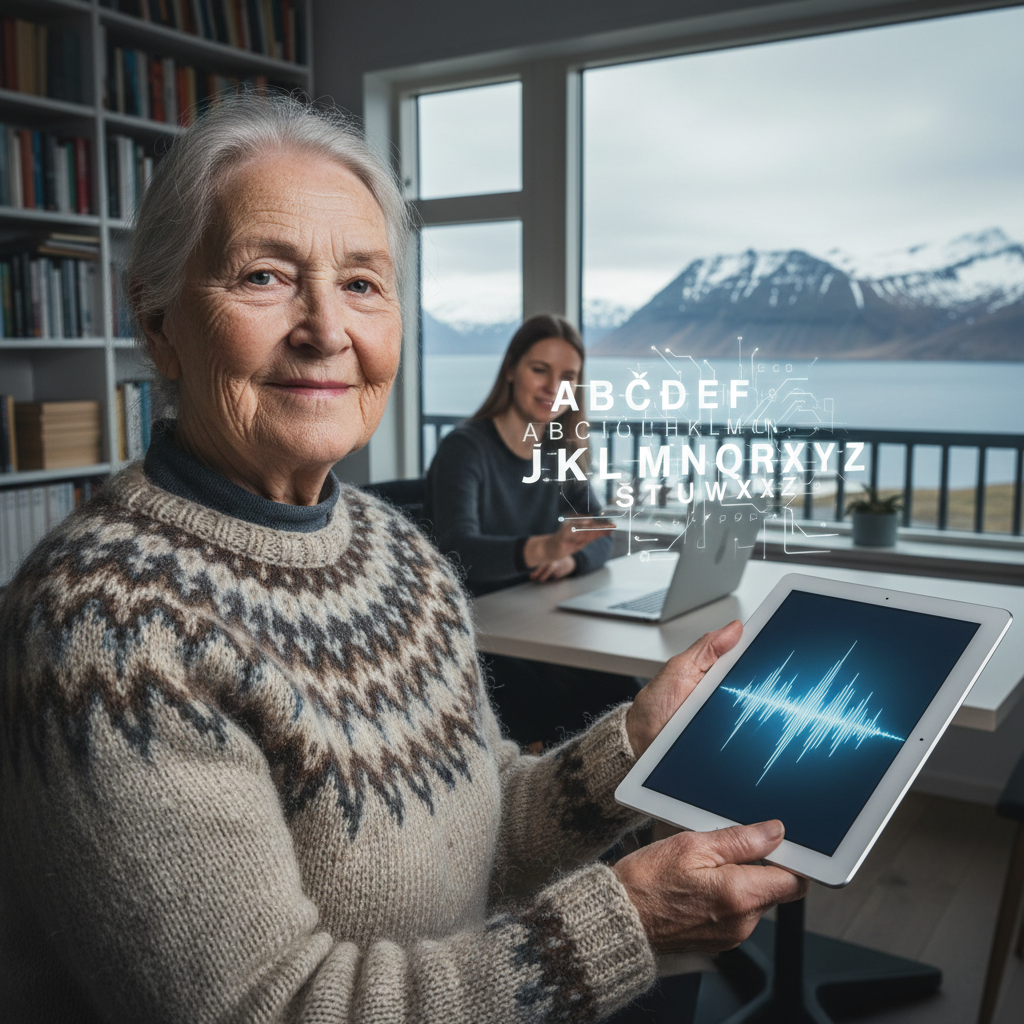
REYKJAVÍK – In a rapidly evolving digital landscape, the preservation of unique cultural identities, particularly language, has become a pressing concern. For Iceland, a nation fiercely proud of its linguistic heritage, the advent of Artificial Intelligence (AI) presents both unprecedented opportunities and significant challenges. As a reporter who has long chronicled the resilience and ingenuity of Icelandic women, I find this intersection of technology and culture particularly compelling.
Across Europe, discussions around AI's impact on linguistic diversity are intensifying. Here in Iceland, the conversation is amplified by our relatively small language community. Dr. Katrín Magnúsdóttir, a leading computational linguist at Háskóli Íslands and a prominent figure in the field, emphasizes the urgency. “For AI models to truly serve our society, they must understand and generate Icelandic with nuance and accuracy,” she stated recently at a digital culture symposium in Harpa. “Without dedicated efforts, our language risks becoming marginalized in the global digital sphere, much like a forgotten sagnahefð.”
Recognizing this, the Icelandic government, in collaboration with institutions like the Árni Magnússon Institute for Icelandic Studies and the Icelandic Language Technology Centre (ÍST), has intensified its efforts. The 'Málföng fyrir Gervigreind' (Language Resources for AI) project, spearheaded largely by women researchers and data scientists, is creating comprehensive datasets crucial for training Icelandic-speaking AI models. This initiative is not merely about translation; it's about enabling AI to grasp the intricate grammar, rich vocabulary, and cultural context embedded within our tongue.
Guðrún Jónsdóttir, CEO of 'Tungumálatækni ehf.', a burgeoning Icelandic tech startup, highlights the commercial and cultural implications. “Imagine an AI assistant that understands the subtleties of our colloquialisms, or educational software that teaches children Icelandic history through interactive, linguistically accurate narratives,” she explained during a recent interview. “This isn't just about convenience; it’s about empowering future generations to engage with technology in their mother tongue, fostering a deeper connection to their roots.” Her company is currently developing an AI-powered conversational agent specifically designed for customer service in Icelandic, aiming to set a new standard for local language integration.
However, the path is not without its hurdles. Securing adequate funding and attracting top talent to work on a 'small' language like Icelandic remains a constant battle against the allure of larger markets. Yet, the determination I've witnessed among Icelandic women in technology, often leading these critical projects, is inspiring. They understand that preserving Icelandic in the age of AI is not just an academic exercise; it's a vital component of national sovereignty and cultural continuity.
The European Union's broader initiatives, such as the 'Digital Europe Programme,' offer some support, but local ownership and innovation remain paramount. As we look towards 2026 and beyond, the success of these endeavors will determine whether Icelandic remains a vibrant, living language in both the physical and digital realms, or if it slowly recedes into the shadows of global linguistic homogenization. The future of our language, it seems, is increasingly intertwined with the algorithms that shape our world.
Related Articles

AI Revolutionizes Portuguese Football: Benfica Leads the Charge with Data Analytics
 Luís Ferreiràs
AI in the Diwan: Bridging Generations and Preserving Heritage in Jordan
 Hamzà Al-Khalìl
AI's Cultural Canvas: Kerala's Kalamkari Artisans Embrace Digital Weave
 Priyà Nairé
Belgian SMEs Grapple with AI Adoption: A Call for Pragmatic Digitalisation
 Michèl Lambertè