
Ubuntu AI: South Africa's Indigenous Data Initiative Bridges Tech Divide
South Africa launches a groundbreaking 'Ubuntu AI' initiative, aiming to decolonize AI development by integrating indigenous languages and cultural data, championed by Black South African women in tech.
Click play to listen to this article read aloud using text-to-speech.


JOHANNESBURG – In a significant stride towards inclusive technological advancement, South Africa has officially launched its 'Ubuntu AI' initiative, a visionary project poised to reshape the landscape of artificial intelligence development on the continent. Spearheaded by the Department of Science and Innovation (DSI) and supported by a consortium of local universities and tech hubs, this initiative seeks to embed indigenous knowledge systems and African languages into the very fabric of AI algorithms.
At the heart of Ubuntu AI is the recognition that current global AI models often suffer from inherent biases, largely due to their reliance on data sets predominantly sourced from Western societies. This oversight frequently leads to misinterpretations, inaccuracies, and a lack of cultural relevance when applied to African contexts, particularly impacting Black South African women who navigate unique linguistic and socio-economic realities.
Dr. Naledi Mkhize, a leading AI ethicist and Director of the African Centre for Digital Innovation at the University of Cape Town, articulated the urgency of this approach. "For too long, AI has spoken to us in foreign tongues, failing to grasp the nuances of isiZulu proverbs or the intricate social dynamics embedded in Xhosa narratives. Ubuntu AI isn't just about translation; it's about infusing the spirit of 'I am because we are' into machine learning, ensuring these technologies truly serve our diverse communities," Dr. Mkhize stated during the launch event at the Innovation Hub in Pretoria.
The initiative will focus on building robust, culturally sensitive large language models (LLMs) and computer vision systems. This involves extensive data collection efforts across all 11 official languages, with a particular emphasis on oral histories, traditional knowledge, and contemporary digital content created by South Africans. Community engagement, especially with women's cooperatives and rural digital literacy programs, is central to ensuring equitable data representation and ownership.
Ms. Thandiwe Dlamini, CEO of 'MoyaTech,' a burgeoning Johannesburg-based AI startup founded by Black South African women, expressed profound optimism. "As innovators, we've often had to adapt global tools to local problems. Ubuntu AI empowers us to build from the ground up, creating solutions that inherently understand and reflect our lived experiences. Imagine an AI-powered agricultural tool that comprehends the specific soil conditions described in a Sepedi dialect, or a healthcare diagnostic system trained on the diverse genetic markers prevalent in our populations. This is not just about technology; it's about digital sovereignty and economic empowerment for our people."
The DSI has allocated substantial funding over the next five years, earmarking resources for scholarships for young Black South African women in AI research and development, fostering a new generation of 'Afro-futurist' technologists. This strategic investment underscores a commitment to not only closing the technological divide but also positioning South Africa as a leader in ethical, culturally resonant AI development on the global stage. The journey of Ubuntu AI promises to be a testament to the power of indigenous wisdom meeting cutting-edge innovation.```
Related Articles

Algeria's AI Health Revolution: A New Dawn for Public Well-being, Says Experts
 Abderrahmàn Bensoussàn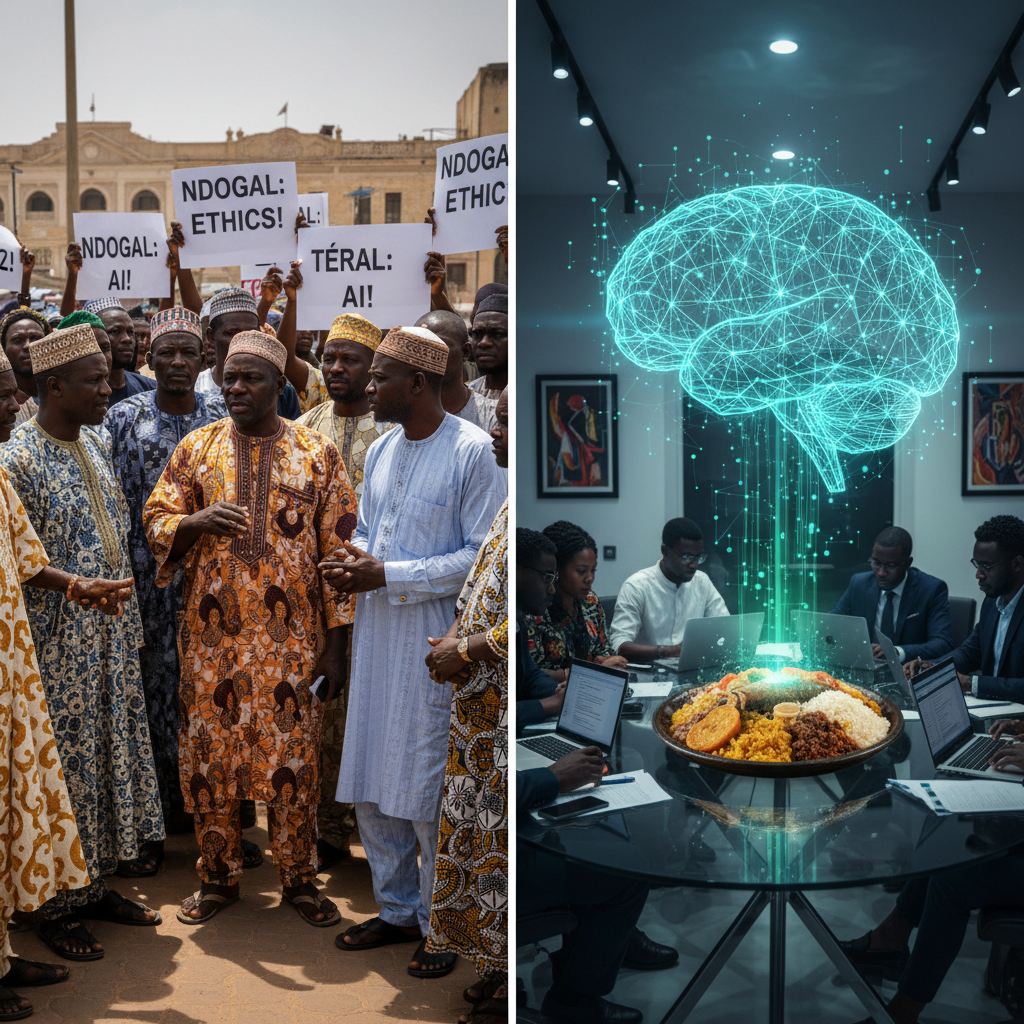
Senegal Grapples with AI's 'Ndogal' in Political Discourse: A Call for Ethical 'Téral'
 Fatimà Diallò
Teranga Lions Roar with AI: Senegal Embraces Tech for Football Excellence
 Mamadouù Dioufée
AI 'Eagles Eye' System Poised to Revolutionize Nigerian Football Scouting
 Chukwuemekà Obiechè