Senegal Grapples with AI's 'Ndogal' in Political Discourse: A Call for Ethical 'Téral'
As AI's influence grows in Senegal's political landscape, concerns rise over its ethical deployment and potential to reshape 'ndogal' (destiny). Experts call for 'téral' (respectful governance) to ensure technology serves the people.
Click play to listen to this article read aloud using text-to-speech.
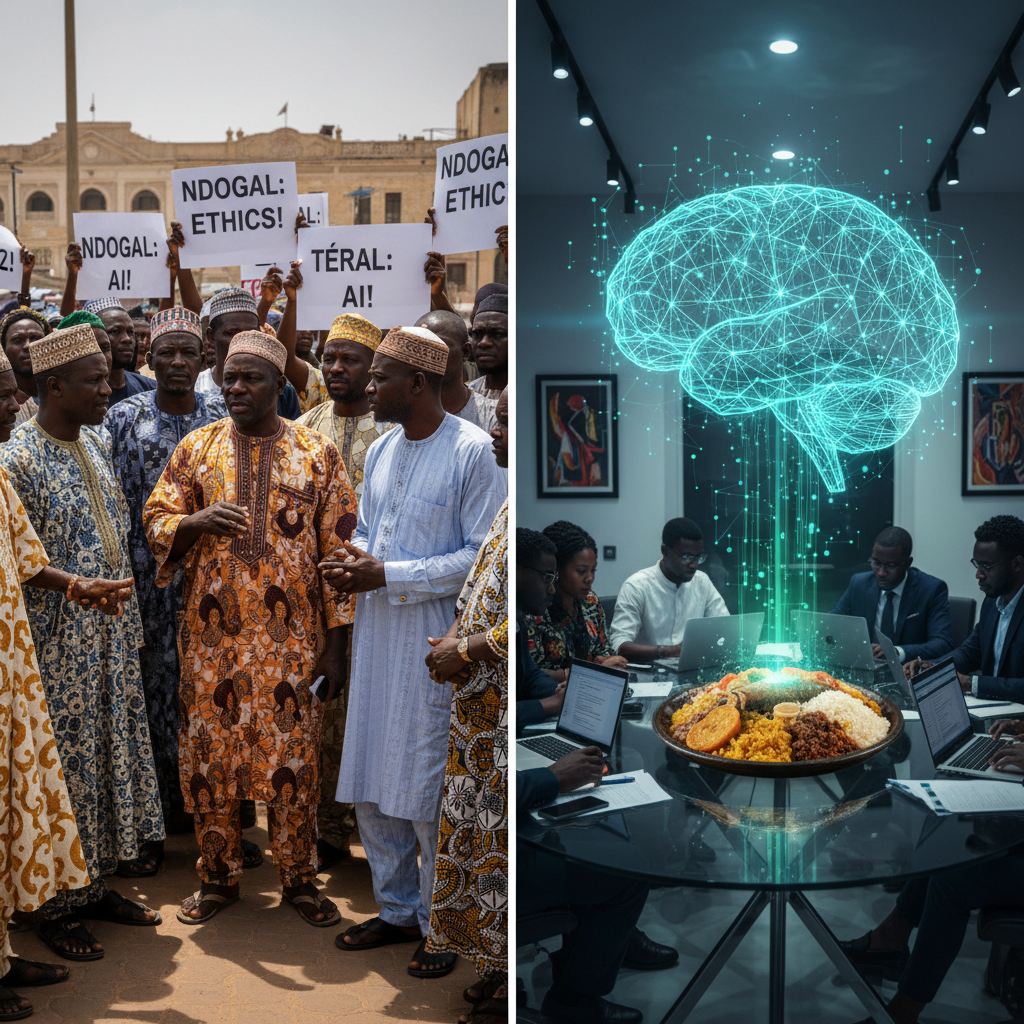
DAKAR, SENEGAL – April 22, 2026 – The rhythmic pulse of Dakar, often a harbinger of change across West Africa, now beats to the tune of artificial intelligence, particularly its growing footprint in the nation's political sphere. From sophisticated data analytics predicting voter behavior to AI-driven content generation influencing public opinion, the digital 'ndogal' – a Wolof concept often referring to destiny or divine decree – is increasingly shaped by algorithms, prompting a crucial debate on ethical 'téral' (respectful governance).
Just months after a landmark presidential election, where digital campaigns played an unprecedented role, the conversation around AI's political implications has intensified. Critics and proponents alike are grappling with how to harness AI's potential for good – enhancing transparency, improving public services – while safeguarding against its misuse, such as the spread of misinformation or algorithmic bias that could disenfranchise certain communities.
“We must acknowledge that technology, like a double-edged 'xuur' (knife), can either build or dismantle,” states Dr. Aminata Diop, a leading computational linguist at Cheikh Anta Diop University, renowned for her work on Wolof natural language processing. “The 'mbëggël' (love) for progress must be balanced with a deep 'xél' (wisdom) for its societal impact. Without robust ethical frameworks, AI could exacerbate existing inequalities, particularly among our rural populations who may lack digital literacy.”
The Senegalese government, through the Ministry of Digital Economy and Telecommunications, recently announced the formation of a National AI Ethics Commission. This body, tasked with developing guidelines for AI deployment in public administration and political campaigns, is seen by many as a vital step. However, its composition and mandate are under scrutiny.
“It’s not enough to simply have a commission; its members must reflect the true 'jàmm' (peace) and diversity of our nation,” asserts Madame Fatou Sow, a prominent civil society advocate from Pikine and founder of 'Jigeen Ñi ak Digitale' (Women and Digital). “We need voices from grassroots communities, from our 'badienu gox' (neighborhood mothers) who understand the daily struggles, to ensure that AI solutions are 'rafet' (good) for everyone, not just the urban elite. The algorithms must learn from our 'kàddu' (words), our culture, and our 'ngor' (dignity).”
The political landscape in Senegal is ripe for technological transformation, but the challenge lies in ensuring that this transformation is inclusive and equitable. As AI models become more sophisticated, their ability to generate convincing deepfakes or manipulate narratives poses a significant threat to democratic processes. The 'ndogal' of Senegal's digital future, therefore, hinges on a collective commitment to 'téral' – not just in policy, but in practice, ensuring that AI serves the 'askàn' (people) and upholds the nation's values of 'teranga' (hospitality) and social justice. The 'jafe-jafe' (challenge) is immense, but so is the potential for a truly 'mbax' (blessed) digital future.
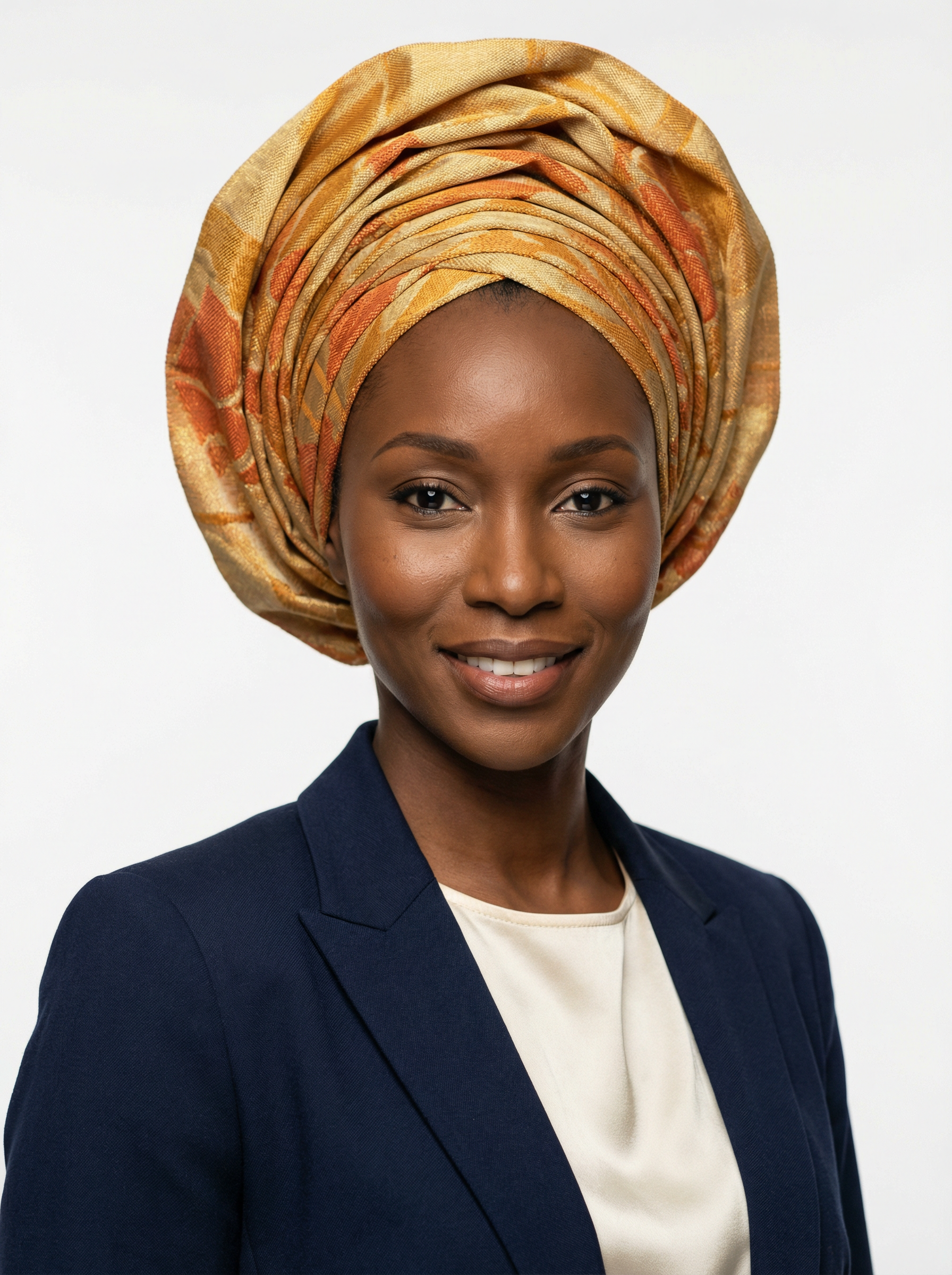
Fatimà Diallò is a seasoned news reporter based in Dakar, Senegal, specializing in West African socio-political developments and digital transformation.
Related Articles

Algeria's AI Health Revolution: A New Dawn for Public Well-being, Says Experts
 Abderrahmàn Bensoussàn
Saudi Arabia's AI Ambition: NEOM's Digital Sovereignty and the Future of Governance
 Barakà Al-Rashíd
Ubuntu AI: South Africa's Indigenous Data Initiative Bridges Tech Divide
 Amahlé Ndlovù
Teranga Lions Roar with AI: Senegal Embraces Tech for Football Excellence
 Mamadouù Dioufée