
Ghana's AI Policy: A Blueprint for Digital Sovereignty or Neo-Colonial Tech Trap?
Ghana unveils its National AI Strategy, sparking debate among policymakers and tech experts on its potential to foster digital sovereignty versus creating new dependencies.
Click play to listen to this article read aloud using text-to-speech.


ACCRA, GHANA – April 22, 2026 – Ghana has officially launched its much-anticipated National Artificial Intelligence (AI) Strategy, a comprehensive document aimed at positioning the nation as a leader in AI innovation and application across West Africa. While the Ministry of Communications and Digitalisation hails it as a pivotal step towards a 'Ghana Beyond Aid' in the digital realm, concerns are emerging from various quarters regarding its implementation and potential long-term implications for national sovereignty.
The strategy, unveiled by Minister Ursula Owusu-Ekuful, outlines ambitious goals: leveraging AI for public service delivery, boosting economic productivity, and fostering a robust AI research ecosystem. It emphasizes local capacity building, ethical AI development, and data governance. “This is not merely about adopting technology; it’s about shaping our digital future, ensuring that AI serves the Ghanaian people first,” Minister Owusu-Ekuful declared at the launch event at the Accra International Conference Centre, to a gathering of diplomats, tech entrepreneurs, and traditional leaders.
However, the devil, as they say, is in the details. Dr. Kwame Nkrumah Jnr., a prominent technologist and lecturer at the Kwame Nkrumah University of Science and Technology (KNUST), voiced a cautious optimism. “The framework is commendable, but we must interrogate the underlying infrastructure. Are we truly building indigenous capabilities, or are we, once again, becoming consumers of foreign-developed AI solutions, albeit with a Ghanaian label?” he queried in an exclusive interview. Dr. Nkrumah Jnr., whose research often focuses on equitable technology transfer, highlighted the need for significant investment in local data centers and computing power, rather than relying solely on cloud services hosted abroad.
The political dimension of this strategy cannot be overstated. For many Black Ghanaian men, the narrative of self-determination and economic independence resonates deeply. The fear is that without robust local ownership of AI development and data, Ghana could inadvertently cede control over critical national data and decision-making processes to foreign tech giants. “Our history teaches us that true liberation requires control over our resources. In the 21st century, data is the new gold, and AI is the refinery,” remarked Nana Osei Tutu, a respected elder and former diplomat, during a panel discussion on GTV.
The strategy proposes public-private partnerships, which, while efficient, also raise questions about oversight and accountability. Critics point to the potential for foreign companies, with their vast resources, to dominate the local AI landscape, potentially stifling nascent Ghanaian startups. The government insists on stringent regulatory frameworks and local content requirements to mitigate these risks.
As Ghana embarks on this ambitious AI journey, the challenge for policymakers will be to navigate the fine line between global collaboration and national self-reliance. The success of the National AI Strategy will ultimately be judged not just by the number of AI applications deployed, but by its ability to genuinely empower Ghanaians, ensuring that this technological revolution truly serves the nation’s long-term political and economic sovereignty.
Related Articles
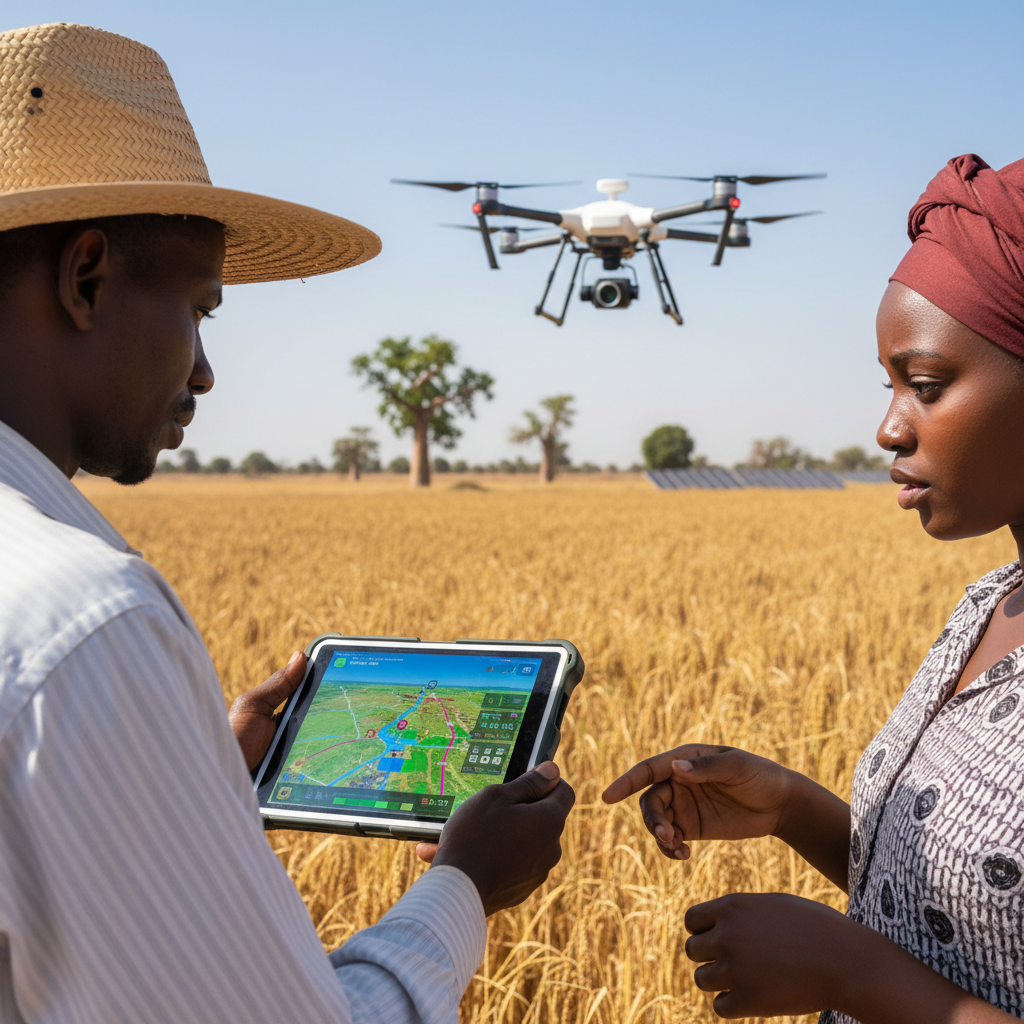
Mali's Digital Future: AI for Agriculture and Local Languages
 Mouhamadouù Bâ
AI's Healing Touch: Revolutionizing Maternal Healthcare in Nigeria's Rural Communities
 Nkirukà Ezenwà
Ghana's AI Leap: Local Startups Drive Innovation, Address Ethical Concerns
Kwamé Asantè
AI Ethics Bill Stalls in Senate Amidst Bipartisan Wrangling Over Oversight
 Amèlia Whitè