
Mali's Digital Future: AI for Agriculture and Local Languages
Mali is exploring AI to revolutionize its agricultural sector and preserve indigenous languages, a move celebrated by local experts as a step towards digital sovereignty and cultural resilience.
Click play to listen to this article read aloud using text-to-speech.
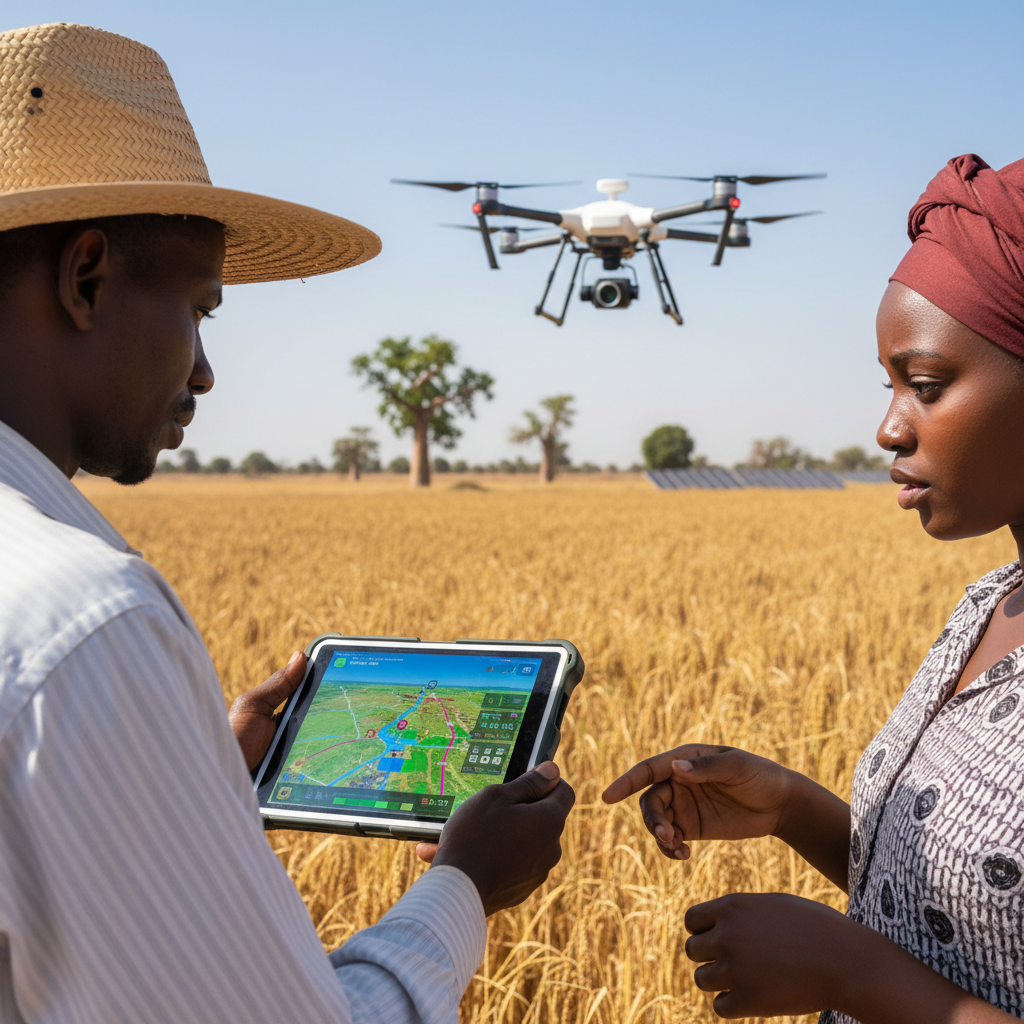

BAMAKO, Mali – In a nation where the rhythm of life is deeply intertwined with the land and the wisdom of its elders, the advent of Artificial Intelligence might seem a distant hum. Yet, here in Mali, the conversation is shifting, with local visionaries advocating for AI solutions tailored to our unique realities, not just imported blueprints.
“For too long, technology has been a one-way street, flowing from North to South,” states Dr. Aminata Keïta, a leading computational linguist at the University of Bamako. “But now, with AI, we have the chance to build tools that speak to our needs, in our own tongues. Imagine an AI that can predict millet yields based on Sahelian weather patterns, or one that helps our griots archive their vast oral histories in Bambara, Soninke, or Fulfulde.”
This sentiment resonates deeply with the Malian spirit – a blend of pragmatism and profound respect for heritage. The Ministry of Digital Economy and Communication recently unveiled a strategic initiative, 'Mali Numérique 2030,' which, for the first time, explicitly prioritizes the development of AI applications in agriculture and local language processing. This is a significant departure from previous digital strategies that often focused solely on infrastructure.
Modibo Traoré, a young agronomist from Ségou, exemplifies the practical application. His startup, 'Jigiya Tech' (Hope Tech), is piloting an AI-powered drone system that monitors crop health and water usage in rice paddies along the Niger River. “Our farmers, the paysans who feed our nation, often lack access to timely information,” Traoré explains. “This AI isn't replacing their ancestral knowledge; it's augmenting it, giving them data to make better decisions, to adapt to climate change.”
The challenge, as always, lies in resources and expertise. While the enthusiasm is palpable, the infrastructure for robust AI development – including reliable internet connectivity and specialized training – remains a hurdle. However, partnerships are emerging. The Malian Agency for Information and Communication Technologies (AMATIC) is collaborating with regional bodies like the African Union's AI Observatory to share best practices and secure funding.
“Our approach must be bamanankan – grounded in our reality, built by us, for us,” asserts Ousmane Diarra, a cultural anthropologist and advocate for digital inclusion. “An AI that cannot understand the nuances of a proverb in Dogon, or an agricultural cycle in the Mopti region, is an AI that serves little purpose here. We are not just consumers of technology; we are creators, and our unique cultural fabric offers fertile ground for innovation.”
The journey is long, but the vision is clear: to harness AI not just for economic growth, but for the preservation of Malian identity and the empowerment of its people, ensuring that as the digital tide rises, no one is left behind in the Sahelian sun.
Related Articles

Taiwan's AI Chip Dominance Bolstered by TSMC's Advanced Packaging for Edge Computing
 Wei-Chéng Liú
Portugal's Digital Leap: AI Ethics Takes Center Stage in Lisbon
 Luís Ferreiràs
Algeria's Football Federation Explores AI for Talent Scouting and Player Development
 Abderrahmàn Bensoussàn
Ghana's AI Future: Local Voices Demand Ethical Frameworks Amidst Tech Boom
 Kwamé Asantè