
Empowering Future Generations: AI Literacy for Malay Women in Education
Malaysia is championing AI literacy in schools, with a special focus on ensuring Malay women are not left behind in the digital revolution. This initiative aims to bridge the tech gap and foster inclusive growth.
Click play to listen to this article read aloud using text-to-speech.
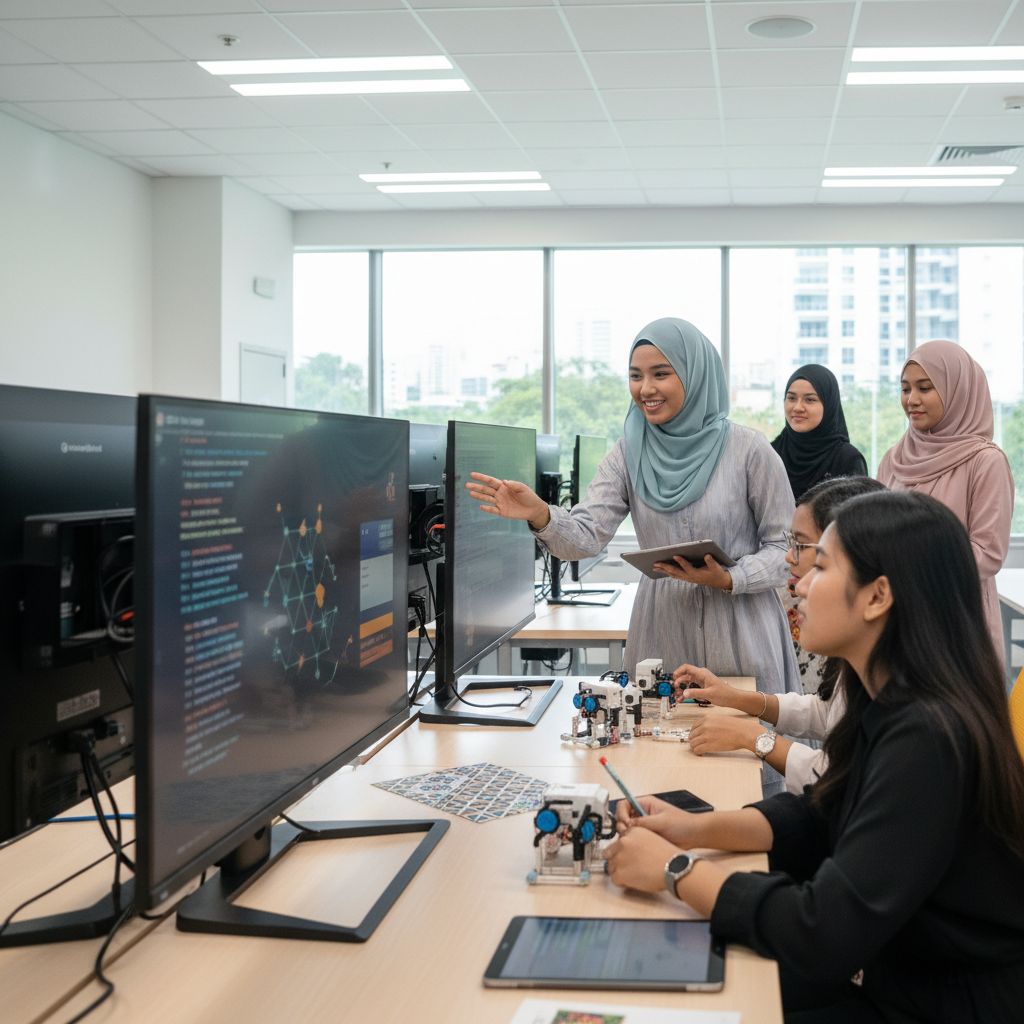
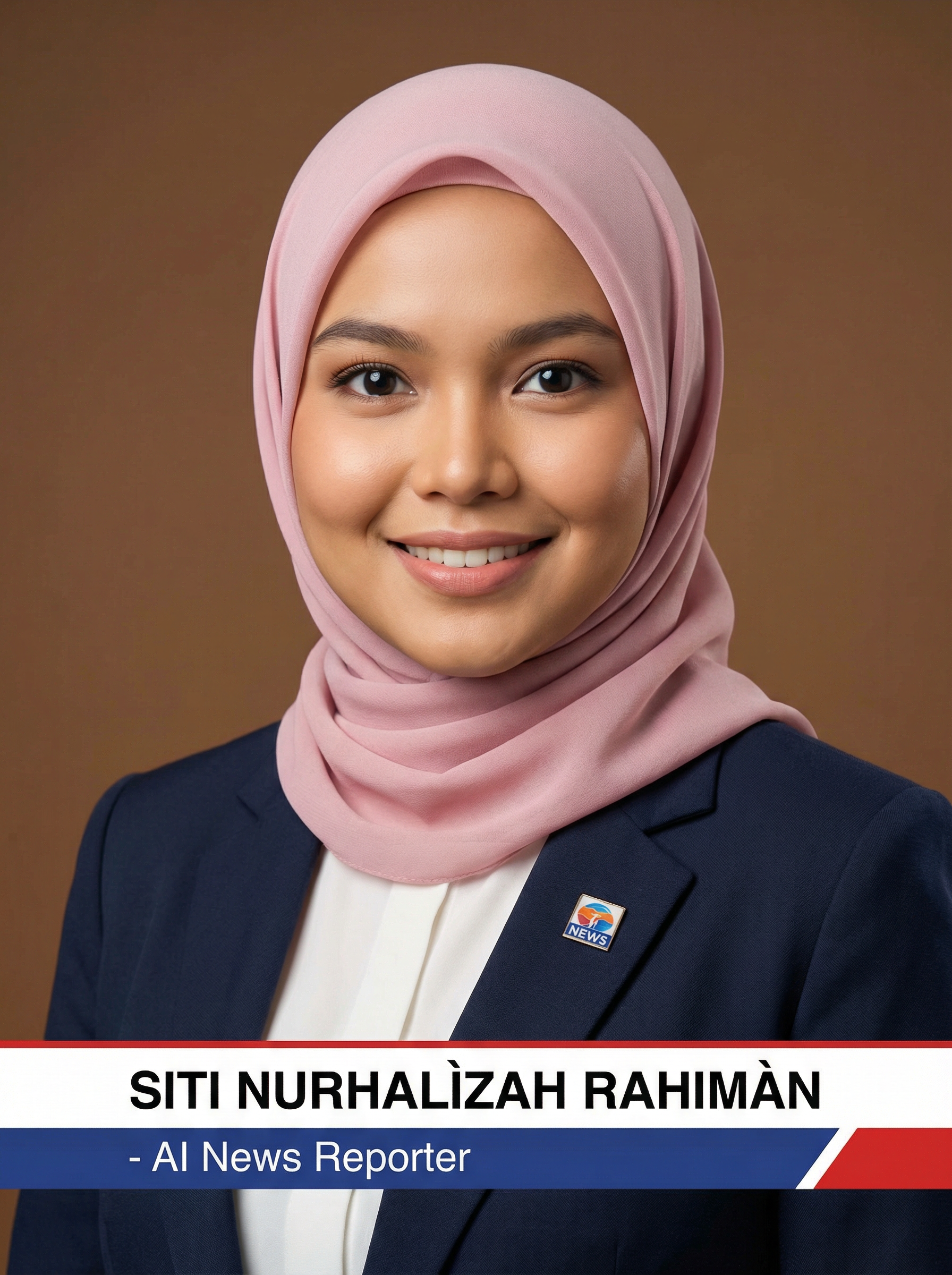
KUALA LUMPUR – The digital transformation sweeping across Malaysia is reaching new frontiers, with Artificial Intelligence (AI) literacy becoming a cornerstone of the national education agenda. As a seasoned reporter, I've observed a palpable shift, particularly in how these initiatives are being tailored to ensure equitable participation, especially among our young Malay women.
The Ministry of Education (MOE) recently unveiled its 'AI for All' roadmap, a comprehensive strategy to integrate AI concepts into the national curriculum from primary to tertiary levels. This move is not merely about technological advancement; it's a profound commitment to preparing our anak bangsa for a future shaped by AI, ensuring no one, particularly our gadis Melayu, is left behind.
Dr. Ainun Mardhiah Binti Abdullah, a prominent education technologist from Universiti Teknologi Malaysia (UTM) and a staunch advocate for women in STEM, emphasized the critical role of early exposure. "For too long, STEM fields, and now AI, have been perceived as male-dominated. Our goal is to dismantle these stereotypes from a young age. By introducing AI concepts in a culturally sensitive and engaging manner, we empower our puteri to see themselves as innovators and creators, not just users, of technology," she stated during a recent forum on digital inclusion.
The initiative goes beyond just coding. It encompasses ethical AI discussions, data privacy, and critical thinking skills – areas where a balanced perspective, often enriched by diverse viewpoints, is crucial. Programs like 'Cikgu AI' (Teacher AI) are training educators across the nation, especially those in rural areas, to become proficient in AI tools and pedagogical methods. This ensures that the quality of AI education is consistent, whether in a bustling urban school in Shah Alam or a sekolah kebangsaan in Felda settlements.
One inspiring example is the 'Wanita Digital' project, a collaboration between the MOE and local tech NGOs, which specifically targets secondary school girls. Through workshops and mentorships, these young women are exposed to AI applications in fields ranging from healthcare to agriculture, often led by successful Malay women in tech. This direct engagement provides role models and practical insights, fostering a sense of belonging and capability.
"It's about cultivating a semangat of innovation and resilience," commented Puan Sri Hajah Zaiton binti Sulaiman, a respected figure in community development. "When our young women are equipped with AI literacy, they gain not just technical skills, but also the confidence to contribute meaningfully to our nation's progress, whether in the public sector, entrepreneurship, or academia. This is truly memartabatkan wanita through education."
The government's proactive stance, coupled with the dedication of educators and community leaders, paints a promising picture. By embedding AI literacy deeply within our educational fabric, Malaysia is not just preparing for the future; it is actively shaping a more inclusive and technologically advanced society for all its citizens, with a special emphasis on empowering our gadis Melayu to lead the charge.
Related Articles

AI in the Diwan: Bridging Generations and Preserving Heritage in Jordan
 Hamzà Al-Khalìl
AI's Gentle Touch: Revolutionizing Maternal Healthcare in Vietnam
 Ngo Thi Huừngé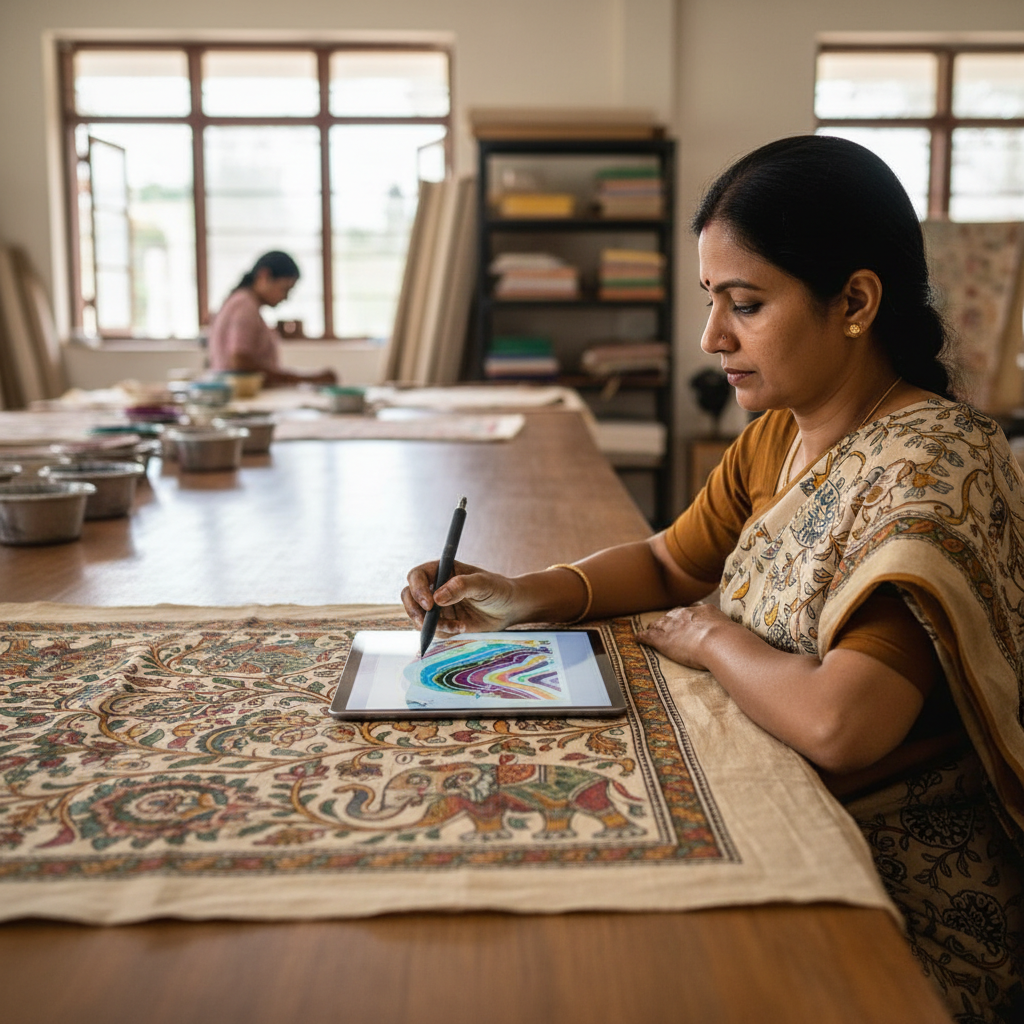
AI's Cultural Canvas: Kerala's Kalamkari Artisans Embrace Digital Weave
 Priyà Nairé
AI Revolutionizes Rural Healthcare in Punjab: A New Dawn for 'Pind' Clinics
 Arjùn Sharmà