
Czechia Leverages AI for Smarter Water Management Amidst Climate Change
Czech Republic is deploying advanced AI systems to optimize water resource management, a critical step in combating the escalating impacts of climate change on the nation's water supply and agricultural sector.

PRAGUE – As Europe grapples with increasingly unpredictable weather patterns, from prolonged droughts to sudden, intense floods, the Czech Republic is turning to artificial intelligence as a cornerstone of its national water management strategy. The Ministry of Agriculture announced this week a significant expansion of its 'AquaIntelli' initiative, a program designed to integrate AI-driven predictive analytics into the country's extensive network of reservoirs, rivers, and agricultural irrigation systems.
"The traditional methods of managing our precious water resources are simply no longer sufficient in the face of a changing climate," stated Minister of Agriculture, Petr Novotný, during a press conference in Prague. "AquaIntelli, powered by sophisticated machine learning algorithms, allows us to forecast water availability with unprecedented accuracy, optimize reservoir releases, and even predict localized drought or flood risks days, sometimes weeks, in advance. This isn't just about efficiency; it's about national resilience."
The initiative, which began as a pilot project in the Moravia region two years ago, has reportedly yielded promising results. Data from the Moravian-Silesian Water Authority indicates a 15% reduction in non-essential water usage in agriculture and a 10% improvement in flood response times in areas where AquaIntelli was deployed. The system analyzes vast datasets, including satellite imagery, meteorological forecasts, historical consumption patterns, and soil moisture levels, to provide real-time recommendations.
Dr. Jana Horáková, a leading hydrologist and AI ethics expert from Charles University, emphasized the dual benefits. "Beyond the immediate operational gains, these AI models are also providing invaluable long-term insights into the hydrological impacts of climate change specific to our region. We can identify vulnerable areas, understand shifts in groundwater tables, and plan for future infrastructure with much greater foresight. However, it's crucial that these systems remain transparent and that human oversight is maintained to prevent unintended consequences or biases in data interpretation."
The expansion will see AquaIntelli rolled out across all major river basins, including the Vltava and Elbe, by late 2027. Funding for the project comes partly from the EU's Digital Europe Programme, underscoring a broader European commitment to leveraging digital technologies for environmental sustainability. Neighboring countries like Slovakia and Austria are reportedly observing the Czech model with keen interest, potentially paving the way for cross-border AI collaboration in water management.
While the technological leap is significant, challenges remain. Ensuring data security, training local water authority personnel, and integrating legacy infrastructure with cutting-edge AI platforms are complex tasks. Yet, as Minister Novotný concluded, "The stakes are too high to ignore innovation. Our water, our agriculture, and ultimately our future depend on our ability to adapt intelligently. AI is not a silver bullet, but it is a powerful tool in our arsenal against climate change's grip on our environment."
Related Articles
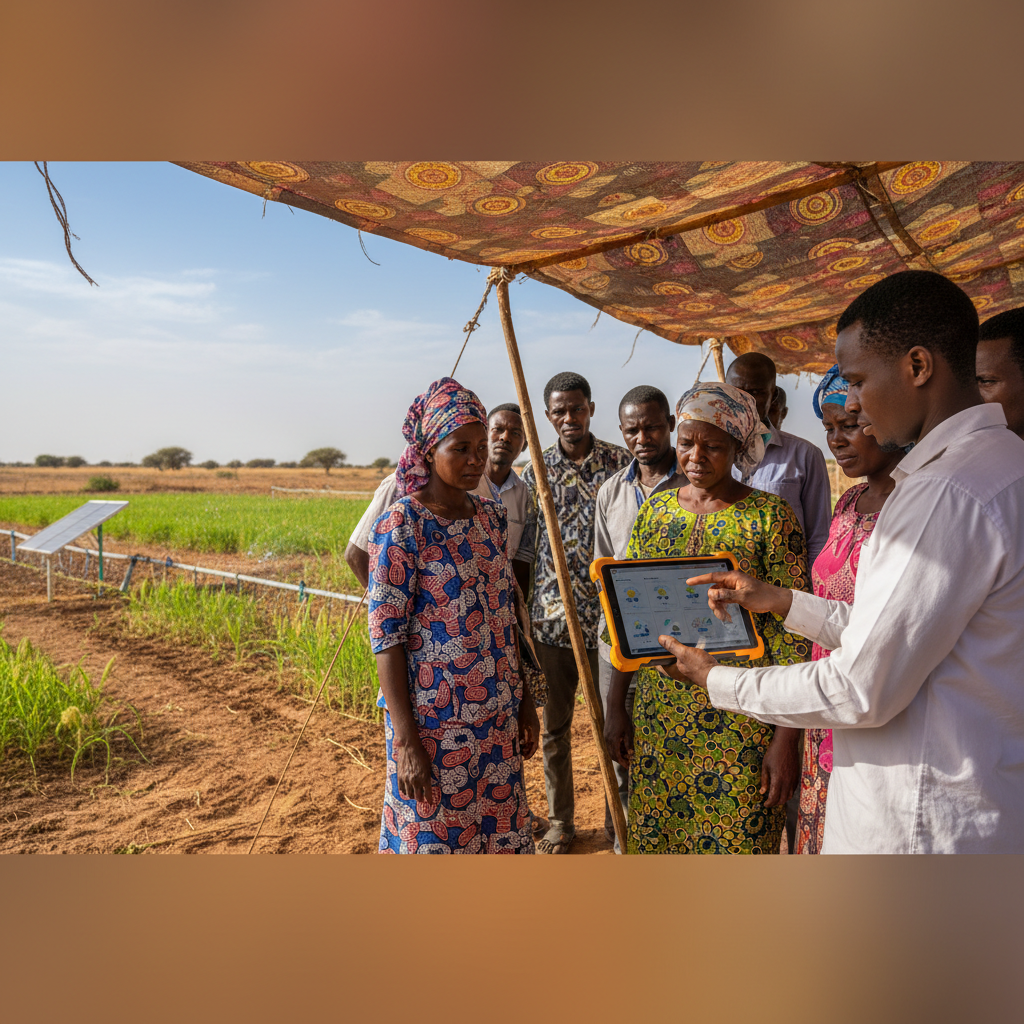
AI-Powered Climate Resilience: Mali's Digital Push for Sahelian Farmers
 Mouhamadouù Bâ
AI Revolutionizes Hungarian Football: A New Era for Talent Scouting and Strategy
 Ferencz Nagŷ
AI for Climate Resilience: Zambian Women Lead the Charge in Sustainable Agriculture
 Lindiwe Sibandà
Finnish AI Sector Eyes Global Growth Amidst Nordic Pragmatism
 Lasse Mäkìnen