
Canberra's AI Gamble: 'Fair Dinkum' Regulation or Bureaucratic Bluster?
The Albanese government unveils its long-awaited AI regulatory framework, sparking debate among tech leaders and privacy advocates about its practical impact and Australia's global standing in the AI race.
Click play to listen to this article read aloud using text-to-speech.
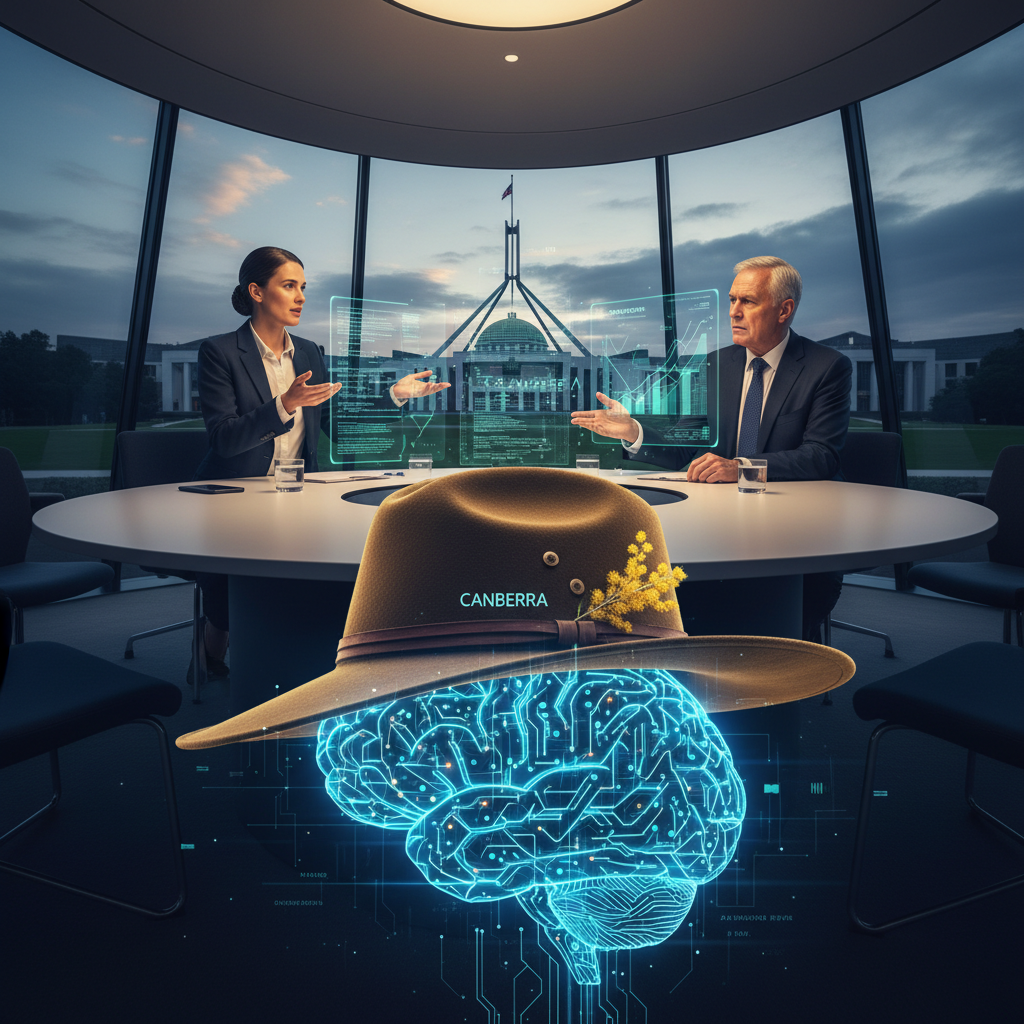

CANBERRA – The federal government has finally dropped its much-anticipated Artificial Intelligence regulatory framework, a document touted by Minister for Industry and Science, Ed Husic, as a “fair dinkum effort to get ahead of the curve.” Unveiled this week in Parliament House, the framework aims to balance innovation with ethical safeguards, but the initial reception from the tech sector and privacy watchdogs is, shall we say, a bit of a mixed bag.
Speaking to a room packed with journos and policy wonks, Minister Husic, looking as earnest as a bloke trying to explain the offside rule, declared, “We can’t just let the robots run wild, can we? This framework isn't about stifling innovation; it’s about making sure AI works for all Australians, not just a select few in Silicon Valley or Shenzhen. It’s about trust, transparency, and accountability, mate.”
The framework proposes a tiered, risk-based approach, with high-risk AI applications – think critical infrastructure, healthcare diagnostics, or anything that might impact a bloke’s Centrelink payments – facing the most stringent oversight. It suggests an independent AI Ethics Council, a bit like the Productivity Commission but for algorithms, to provide ongoing advice and review. There's also talk of mandatory impact assessments for government agencies deploying AI, and a national AI 'sandbox' for testing new technologies under regulatory supervision.
However, not everyone's buying the government’s sunny disposition. Dr. Alistair Finch, a leading AI ethicist from the University of Melbourne, expressed cautious optimism, but also a healthy dose of skepticism. “It’s a step in the right direction, no doubt. But the devil, as always, is in the details. Will this council have real teeth, or will it just be another talkfest? And how do you enforce these rules on global tech giants without creating a compliance nightmare for our local innovators?” Dr. Finch queried, sounding like he’d seen a few too many government white papers in his time.
Meanwhile, the Australian Tech Council, representing some of the nation's biggest digital players, welcomed the clarity but voiced concerns about potential red tape. “We need a framework that’s agile, not one that bogs down our startups in bureaucratic quicksand,” stated CEO Kate McKenzie. “The global AI race is moving at a hundred miles an hour. We can’t afford to be stuck in second gear because of overly prescriptive regulations.”
Privacy advocates, like those from Digital Rights Australia, are also keeping a close eye on the ball. “The framework mentions privacy, but without strong, enforceable data governance laws specifically tailored to AI, it’s just window dressing,” warned spokesperson Emily Wong. “We need to ensure that the data used to train these algorithms isn’t just hoovered up without proper consent or oversight. An Australian bloke’s data is his castle, after all.”
The government plans a period of public consultation, with submissions closing in July. This gives everyone, from the big end of town to the bloke in the pub, a chance to have their say. Whether this framework becomes a world-leading example of sensible AI governance or just another piece of well-intentioned but ultimately toothless legislation, remains to be seen. One thing’s for sure: the conversation about how AI shapes our future has only just begun down under.
Related Articles

AI in the 'Pura Vida' Republic: Legislative Debate on Digital Ethics Heats Up
 Carlòs Ramirèz
Warsaw Debates AI Ethics: A Gendered Lens on Digital Policy
 Agnieszka Kowalskà
Antarctic AI Ethics: Sweden Leads Call for Gender-Inclusive Governance in Polar Research
 Erikà Lindströmè
Dushanbe Debates AI's Role in National Security and Information Sovereignty
 Ismaìlè Rahimovì