
AI in the 'Pura Vida' Republic: Legislative Debate on Digital Ethics Heats Up
Costa Rica's Legislative Assembly grapples with AI regulation, as a new bill seeks to balance innovation with ethical safeguards. Experts warn of potential impacts on the nation's democratic fabric and workforce.
Click play to listen to this article read aloud using text-to-speech.
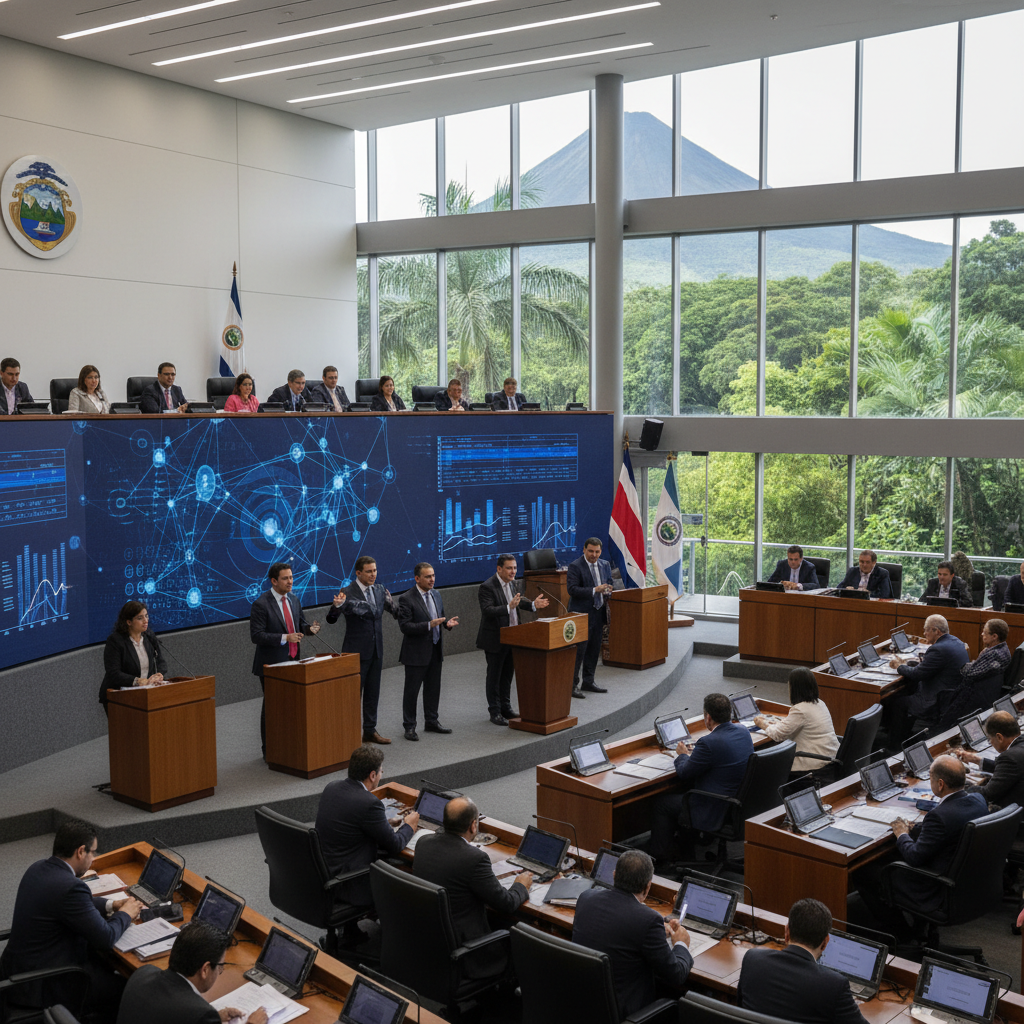
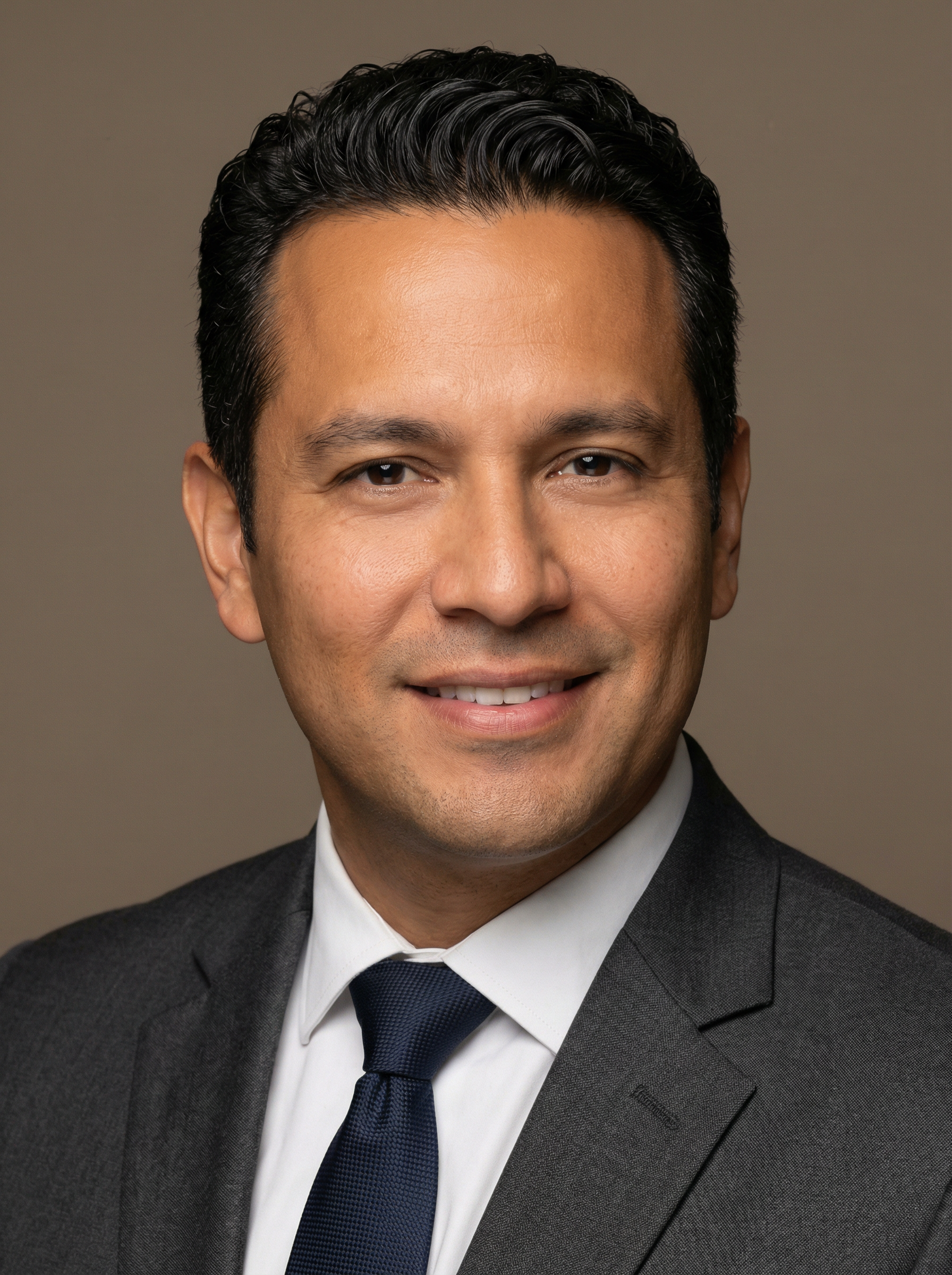
SAN JOSÉ, COSTA RICA – The tranquil 'Pura Vida' rhythm of Costa Rica's political landscape is experiencing a new kind of tremor: the rapid advancement of Artificial Intelligence. As a tico deeply embedded in the pulse of this nation, I've witnessed firsthand how our caballeros in the Legislative Assembly are now confronting the complex ethical and regulatory challenges posed by AI, a discussion that resonates far beyond our borders into the broader North American dialogue on digital governance.
At the heart of this burgeoning debate is a proposed bill, 'Ley de Regulación Ética de la Inteligencia Artificial,' presented by a bipartisan group of diputados. This legislation aims to establish a framework for AI development and deployment, focusing on transparency, accountability, and the protection of citizen rights. "We cannot allow technological progress to outpace our capacity to safeguard our democratic values and the well-being of our gente," stated Deputy Sofía Vargas, a leading proponent of the bill, during a recent committee hearing. "This is not about stifling innovation; it's about ensuring AI serves humanity, not the other way around."
The bill proposes the creation of an independent oversight body, similar to the well-respected Defensoría de los Habitantes, tasked with auditing AI systems used in public services and critical infrastructure. It also mandates impact assessments for high-risk AI applications and calls for public education initiatives to demystify AI for the average costarricense.
However, the path to regulation is fraught with challenges. Business leaders, particularly those in the burgeoning tech sector of the Gran Área Metropolitana, express concerns that overly stringent rules could hinder Costa Rica's competitiveness. "We must strike a delicate balance," commented Ricardo Solano, CEO of InnovaTech CR, a local AI startup. "Our goal is to attract investment and foster a vibrant tech ecosystem, and excessive red tape could drive talent and capital elsewhere. We need agile regulation that adapts as quickly as the technology itself."
From my perspective, observing the tico spirit of pragmatism and social responsibility, this debate is quintessential Costa Rica. Our history, from abolishing the army to pioneering environmental conservation, demonstrates a consistent commitment to progressive ideals. The question now is how these ideals will translate into the digital realm. Dr. Elena Montoya, a leading AI ethicist at the University of Costa Rica, emphasized this point: "Our idiosincrasia demands that we approach AI not just as a technological marvel, but as a tool with profound societal implications. We must ensure it upholds our principles of social justice and equity, preventing algorithmic biases from exacerbating existing inequalities, especially among our vulnerable populations."
As the Legislative Assembly prepares for further deliberations in the coming months, the eyes of the region are on this small Central American nation. Costa Rica's approach to AI regulation could very well serve as a model for other developing economies grappling with the same complex issues, proving once again that even in the most advanced technological discussions, the 'Pura Vida' philosophy of thoughtful, human-centered progress can lead the way.
Related Articles

Guatemala's Digital Divide: AI's Promise and Peril for Indigenous Communities
 Xiomàra Hernándèz
Warsaw Debates AI Ethics: A Gendered Lens on Digital Policy
 Agnieszka Kowalskà
Canberra's AI Gamble: 'Fair Dinkum' Regulation or Bureaucratic Bluster?
 Lachlaneè Mitchèll
AI's 'Glass Ceiling' for Women: New Study Reveals Persistent Bias in STEM
 Amèlia Whitè