
Dushanbe Debates AI's Role in National Security and Information Sovereignty
Tajikistan's government is cautiously exploring AI integration, balancing technological advancement with concerns over national security, information control, and the preservation of Tajik cultural identity in the digital age.
Click play to listen to this article read aloud using text-to-speech.
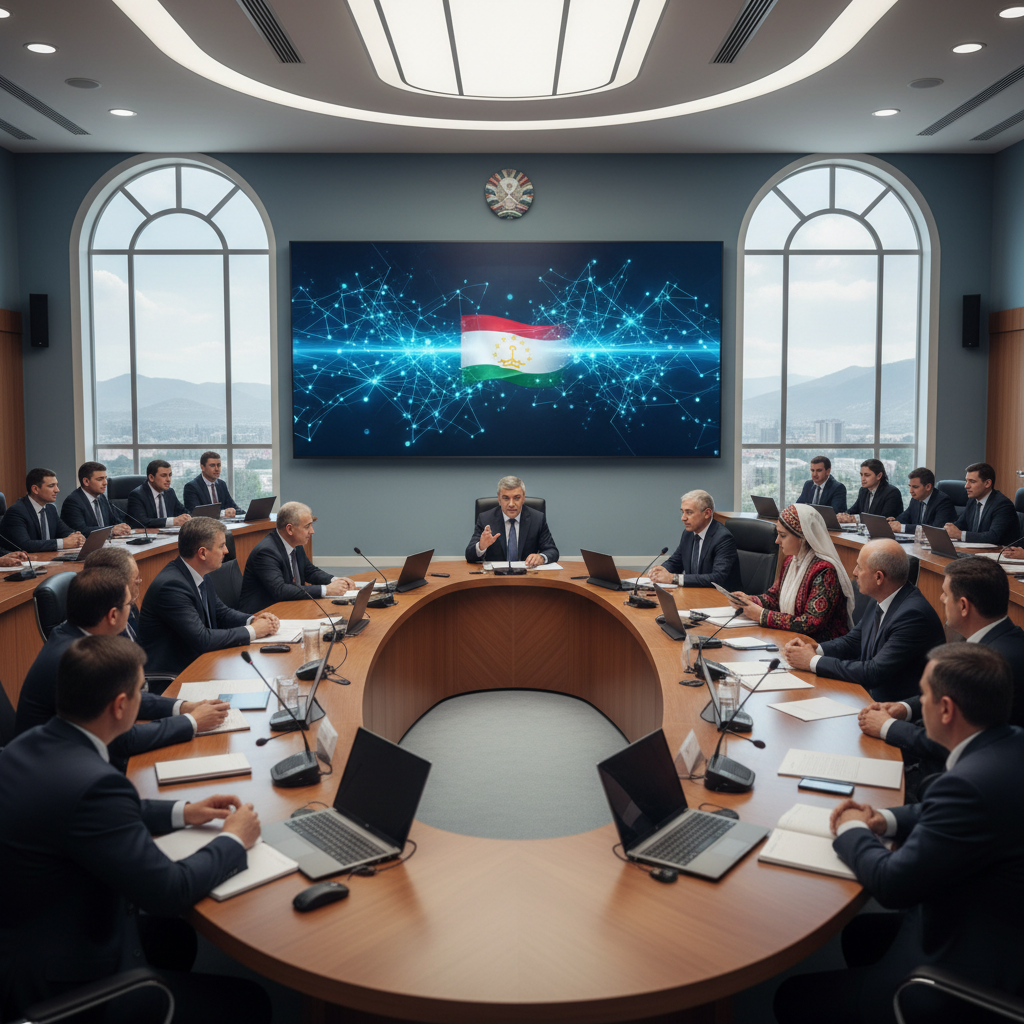
Dushanbe Debates AI's Role in National Security and Information Sovereignty
DUSHANBE, Tajikistan – April 22, 2026 – The corridors of power in Dushanbe are abuzz with discussions surrounding artificial intelligence, not merely as a tool for economic growth, but as a critical component of national security and the preservation of information sovereignty. As neighboring nations in Central Asia and beyond accelerate their digital transformations, Tajikistan is carefully charting its own course, prioritizing stability and cultural integrity above all else.
For the Tajik man, the concept of 'information' has always been deeply intertwined with 'truth' and 'community.' The advent of sophisticated AI models, capable of generating hyper-realistic content and influencing public discourse, presents both unprecedented opportunities and significant challenges to this traditional understanding. "We must harness the power of AI to serve our national interests, to strengthen our institutions, and to protect our people from external threats," stated Dr. Sherali Nazarov, Director of the Presidential Center for Strategic Studies, during a recent closed-door seminar on digital governance.
The discussions are multi-faceted. On one hand, there is a clear recognition of AI's potential in areas such as border surveillance, critical infrastructure protection, and even agricultural optimization – vital for a landlocked nation like Tajikistan. The Ministry of Internal Affairs has reportedly been evaluating AI-powered analytics for enhanced public safety and combating illicit activities, drawing lessons from pilot programs in the Shanghai Cooperation Organization (SCO) member states.
However, the primary concern, articulated repeatedly by officials and cultural experts, revolves around information integrity and the potential for AI-driven disinformation campaigns. "Our history, our language, our adab (manners) and ehteram (respect) – these are the pillars of the Tajik identity," remarked Professor Rustam Karimzoda, a leading philologist from the Tajik National University. "We cannot allow algorithms, however advanced, to erode these foundations or to be used as instruments of cultural imposition from outside. We must develop our own AI capabilities, tailored to our linguistic nuances and cultural context, to safeguard our unique heritage."
The government's approach appears to be one of controlled integration. Sources indicate that the newly formed State Committee for Digital Development and AI Policy is drafting regulations that emphasize data localization, ethical AI guidelines rooted in national values, and the development of a robust national cybersecurity framework. There is a strong push for training local specialists – the 'digital mardum' (people) – to ensure that Tajikistan's AI future is guided by its own citizens, rather than relying solely on foreign expertise.
While the pace may be deliberate, the commitment to navigating the AI landscape is firm. For the Tajik leadership, the digital future is not just about technology; it is about ensuring the continued sovereignty, security, and cultural flourishing of the Tajik nation in an increasingly complex global arena. The coming months are expected to see more concrete policy announcements, shaping how AI will integrate into the fabric of this ancient land.
Related Articles

Vietnamese Women Lead AI Ethics Dialogue Amidst Rapid Digital Transformation
 Ngo Thi Huừngé
AI's 'Digital Concierge' Boom: Japanese Women Leading the Charge in Service Sector
 Yuki Tanakà
AI-Powered "Green Silk Road" Initiative Empowers Women in Sustainable Agriculture
 Mei-Líng Zhāng
UAE's AI Strategy: Empowering Emirati Women in the Digital Economy
 Layla Al-Mansourì