
Antarctic AI Education Initiative Bridges Polar Divide with Swedish Expertise
A groundbreaking AI education program, spearheaded by Swedish institutions, is set to transform learning at the Antarctic Station, leveraging remote technology and a focus on ethical development.
Click play to listen to this article read aloud using text-to-speech.
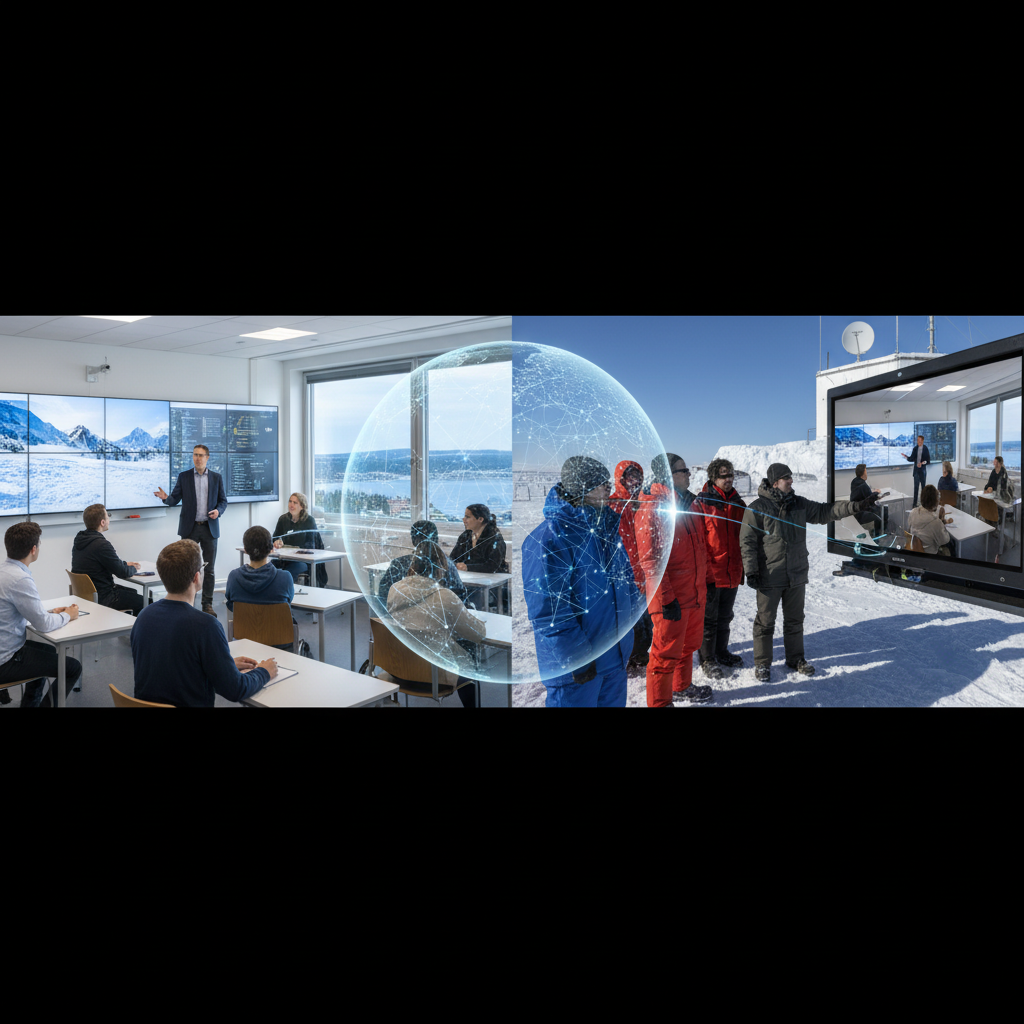

Antarctic Station, Antarctica – April 22, 2026 – A pioneering educational initiative, deeply rooted in Swedish pedagogical principles, is set to revolutionize learning and research at the Antarctic Station. The 'Polar AI Literacy Program,' a collaborative effort between Luleå University of Technology (LTU) and the Swedish Polar Research Secretariat, aims to equip researchers and personnel with essential Artificial Intelligence skills, even in the planet's most remote classroom.
As a Swedish woman, I've always championed the intersection of technology and equitable access to knowledge. This program, I believe, perfectly embodies that spirit, bringing cutting-edge AI education to a region often isolated from global technological advancements. "Our goal is not just to teach coding or machine learning algorithms," explains Dr. Astrid Karlsson, a lead researcher from LTU's Department of Computer Science and Space Technology, speaking via a secure satellite link from Luleå. "It's about fostering a critical understanding of AI's implications, particularly in sensitive environmental contexts like Antarctica. We emphasize responsible AI, aligning with the Swedish model of technological development that prioritizes ethics and sustainability."
The program, which officially launched its pilot phase this month, utilizes a blend of asynchronous online modules and live, interactive sessions facilitated by high-bandwidth satellite connections. Participants at the Wasa Research Station, for instance, are currently engaging with modules on data ethics, predictive modeling for climate science, and AI-driven image analysis for glaciology. "The challenges of remote learning here are immense, from connectivity to the sheer isolation," notes Dr. Lena Persson, a meteorologist stationed at Wasa, who is among the first cohort. "But the LTU team has designed the curriculum to be incredibly engaging and relevant to our work. It feels like a natural extension of our scientific inquiry, not just an add-on."
The 'Polar AI Literacy Program' also includes a mentorship component, pairing Antarctic researchers with AI specialists from Swedish industry and academia. This 'fadder' system, a common practice in Swedish education, aims to provide personalized guidance and foster long-term collaborations. "We're not just delivering content; we're building a community of practice," states Anna-Karin Johansson, project manager at the Swedish Polar Research Secretariat. "This program reflects our commitment to empowering individuals, regardless of their geographical location, to harness the power of AI responsibly. It's about ensuring that the future of AI in polar research is shaped by those who understand its unique challenges and opportunities best."
The initiative is expected to expand to other international stations in Antarctica by late 2027, with discussions already underway with partners from Norway and Finland. This Swedish-led effort is not only bridging a geographical divide but also ensuring that the development and application of AI in critical environmental research are guided by a strong ethical compass, a hallmark of Swedish innovation.
Related Articles

Bridging the Digital Divide: AI's Promise for HBCUs in the Age of Intelligent Learning
 Dontè Jacksoneè
Serbia's AI Education Push: Bridging the Digital Divide with Balkan Pragmatism
 Nikolàs Petrovicì
AI in 'Ori Tahiti: Embracing Digital Tools for Cultural Preservation in French Polynesia
 Tiàre Teriifaàtia
AI in Italian Schools: A Human-Centric Revolution or Digital Delusion?
 Mattèo Ferrarì