
AI in 'Ori Tahiti: Embracing Digital Tools for Cultural Preservation in French Polynesia
French Polynesia explores AI's role in education, particularly for 'Ori Tahiti, sparking debate on technology's impact on cultural heritage. Experts weigh in on balancing innovation with tradition.
Click play to listen to this article read aloud using text-to-speech.
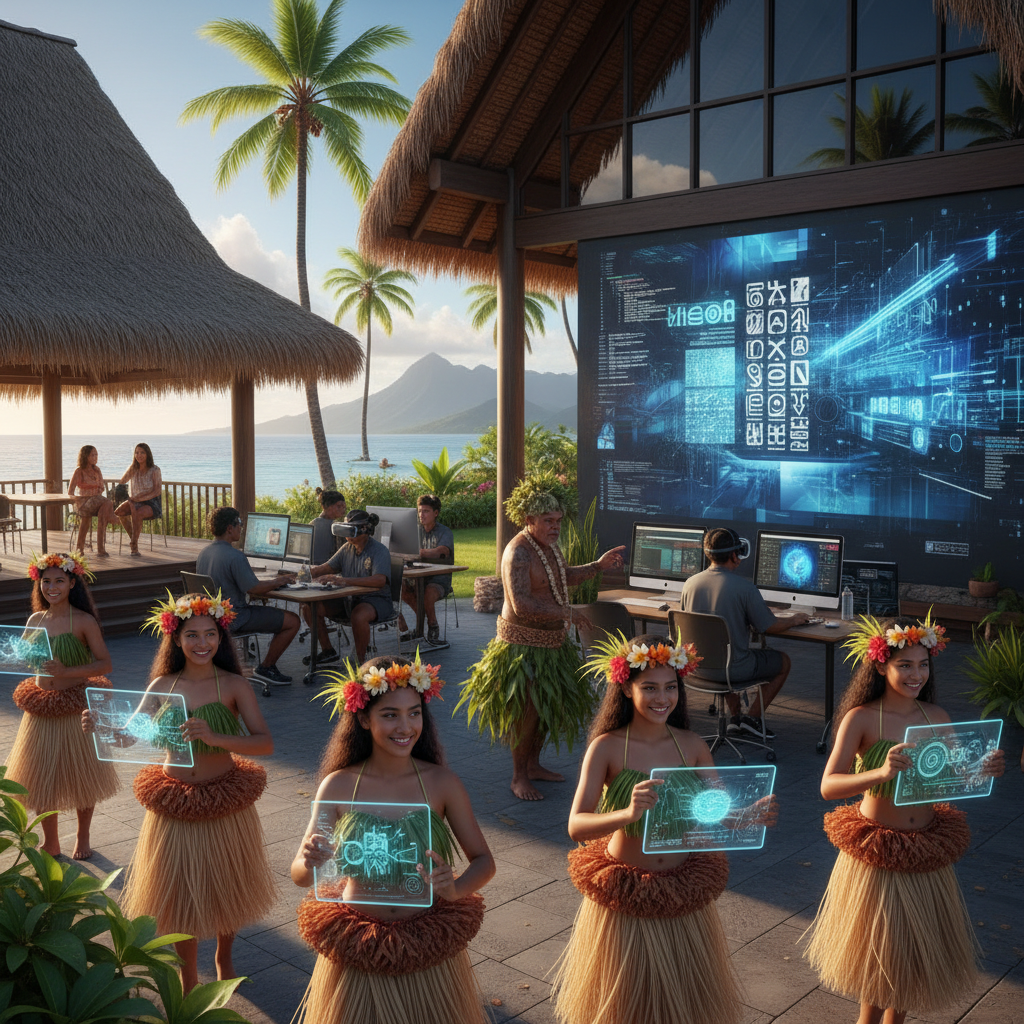

PAPE'ETE, Tahiti – The rhythmic sway of the Ori Tahiti, a cornerstone of our Fenua's cultural identity, is now at the heart of a fascinating discussion concerning artificial intelligence in education. As French Polynesia navigates the digital age, institutions are exploring how AI can support, rather than dilute, the transmission of our ancestral knowledge, particularly among our young women.
The recent 'A'ai Digital Forum held at the University of French Polynesia (UPF) brought together educators, cultural practitioners, and technologists to deliberate on the ethical and practical applications of AI in preserving and teaching Ori Tahiti. The focus was particularly sharp on how these tools could empower young *vahine* (women) to deepen their connection to their heritage.
"The Ori Tahiti is more than just a dance; it's a *parau tumu* – a foundational narrative – passed down through generations," explains Dr. Hinaura Teihotaata, a prominent ethnomusicologist and expert in Polynesian cultural studies at UPF. "For our *tamahine* (daughters) and *vahine* to truly embody its spirit, they need access to authentic teachings. AI, if used thoughtfully, could offer new avenues for learning intricate movements, chants, and the *mana* (spiritual power) behind each gesture, especially for those in remote *motu* (islands) where master teachers are scarce."
One initiative discussed was the potential development of an AI-powered 'Ori Tahiti learning platform. This platform could analyze dance movements, provide real-time feedback on posture and fluidity, and even translate ancient pehe (chants) into contemporary Tahitian or French, ensuring deeper comprehension of the lyrical narratives. "Imagine a young vahine in Rurutu, perfecting her fa'arapu with personalized AI guidance, then sharing her progress with her tumu ra'atira (master teacher) via video," says Manutea Tauhiti, Director of the Tahitian Cultural Academy, a fictional institution dedicated to cultural arts. "This isn't about replacing human instruction but augmenting it, making our heritage more accessible and engaging for the next generation of 'aito (champions) of our culture."
However, concerns were also voiced. Some cultural elders, or matahiapo, expressed apprehension that over-reliance on technology might strip the dance of its spiritual essence and the vital human connection inherent in its transmission. "The ha'api'ira'a (teaching) of Ori Tahiti is a sacred exchange, a bond between teacher and student," remarked Mama Ruahine, a revered *ra'atira 'ori* (master dancer) from Papenoo. "Can a machine truly convey the *'ā'au* – the heart and soul – of our dance? We must ensure that technology serves our traditions, not the other way around."
The consensus from the forum leaned towards a balanced approach, emphasizing AI as a supplementary tool. The goal is to leverage its capabilities for archiving, detailed analysis, and widespread dissemination, while preserving the irreplaceable role of human tumu ra'atira in imparting the 'ōpuara'a (intention) and manao (thought) behind the movements. As French Polynesia looks to the future, the integration of AI in education, particularly for cultural preservation, promises a dynamic interplay between innovation and the enduring spirit of our fenua.
Related Articles
Bridging the Digital Divide: AI's Promise for HBCUs in the Age of Intelligent Learning
 Dontè Jacksoneè
AI Coaching Down Under: Wallabies Eyeing Data Edge for Bledisloe Glory
 Lachlaneè Mitchèll
AI's Promise for Tahitian Women's Health: Early Cancer Detection in Remote Fenua
Tiàre Teriifaàtia
Antarctic AI Education Initiative Bridges Polar Divide with Swedish Expertise
 Erikà Lindströmè