AI's Promise for Tahitian Women's Health: Early Cancer Detection in Remote Fenua
AI-powered diagnostics are poised to revolutionize early cancer detection for women in French Polynesia's remote islands, addressing critical healthcare disparities and leveraging traditional knowledge.
Click play to listen to this article read aloud using text-to-speech.
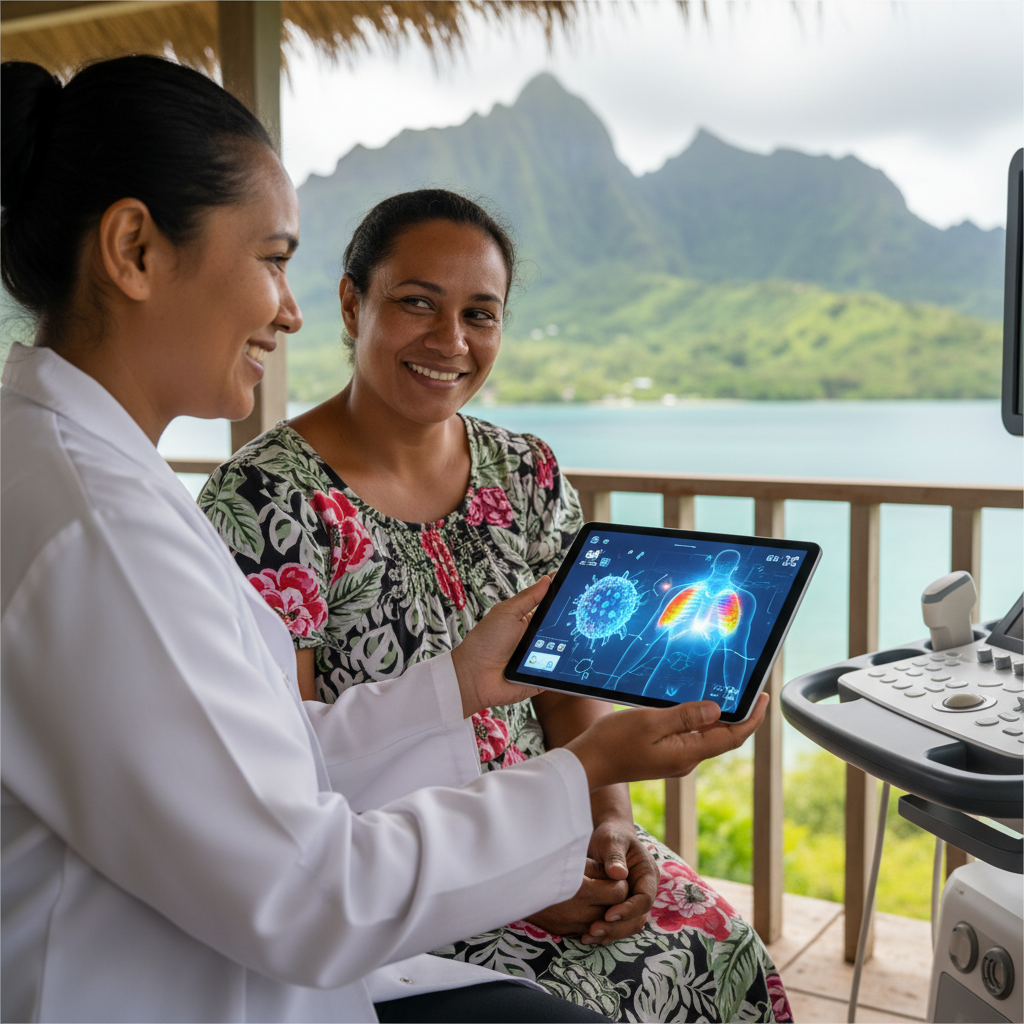
PAPEETE, TAHITI – The vast blue expanse of Te Moana Nui a Hiva often means vast distances to healthcare, a reality keenly felt by vahine across our fenua. However, a groundbreaking initiative leveraging Artificial Intelligence (AI) is set to bridge this gap, promising earlier cancer detection, particularly for breast and cervical cancers, which disproportionately affect Tahitian women in our more isolated communities.
Spearheaded by the Direction de la Santé in partnership with the Université de la Polynésie Française (UPF) and supported by the Gouvernement de la Polynésie Française, the 'Vahine Ora AI' project aims to deploy AI-driven diagnostic tools to aid local health professionals in remote motu and archipelagos. Dr. Hina Tevaearai, a leading epidemiologist at the UPF and a strong advocate for women's health, emphasizes the urgency. "For too long, women in the Tuamotus or Marquesas have faced significant delays in diagnosis due to limited access to specialists and advanced imaging. AI offers a pathway to democratize early detection, a critical factor in survival rates for cancers like breast and cervical cancer, which are unfortunately on the rise among our māmā and tamāhine."
The pilot program, launched this month in Raiatea and Rurutu, involves AI algorithms trained on a vast dataset of medical images and patient histories, including anonymized data from Centre Hospitalier de Polynésie Française (CHPF). These algorithms assist local nurses and general practitioners in interpreting mammograms and cervical smear results with enhanced accuracy, flagging potential anomalies that might otherwise be missed or require costly, time-consuming referrals to Tahiti.
Ms. Mereani Tefaatau, a community health worker from Rurutu, expressed her enthusiasm during a recent training session. "This technology is a gift. It means we can offer our women here the same level of initial screening as in Papeete. It empowers us, the local health teams, to act faster. Our vahine are often hesitant to travel for check-ups due, to cultural reasons or financial constraints; this brings the care closer to home, respecting their mana and autonomy."
The 'Vahine Ora AI' project isn't just about technology; it's deeply rooted in the Polynesian principle of 'aito, or resilience, and community care. The initiative also incorporates a culturally sensitive outreach program, ensuring that the technology is introduced in a way that respects local customs and promotes trust. Educational materials are being developed in Reo Tahiti and other local languages, emphasizing the importance of regular screenings and demystifying AI.
However, challenges remain. Reliable internet connectivity in remote areas is crucial for data transfer and algorithm updates. Dr. Tevaearai acknowledges this: "We are working closely with the Office des Postes et Télécommunications (OPT) to ensure robust satellite internet access for these health centers. The success of 'Vahine Ora AI' hinges not just on the algorithm, but on the entire digital infrastructure and, most importantly, the trust and participation of our vahine."
As French Polynesia continues to navigate its digital transformation, this AI initiative stands as a beacon of hope, promising a future where geographical isolation no longer dictates health outcomes for Tahitian women. It's a testament to how innovation, when guided by local needs and cultural understanding, can truly serve the well-being of our nūna'a. The vision is clear: to ensure every vahine in every motu has the best chance at a healthy life.
Related Articles
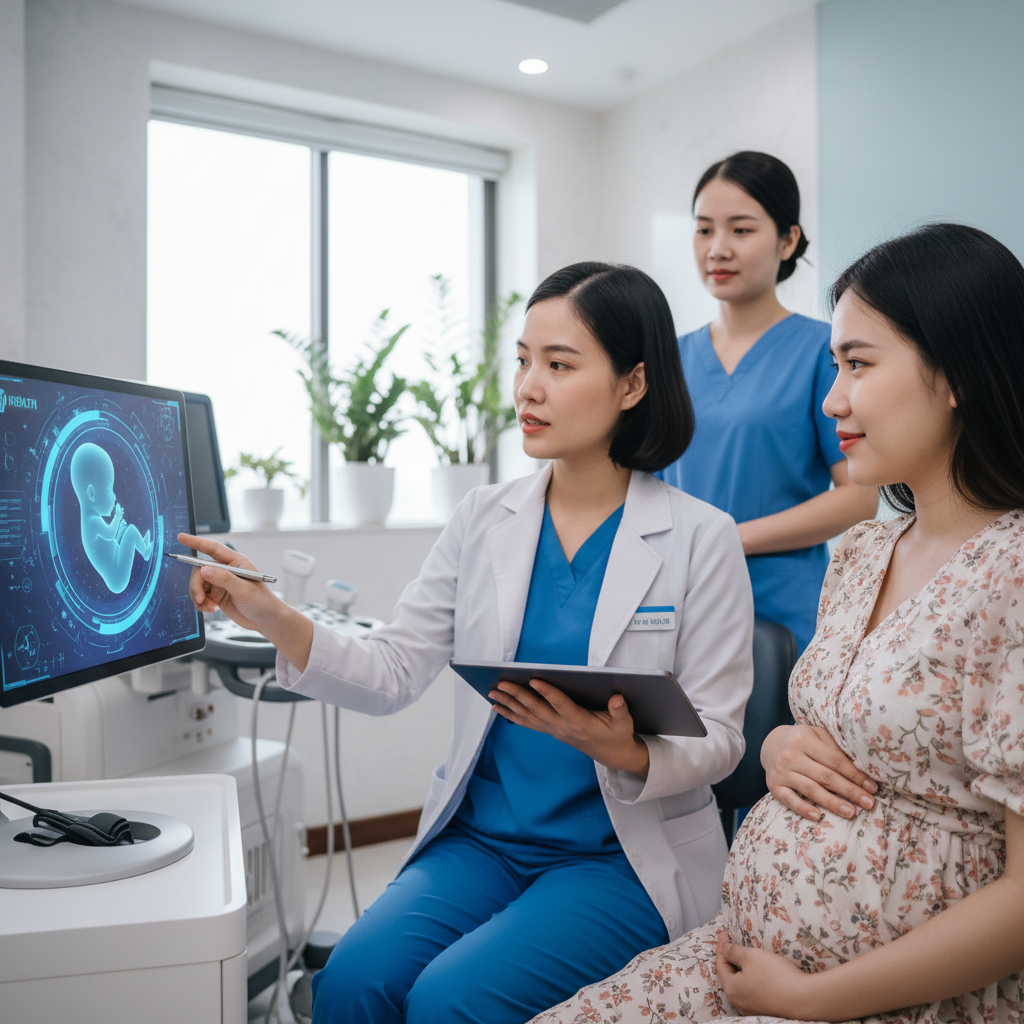
AI's Gentle Touch: Revolutionizing Maternal Healthcare in Vietnam
 Ngo Thi Huừngé
Algeria's AI Health Revolution: A New Dawn for Public Well-being, Says Experts
 Abderrahmàn Bensoussàn
AI Revolutionizes Rural Healthcare in Punjab: A New Dawn for 'Pind' Clinics
 Arjùn Sharmà
AI Coaching Down Under: Wallabies Eyeing Data Edge for Bledisloe Glory
 Lachlaneè Mitchèll