
AI's 'She-Power' in China's Rural Health: Bridging Gaps for Women
AI-powered diagnostic tools are revolutionizing healthcare access for women in China's rural areas, addressing long-standing disparities and empowering local female health workers. This initiative, championed by the National Health Commission, promises a new era of equitable care.
Click play to listen to this article read aloud using text-to-speech.
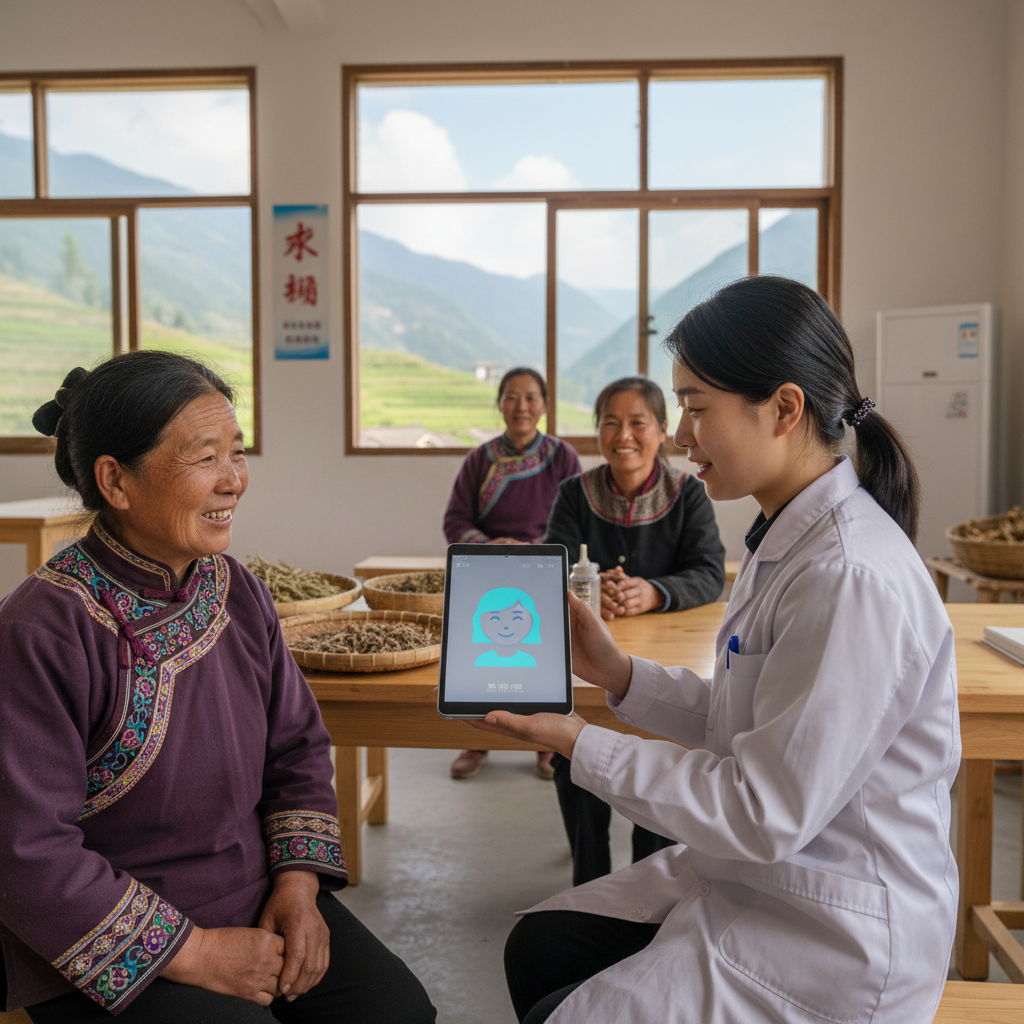
Beijing, China – April 2026 – In a significant stride towards equitable healthcare, China is leveraging artificial intelligence to transform medical diagnostics in its vast rural hinterlands, with a particular focus on improving health outcomes for women. This initiative, often dubbed the 'She-Power' (她力量) of AI in healthcare, is not merely about technological advancement but about addressing systemic challenges faced by rural Chinese women.
For generations, women in remote villages have contended with limited access to specialized medical care, particularly for conditions like cervical cancer, breast cancer, and maternal health issues. The scarcity of highly trained specialists and advanced diagnostic equipment outside major urban centers has created a persistent 'health divide' (健康鸿沟). However, new AI diagnostic platforms are rapidly closing this gap.
Take, for instance, the 'Jiankang Nüwa' (健康女娲 – Health Goddess Nüwa) project, a collaborative effort between the Chinese Academy of Medical Sciences and leading tech firms like Baidu Health. This platform utilizes deep learning algorithms to analyze medical images – from mammograms to cervical cytology slides – with accuracy comparable to, and sometimes exceeding, human specialists. Crucially, these systems can be operated by local community health workers (乡村医生), many of whom are women themselves, after minimal specialized training.
"This isn't just about technology; it's about empowerment," states Dr. Li Wei, Director of the Women's Health Department at the National Health Commission, in an exclusive interview. "By placing advanced diagnostic capabilities into the hands of our grassroots female health practitioners, we are not only improving early detection rates but also elevating their professional standing and influence within their communities. It's a testament to the 'half the sky' (半边天) principle, applied to medical innovation." Dr. Li emphasized that early data from pilot programs in Sichuan and Gansu provinces show a 30% increase in early-stage cervical cancer detection among rural women, a critical factor for successful treatment.
Furthermore, AI-driven telemedicine platforms are connecting rural patients directly with urban specialists for consultations, reducing the need for arduous and costly travel. These platforms are often designed with user interfaces that are intuitive for older generations and those with limited digital literacy, reflecting a thoughtful approach to inclusive design.
Professor Chen Jing, a sociologist specializing in gender and technology at Peking University, highlights the cultural significance. "Historically, women in rural China have often prioritized family needs over their own health. The accessibility and ease of these AI tools, often brought directly to their doorsteps by familiar female health workers, subtly shifts this dynamic, encouraging proactive health management. It reinforces the concept of 'women supporting women' (姐妹互助) through technological means."
The integration of AI into rural women's health is a powerful example of China's commitment to 'digital inclusion' (数字包容) and its pursuit of a 'Healthy China' (健康中国) strategy. As these technologies mature, they promise to not only extend lifespans but also enhance the quality of life for millions of Chinese women, ensuring that geographical location no longer dictates access to essential healthcare.
Related Articles
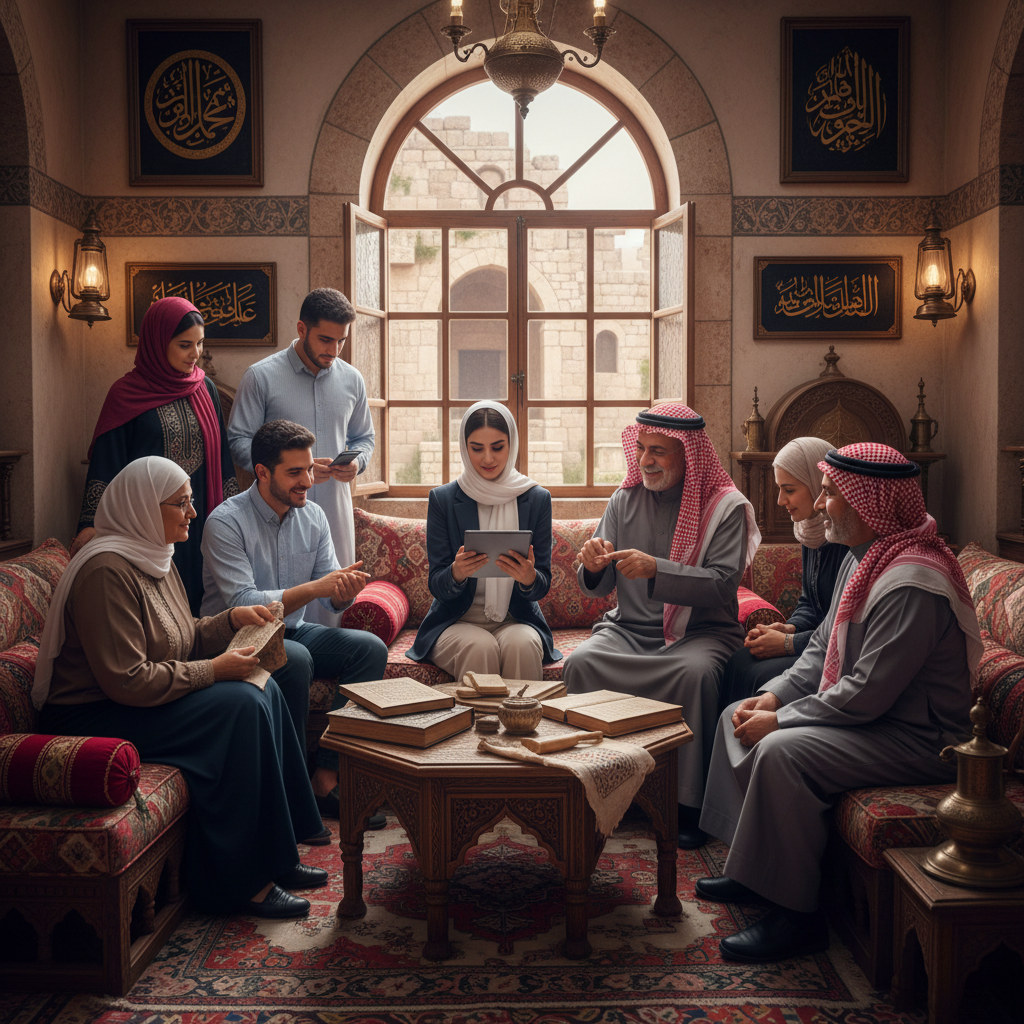
AI in the Diwan: Bridging Generations and Preserving Heritage in Jordan
 Hamzà Al-Khalìl
AI's Gentle Touch: Revolutionizing Maternal Healthcare in Vietnam
 Ngo Thi Huừngé
Algeria's AI Health Revolution: A New Dawn for Public Well-being, Says Experts
 Abderrahmàn Bensoussàn
AI's Cultural Canvas: Kerala's Kalamkari Artisans Embrace Digital Weave
 Priyà Nairé