
AI's Healing Touch: Revolutionizing Women's Health in Egypt
Egypt is embracing AI to transform women's healthcare, offering early disease detection and personalized treatments, particularly in underserved communities. This digital leap promises a future of equitable health outcomes for Egyptian women.
Click play to listen to this article read aloud using text-to-speech.
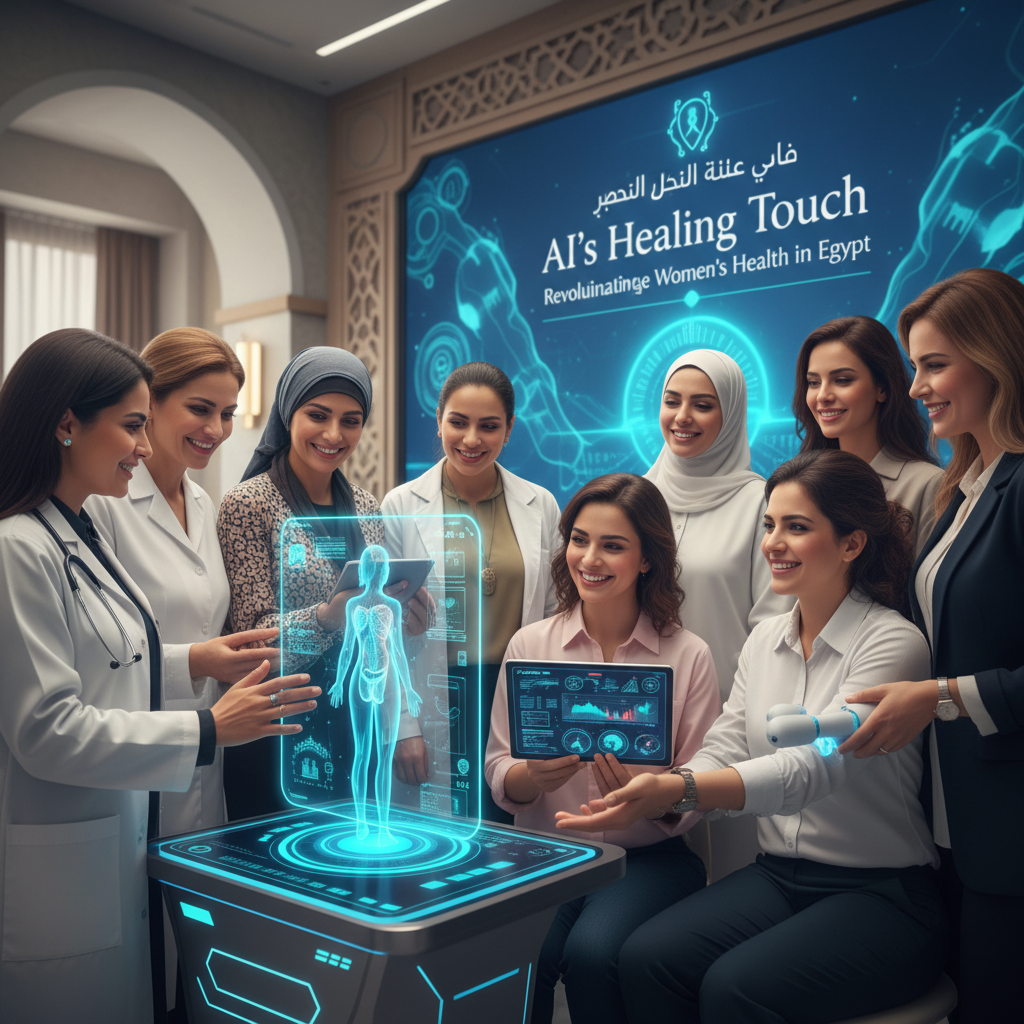
CAIRO, Egypt – The digital revolution is not just reshaping our economy; it's profoundly impacting the very fabric of our health, especially for women across Egypt. From the bustling clinics of Cairo to the more remote villages of Upper Egypt, Artificial Intelligence (AI) is emerging as a powerful ally in the quest for improved women's health outcomes, a development I, Amiraà Hassàn, have observed with keen interest.
Historically, access to specialized healthcare, particularly for women's specific needs like early cancer detection or reproductive health, has been uneven. The Ministry of Health and Population, under the visionary leadership of Dr. Hala Zayed, has been a staunch advocate for leveraging technology to bridge these gaps. Now, AI-driven diagnostic tools are making this vision a reality.
Consider the groundbreaking work at the National Cancer Institute (NCI) in Cairo. Dr. Mona El-Kady, a leading oncologist and a pioneer in AI diagnostics, explains, "We are deploying AI algorithms trained on vast datasets of Egyptian patient records to detect early signs of breast and cervical cancer with unprecedented accuracy. This is not just about technology; it's about saving lives and empowering women to seek timely intervention, reducing the burden of late-stage diagnoses that disproportionately affect our sisters in less accessible areas." The NCI's pilot programs, particularly in governorates like Minya and Assiut, have shown promising results, significantly improving screening rates and reducing diagnostic delays.
Beyond diagnostics, AI is also personalizing treatment plans. Startups like 'Sehaty.AI', founded by Egyptian female tech entrepreneurs, are developing platforms that use machine learning to analyze individual patient data – from genetic predispositions to lifestyle factors – to recommend tailored health strategies. "For Egyptian women, whose health journeys are often intertwined with family responsibilities and cultural nuances, a 'one-size-fits-all' approach simply doesn't work," states Ms. Sara Hegazy, CEO of Sehaty.AI. "Our AI considers these unique aspects, offering culturally sensitive advice and connecting women to appropriate local resources, whether it's a nutritionist or a support group for new mothers."
The implications for maternal health are equally transformative. AI-powered predictive analytics are helping identify high-risk pregnancies earlier, allowing healthcare providers to intervene proactively. Dr. Noha Refaat, a prominent gynecologist at Ain Shams University Hospital, notes, "The integration of AI into our prenatal care protocols is a game-changer. It enables us to monitor fetal development more closely and anticipate complications, leading to healthier mothers and babies. This is particularly crucial in rural settings where access to frequent specialist consultations is limited."
However, the journey is not without its challenges. Ensuring data privacy, building trust in AI systems within conservative communities, and addressing the digital literacy gap are critical. The National Council for Women (NCW) is actively involved in awareness campaigns, emphasizing the benefits of these technologies while also educating women on data security and digital rights. Dr. Maya Morsi, President of the NCW, asserts, "Our role is to ensure that this digital transformation in health is inclusive and equitable, reaching every Egyptian woman, safeguarding her data, and empowering her to take control of her health journey. This is about true empowerment, 'tamkeen' in its truest sense."
As Egypt strides forward into a digitally-driven future, AI's potential to revolutionize women's health offers a beacon of hope. It promises a future where geographical location or socio-economic status no longer dictates the quality of care, ensuring that every Egyptian woman has the opportunity to lead a healthier, more fulfilling life.
Related Articles
AI Diagnostics Bolster Rural Health in Russia's Far East, Aiding Men's Health Initiatives
 Alekseï Volkovì
AI in Women's Health: Spain Leads with 'SaludIA' for Early Detection
 Marisolò Garcíà
AI-Powered Coaching: Basotho Athletes Eye Global Stage with Digital Edge
 Nalèdi Mokoèna
Naija's AI Leap: Local Startups Eye Economic Transformation Amidst Global Race
 Chukwuemekà Obiechè