
AI-Powered Coaching: Basotho Athletes Eye Global Stage with Digital Edge
Lesotho's sports sector is embracing AI to revolutionize athlete training, with local experts and institutions pioneering solutions to elevate Basotho talent onto the international stage, particularly for women in sports.
Click play to listen to this article read aloud using text-to-speech.
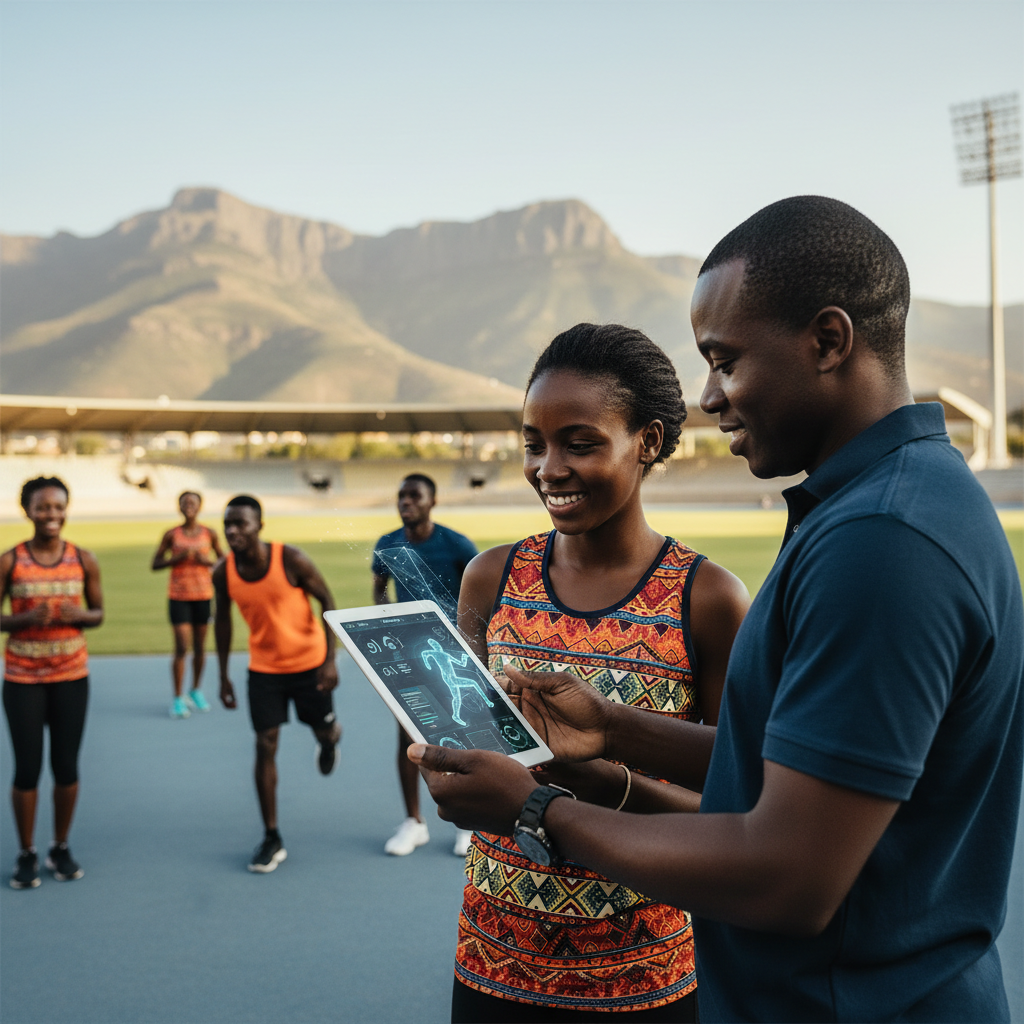

MASERU, LESOTHO – The roar of the crowd at Setsoto Stadium may soon be amplified by the silent hum of artificial intelligence. Lesotho, a nation rich in athletic potential, is strategically integrating AI-powered coaching and performance analytics into its sports development programs, a move poised to give Basotho athletes a significant edge on the global stage.
This digital transformation is particularly impactful for women in sports, a demographic often overlooked in traditional training paradigms. "For too long, our 'liatla' (hands) have been tied by limited resources and outdated methodologies," states 'M'e Nthabiseng Mohlomi, a revered sports psychologist and former national netball player, now a consultant for the Lesotho National Olympic Committee (LNOC). "AI offers a 'khoeli e ncha' (new moon) of opportunity, providing personalized insights that can sculpt our athletes into formidable competitors, especially our 'basali' (women) who are breaking barriers in fields like long-distance running and football."
At the forefront of this initiative is the newly established Centre for Sports Innovation (CSI) at the National University of Lesotho (NUL). Working in collaboration with the Lesotho Sports and Recreation Commission (LSRC), the CSI has launched a pilot program utilizing AI platforms to analyze athlete biomechanics, track performance metrics, and even predict injury risks. Dr. Thabo Mofokeng, head of the CSI, explains, "Our AI models, some developed using local data, can process vast amounts of information from wearable sensors and video footage. This allows coaches to identify subtle inefficiencies in a runner's stride or a footballer's kick, offering data-driven adjustments that were previously impossible without expensive, specialized equipment or foreign expertise."
The focus is not just on elite athletes. Grassroots programs, particularly those nurturing young 'banana' (girls) in rural areas, are also seeing the benefits. Mobile applications, developed by local tech startups like 'Lekhotla Tech,' are being piloted to provide basic AI-driven fitness assessments and training routines accessible via smartphones, bridging the technological gap for aspiring athletes in remote villages. "This is about democratizing access to world-class training," adds 'M'e Mohlomi. "A young woman in Mokhotlong should have the same analytical tools at her disposal as someone training in Johannesburg or London. It's about 'ho fana ka matla' (empowering) our future champions."
While the initial investment in AI infrastructure is substantial for a developing nation, the long-term benefits are expected to outweigh the costs. The LNOC is exploring partnerships with international tech firms and seeking grants from organizations like the African Union's Digital Transformation Initiative to scale these programs. The hope is that by April 2026, Lesotho will not only be sending more athletes to international competitions but also seeing them return with more 'khanya' (glory), all thanks to a strategic embrace of the digital future in sports.
Related Articles

Naija's AI Leap: Local Startups Eye Economic Transformation Amidst Global Race
 Chukwuemekà Obiechè
AI Revolutionizes Saudi Football: Al-Hilal Leads the Charge in Player Analytics
 Barakà Al-Rashíd
Algeria's Football Federation Explores AI for Talent Scouting and Player Development
 Abderrahmàn Bensoussàn
Ghana's AI Future: Local Voices Demand Ethical Frameworks Amidst Tech Boom
 Kwamé Asantè