
AI Diagnostics Bolster Rural Health in Russia's Far East, Aiding Men's Health Initiatives
New AI-driven diagnostic systems are being deployed across Russia's Far East, significantly improving early disease detection, particularly for men in remote regions, and reducing the burden on traditional healthcare infrastructure.
Click play to listen to this article read aloud using text-to-speech.
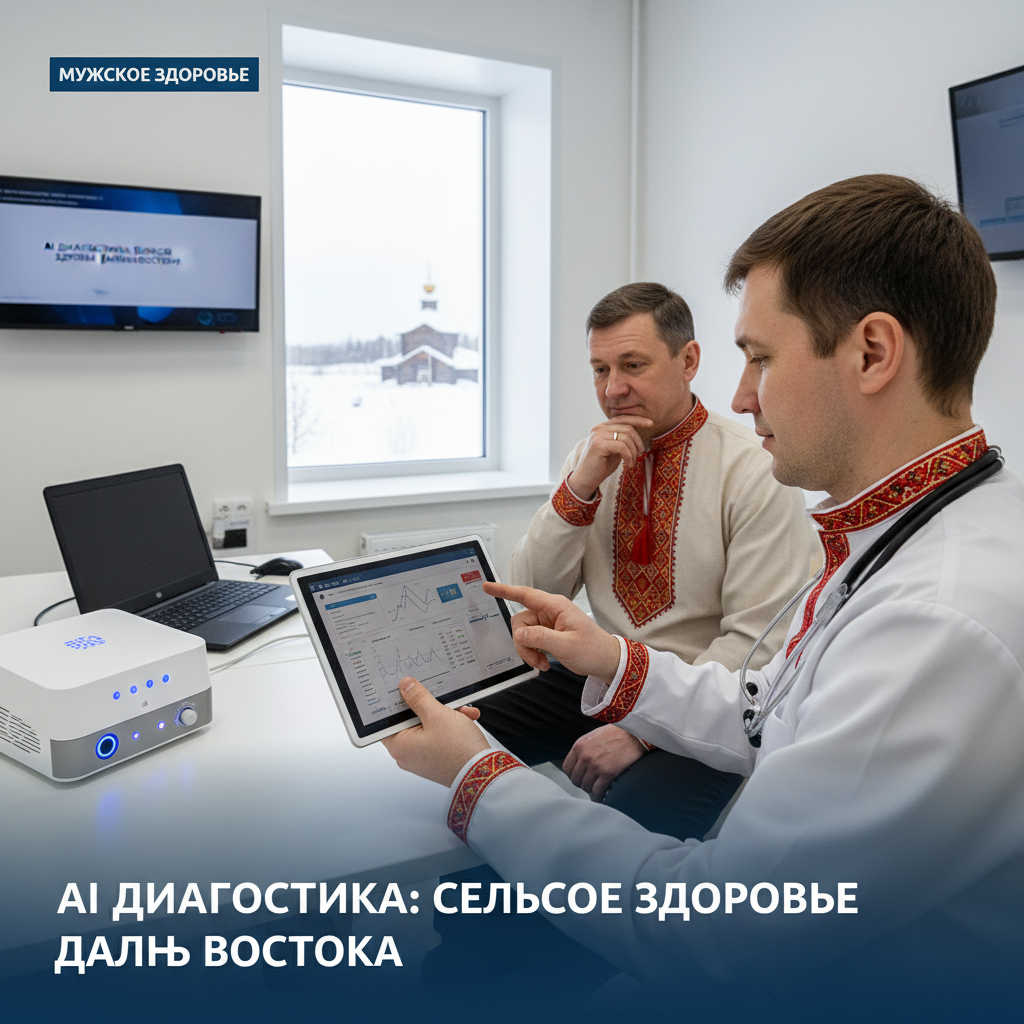
Vladivostok, Russia – The vast, often sparsely populated territories of Russia's Far East are witnessing a quiet revolution in healthcare, driven by advanced Artificial Intelligence. This initiative, spearheaded by the Ministry of Health and supported by the Rostec corporation, aims to bridge the geographical divide that has historically challenged timely medical access, especially for the muzhiki working in demanding industries like mining, fishing, and timber.
For generations, men in these remote posyolki have often delayed seeking medical attention due to distance, time constraints, and a cultural stoicism. This has frequently led to late-stage diagnoses of chronic conditions, significantly impacting life expectancy and quality. However, the new 'Med-AI Diagnostics' program, launched in full swing this spring, is changing this narrative.
"We are deploying sophisticated AI algorithms, developed by specialists from the Skolkovo Institute of Science and Technology, to analyze medical images – X-rays, CT scans, even basic ultrasound data – with unprecedented speed and accuracy," stated Dr. Ivan Petrov, Chief Medical Officer for the Far Eastern Federal District, in an exclusive interview. "This allows for early detection of pathologies, from pulmonary issues common among our miners to cardiovascular risks prevalent in our working-age male population, often before symptoms become severe enough for a man to consider a long journey to a regional hospital."
The system operates by transmitting anonymized patient data from local feldsher (paramedic) stations and small clinics to central processing hubs. Here, AI models, trained on vast datasets of Russian patient profiles, flag potential anomalies for review by human specialists. This hybrid approach ensures both efficiency and diagnostic integrity.
"The initial results are promising," noted Professor Anatoly Kuznetsov, head of the AI in Medicine department at Lomonosov Moscow State University, who has been advising on the project. "In pilot regions, we've seen a 20% increase in early-stage cancer diagnoses and a 15% reduction in misdiagnoses for cardiovascular diseases within the male demographic over the past year. This is a testament to the synergy between human expertise and machine intelligence."
The program is not without its challenges. Ensuring robust internet infrastructure in every remote settlement remains a priority, as does training local medical personnel to effectively utilize the new digital tools. "It's a significant undertaking, but one vital for the health and well-being of our citizens, particularly the backbone of our economy – our working men," emphasized Deputy Minister of Health, Svetlana Orlova, during a recent press briefing in Khabarovsk.
This strategic investment in AI healthcare technology underscores Russia's commitment to leveraging digital transformation for social good, ensuring that even the most isolated muzhik has access to cutting-edge diagnostic capabilities, reinforcing the nation's health security and productivity.
Related Articles

Slovak Universities Embrace AI: A New Era for STEM Education and Gender Equality
 Katarína Novákovà
Oslo's AI Ethics Initiative: A Nordic Model for Gender-Inclusive Development
 Ingridè Hansèn
Greek Universities Embrace AI: Bridging the Digital Divide for Women in STEM
 Zoë Papadakìs
AI in Women's Health: Spain Leads with 'SaludIA' for Early Detection
 Marisolò Garcíà