
AI's Green Promise: Jamaican Women Lead Climate Resilience with Tech
As climate change intensifies, Jamaican women are at the forefront, leveraging AI to build environmental resilience. From predicting extreme weather to optimizing agricultural practices, technology is empowering local communities.
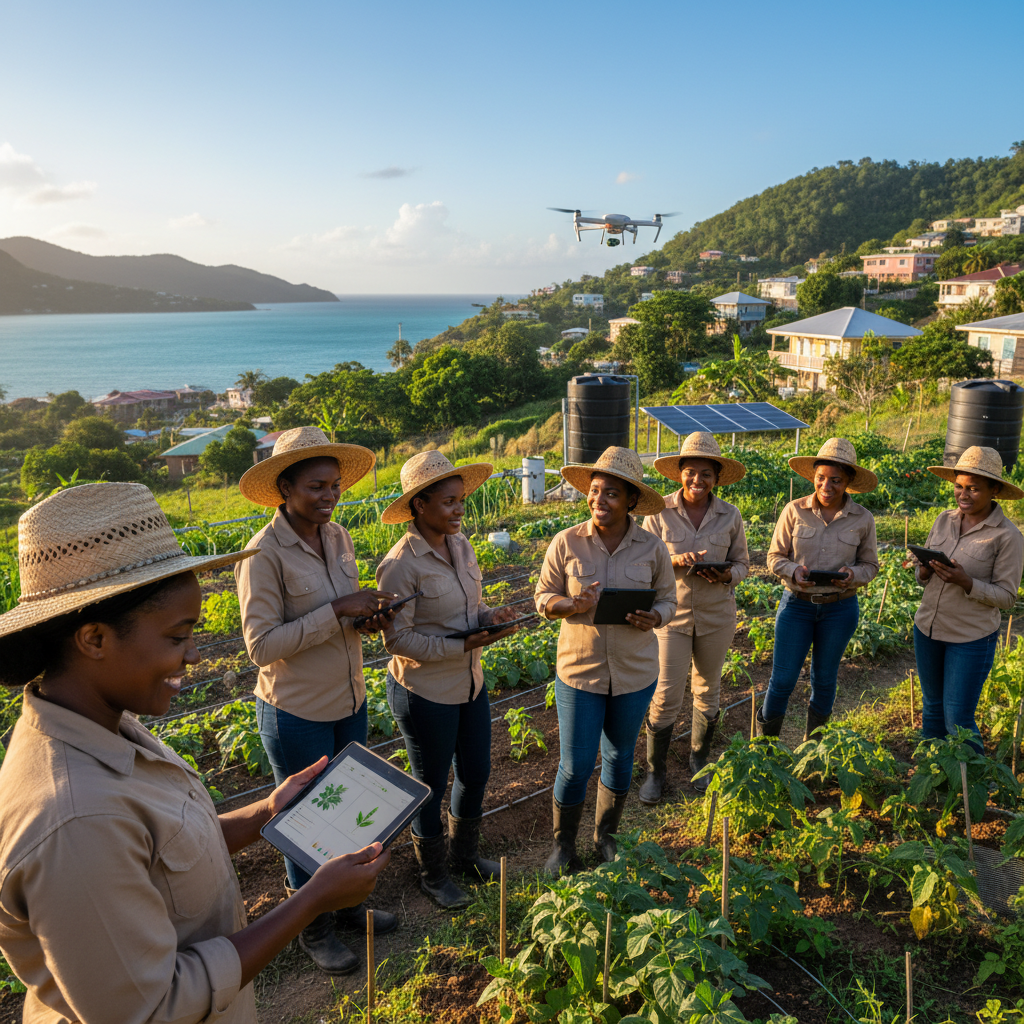

KINGSTON, JAMAICA – April 22, 2026 – The rhythmic pulse of Jamaica, often celebrated in song, now beats to the urgent drum of climate change. With rising sea levels, more intense hurricanes, and unpredictable rainfall patterns, the island nation, much like its Caribbean neighbours, faces an existential threat. Yet, amidst the challenges, a powerful narrative is emerging: Jamaican women are not just adapting, they are innovating, harnessing the power of Artificial Intelligence (AI) to forge a path towards environmental resilience.
“We can’t afford to be spectators in this fight; our livelihoods, our children’s future, depend on proactive solutions,” states Dr. Aliyah Campbell, a leading climate scientist and Head of the Environmental Data Analytics Unit at the University of the West Indies (UWI), Mona Campus. “AI isn’t a magic wand, but it’s a powerful tool that, when wielded with local knowledge, can transform our approach to environmental stewardship.”
Dr. Campbell, a staunch advocate for gender-inclusive technology, highlights initiatives like the ‘Caribbean Climate AI Hub,’ a regional collaboration focused on developing AI models tailored to Caribbean specificities. One such project, spearheaded by a team largely comprising Jamaican female engineers and data scientists, is an early warning system for extreme weather events. This system integrates satellite imagery, historical meteorological data, and predictive algorithms to forecast hurricane intensity and trajectory with unprecedented accuracy, providing communities with crucial extra hours for preparation and evacuation.
“For generations, it was the women in our communities who watched the skies, understood the land, and prepared the households for the ‘bad weather’,” explains Sister Veronica 'Ronnie' Davis, a community organizer from Portland, a parish particularly vulnerable to coastal erosion. “Now, these young women, bright like the morning sun, are using computers to do the same, but faster, smarter. It’s like their grandmothers’ wisdom, but with a digital upgrade.”
Beyond disaster preparedness, AI is making inroads into sustainable agriculture. In rural St. Ann, the ‘Agri-Tech Sisters’ cooperative, an all-female collective, is employing AI-powered sensors to monitor soil moisture, nutrient levels, and crop health. This data-driven approach optimizes irrigation, reduces water waste, and minimizes pesticide use, leading to higher yields and more sustainable farming practices. “Before, it was guesswork, or relying on traditional methods that aren’t always enough with the changing climate,” says Keisha Grant, a young farmer and co-founder of the cooperative. “Now, the AI tells us exactly what the plants need, when they need it. It’s a game-changer for our food security.”
While the promise of AI is immense, Dr. Campbell cautions that equitable access and digital literacy remain critical hurdles. “We must ensure that these technologies are not just developed for our people, but with them, and that the benefits reach every corner of our island, especially our rural women who are often the most impacted by environmental degradation,” she asserts. The Jamaican government, through the Ministry of Science, Energy, and Technology, has pledged support for digital inclusion programmes, recognizing that empowering women with AI skills is not just about technology, but about building a more resilient, equitable, and sustainable Jamaica. The future, it seems, is not just intelligent, but also distinctly feminine and profoundly Jamaican.
Related Articles
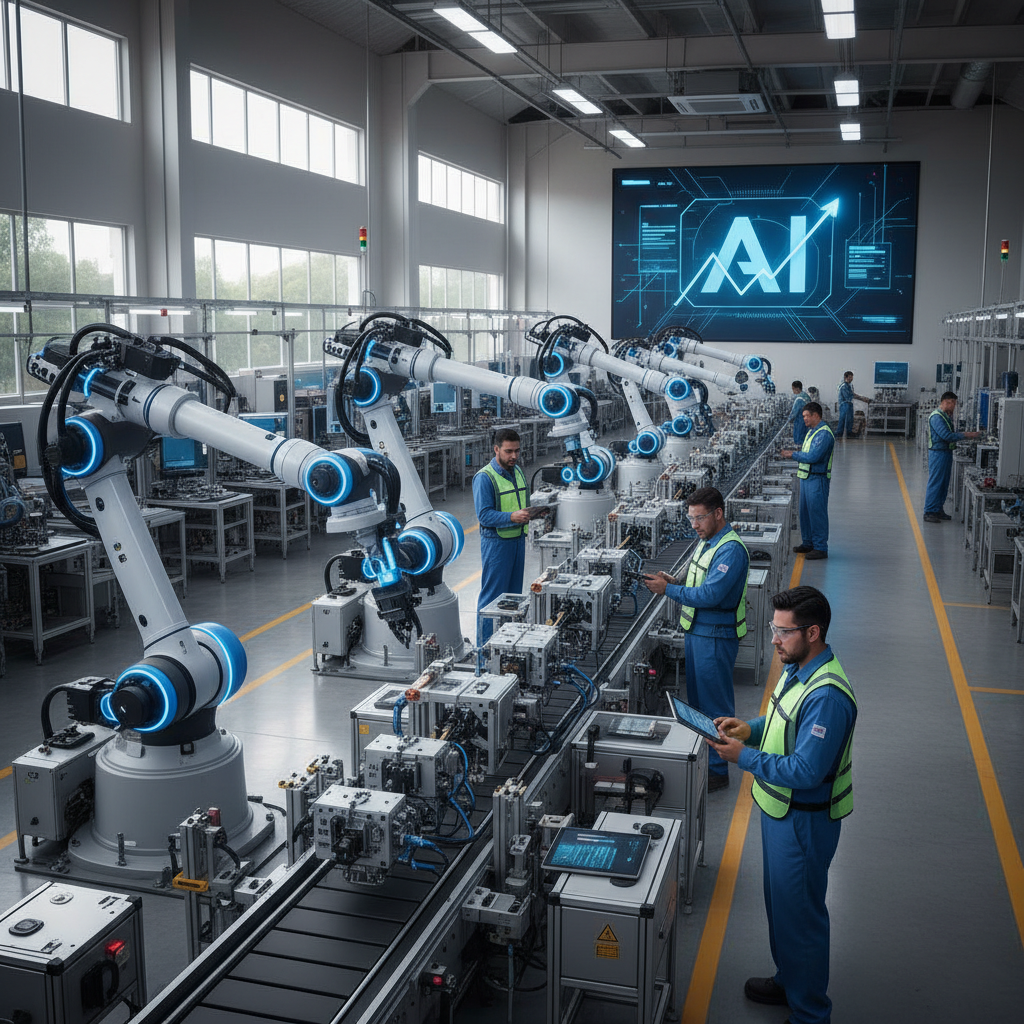
México's Maquiladoras Embrace AI: A New Era of Efficiency or Job Displacement?
 Alejandroó Riveràs
AI's Algorithmic Bias: A New Frontier in the Fight for Digital Equity for Black Men
 Deshawné Thompsòn
AI's Dual Edge: Opportunities and Gendered Challenges for Mexican Women in Tech
 Marisèl Rodriguèz
AI's Impact on the American Workforce: A Gendered Economic Shift
 Amèlia Whitè