
México's Maquiladoras Embrace AI: A New Era of Efficiency or Job Displacement?
AI integration in Mexico's manufacturing sector, particularly maquiladoras, is driving unprecedented efficiency but sparking debate over its long-term impact on the workforce and economic development. Experts weigh in on the 'nearshoring' boom meeting the 'AI revolution'.
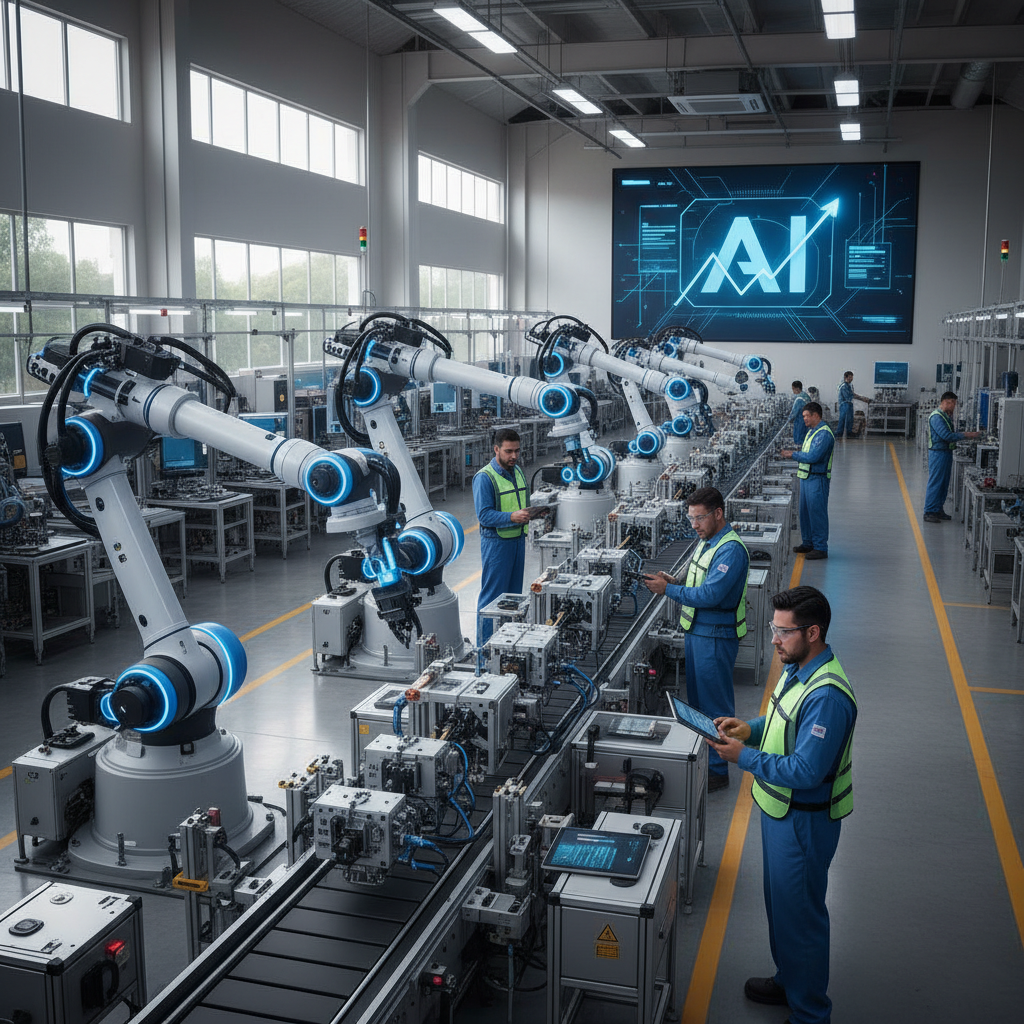

CIUDAD DE MÉXICO – The hum of machinery in Mexico's vast industrial corridors, from Tijuana to Querétaro, is increasingly accompanied by the silent whir of artificial intelligence. As the nearshoring phenomenon continues to reshape North American supply chains, Mexican manufacturing, particularly the maquiladora sector, is rapidly adopting AI to boost productivity and maintain its competitive edge.
This embrace of advanced automation, while economically promising, is igniting a crucial debate among policymakers, labor unions, and economists across the República Mexicana. Is this a golden opportunity for Mexico to solidify its position as a global manufacturing powerhouse, or a looming threat to the livelihoods of millions of trabajadores?
“The cuarta revolución industrial is here, and Mexico cannot afford to be left behind,” states Dr. Sofía Ramírez, an economist specializing in digital transformation at the Tecnológico de Monterrey. “We are seeing AI-powered predictive maintenance, quality control, and even robotic process automation becoming standard in facilities producing everything from automotive parts to electronics. This is driving down costs and increasing output, making Mexico even more attractive for foreign direct investment.”
Indeed, the numbers are compelling. A recent report by the Banco de México indicates that AI adoption in manufacturing could increase sector productivity by up to 15% over the next five years. Companies like Foxconn and Bosch, with significant footprints in Mexico, are leading the charge, implementing AI solutions to optimize their operations.
However, the human element remains a significant concern. “We must be pragmatic,” argues Lic. Ricardo Sánchez, Secretary General of the Confederación de Trabajadores de México (CTM) in Nuevo León. “While efficiency is good, we cannot sacrifice our gente. Many of our compañeros have built their lives around these jobs. The government, in conjunction with industry, must invest heavily in reskilling and upskilling programs. We need to prepare our workforce for the jobs of tomorrow, not just lament the loss of yesterday’s.”
President Andrés Manuel López Obrador’s administration, through the Secretaría de Economía, has acknowledged these concerns. “We are working on a national strategy for technological integration that prioritizes human capital,” stated Undersecretary of Industry and Commerce, Mtro. Juan Pablo Castañón, in a recent press conference. “Our goal is to ensure that AI serves to elevate the quality of life for all Mexicans, not to create a new divide.”
The challenge for Mexico, a nation with a rich history of industrial development and a vibrant workforce, is to navigate this technological tide with foresight and social responsibility. The future of its maquiladoras, and indeed its broader economy, hinges on how deftly it can marry the promise of AI with the imperative of inclusive growth. The mañana of Mexican industry is being forged today, one algorithm at a time.
Related Articles

AI's Ethical Frontier: White House Task Force Grapples with Bias in Public Sector Algorithms
 Amèlia Whitè
AI's 'Glass Ceiling' for Women: A New Frontier for Equity in Tech
Amèlia Whitè
Italy's AI Ambitions: Can Digital Transformation Revitalize the 'Made in Italy' Economy?
 Mattèo Ferrarì
AI's Algorithmic Bias: A New Frontier in the Fight for Digital Equity for Black Men
 Deshawné Thompsòn