
Italy's AI Ambitions: Can Digital Transformation Revitalize the 'Made in Italy' Economy?
Italy grapples with the integration of Artificial Intelligence into its traditional economic fabric, particularly the 'Made in Italy' sectors. Experts debate the balance between innovation and preserving artisanal heritage.
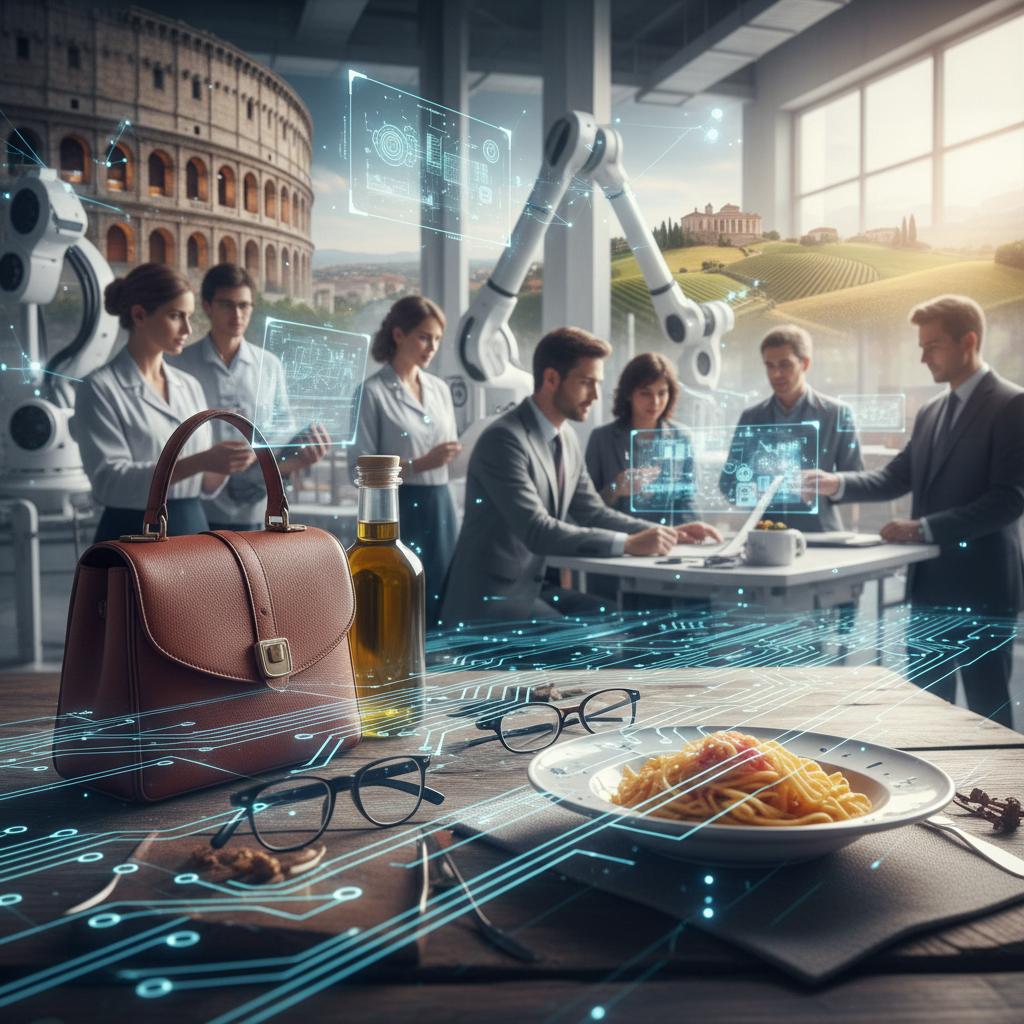
ROME – The hum of servers and the whisper of algorithms are increasingly echoing through the storied halls of Italian industry, prompting a national conversation about the future of the 'Made in Italy' brand in an AI-driven world. As Europe pushes for digital transformation, Italy finds itself at a critical juncture, balancing its rich artisanal heritage with the imperative of technological advancement.
For generations, the Italian man, with his innate sense of craftsmanship and dedication to quality, has been the bedrock of sectors like fashion, automotive, and food. Now, Artificial Intelligence promises to revolutionize production, supply chains, and even design. But the question remains: can AI enhance, rather than erode, the unique human touch that defines Italian excellence?
"The challenge is not to replace the maestro artigiano with a machine, but to empower him," states Professor Alessandro Rossi, an economist at Bocconi University in Milan, known for his studies on the Italian industrial districts. "We must see AI as a sophisticated tool, a strumento di precisione, that amplifies human ingenuity, not diminishes it. Imagine AI optimizing textile patterns or predicting market trends for a small leather goods workshop in Florence – this is where the synergy lies."
The Italian government, through initiatives championed by the Ministry for Enterprise and Made in Italy (MIMIT), is actively promoting AI adoption. A recent parliamentary discussion highlighted the need for targeted investments in reskilling the workforce, particularly the male demographic traditionally dominant in these sectors. "Our men, our uomini, are adaptable. They have always embraced new technologies, from the loom to the assembly line," remarked Senator Marco Bellini, head of the Senate's Industry Committee. "We need to ensure they are at the forefront of this digital revolution, not left behind. Training programs must be accessible, practical, and respect the deep-rooted knowledge they already possess."
However, concerns persist among smaller enterprises. Giovanni Esposito, owner of a third-generation ceramic workshop in Faenza, voiced his reservations. "My father taught me this craft, his father taught him. Can an algorithm truly understand the subtle variations in clay, the feeling in the hand?" he pondered, gesturing to a newly fired vase. "We are open to innovation, yes, but not if it means losing our soul, our anima."
Experts like Dr. Sofia Bianchi from the European Digital Innovation Hub in Turin emphasize that ethical AI development and human-centric design are paramount. "The European approach, unlike some others, prioritizes human oversight and ethical guidelines. For Italy, this is an opportunity to lead in creating AI that serves humanity, preserving cultural identity while fostering economic growth," Dr. Bianchi explained during a recent industry summit in Bologna.
The coming years will be crucial. Italy's ability to integrate AI while safeguarding its distinctive industrial character – a character deeply intertwined with the skills and spirit of its people – will determine whether 'Made in Italy' remains a global benchmark for quality and innovation in the digital age.
Related Articles

AI's 'Lagom' Embrace: Swedish Women Navigate Digital Transformation in Cultural Spheres
 Annikà Lindqvìst
Turkish Universities Embrace AI: A New Era for Education and Workforce Development
 Emrè Yilmazì
Irish Women at Forefront of Ethical AI Development Amid EU Regulation
 Aoifè Murphŷ
AI's Ethical Compass: Nordic Women Lead in Shaping Responsible Digital Futures
 Ingridè Hansèn