
AI's Impact on the American Workforce: A Gendered Economic Shift
As AI integration accelerates across the U.S. economy, a new report from the National Bureau of Economic Research highlights a disproportionate impact on female-dominated sectors, prompting calls for targeted reskilling initiatives.
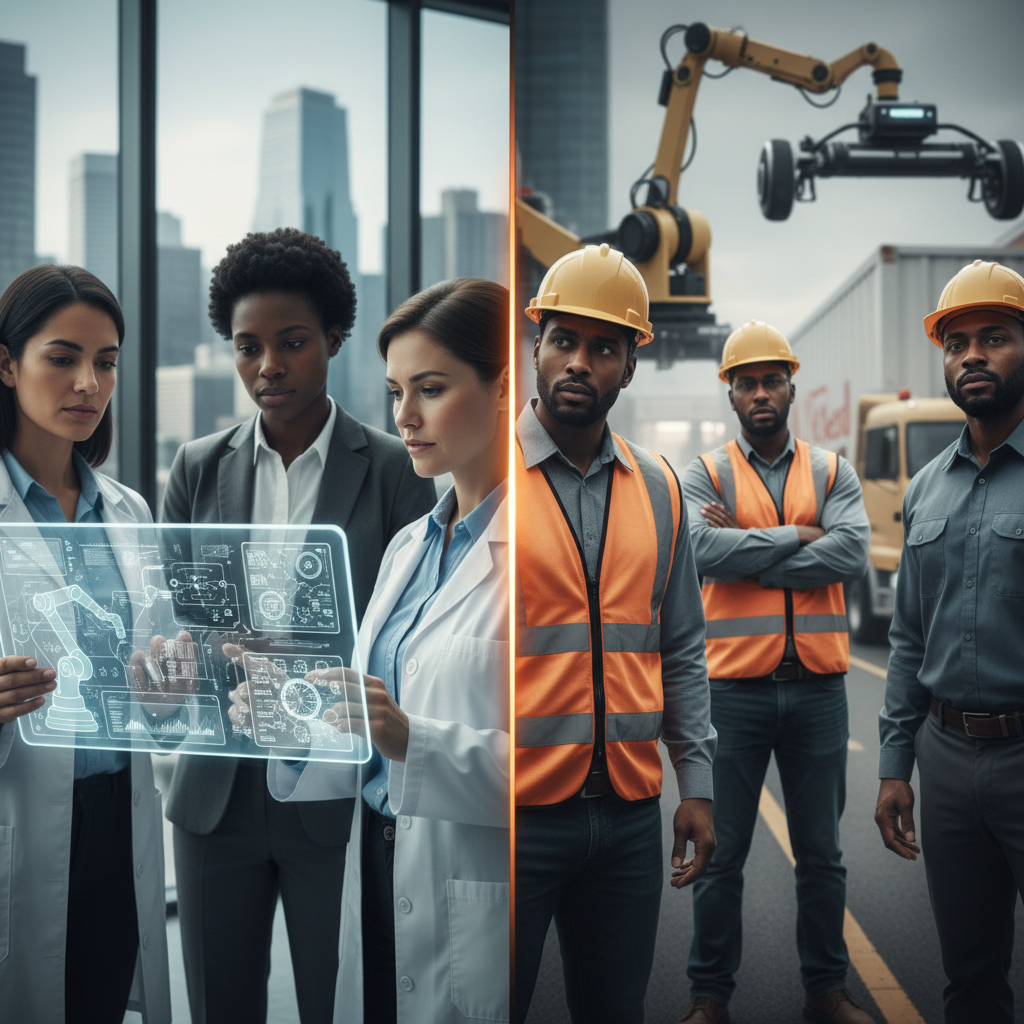

AI's Impact on the American Workforce: A Gendered Economic Shift
Washington D.C. – The rapid integration of Artificial Intelligence into the American economy is ushering in a transformative era, but a recent report from the National Bureau of Economic Research (NBER) suggests this shift is not gender-neutral. The study, titled "Automation and the American Labor Market: A Gendered Perspective," indicates that while AI promises increased productivity, its immediate impact is disproportionately felt in sectors traditionally dominated by Caucasian American women, raising concerns about economic equity and future workforce development.
"We're seeing a clear pattern," explains Dr. Eleanor Vance, a lead economist at the NBER and a prominent voice on labor market dynamics. "Roles in administrative support, customer service, and even some areas of healthcare administration, which have historically provided stable career paths for women, are now highly susceptible to AI-driven automation. This isn't just about job displacement; it's about the need for proactive strategies to ensure these women aren't left behind in the evolving economic landscape."
The report, released last week, projects that up to 30% of current roles in these sectors could be significantly altered or made redundant by advanced AI systems within the next five years. For many Caucasian American women, these positions represent not just employment, but often the primary or sole income for their households, making the potential disruption particularly acute.
"My mother worked as an executive assistant for thirty years, a role that offered stability and a path to homeownership," shared Sarah Jenkins, a 34-year-old marketing professional from Atlanta, Georgia. "Now, I see entry-level positions in similar fields being replaced by AI tools. It makes you wonder what opportunities will be left for the next generation of women entering the workforce."
Experts are calling for a concerted effort from both the public and private sectors to address this emerging challenge. "It's imperative that we invest in robust reskilling and upskilling programs tailored to the needs of these demographics," states Ms. Brenda Harrison, CEO of the American Women's Economic Council (AWEC), a non-profit advocating for female economic empowerment. "We need to identify the emerging roles in the AI economy – data annotation, AI ethics review, human-AI collaboration management – and create accessible pathways for women to transition into them. This isn't just about fairness; it's about maintaining a strong, diverse, and productive national workforce."
The Biden-Harris administration has acknowledged these concerns, with Secretary of Labor Julie Su recently announcing a new federal task force aimed at studying AI's impact on vulnerable worker populations. While details are still emerging, the initiative is expected to prioritize partnerships with community colleges and vocational training centers to develop AI-literacy and specialized technical skills programs.
As the U.S. navigates this technological frontier, ensuring that the benefits of AI are broadly shared and that no segment of the workforce is disproportionately disadvantaged will be a critical measure of economic success and social equity.
Related Articles

AI's Algorithmic Bias: A New Frontier in the Fight for Digital Equity for Black Men
 Deshawné Thompsòn
AI's Economic Dawn: Malaysian Women Entrepreneurs Embrace Digital Transformation
 Siti Nurhalizah Rahimàn
AI's Dual Edge: Opportunities and Gendered Challenges for Mexican Women in Tech
 Marisèl Rodriguèz
Turkey's AI Leap: Localized LLMs Powering SME Growth, Bolstering Digital Economy
 Emrè Yilmazì