
AI's 'Gender Gap' in Japan: Bridging the Divide for Economic Revival
Japan's push for AI integration faces a significant 'gender gap,' particularly concerning women's participation in development and leadership roles. Experts urge immediate action to diversify the AI workforce, highlighting its critical impact on innovation and economic growth.
Click play to listen to this article read aloud using text-to-speech.
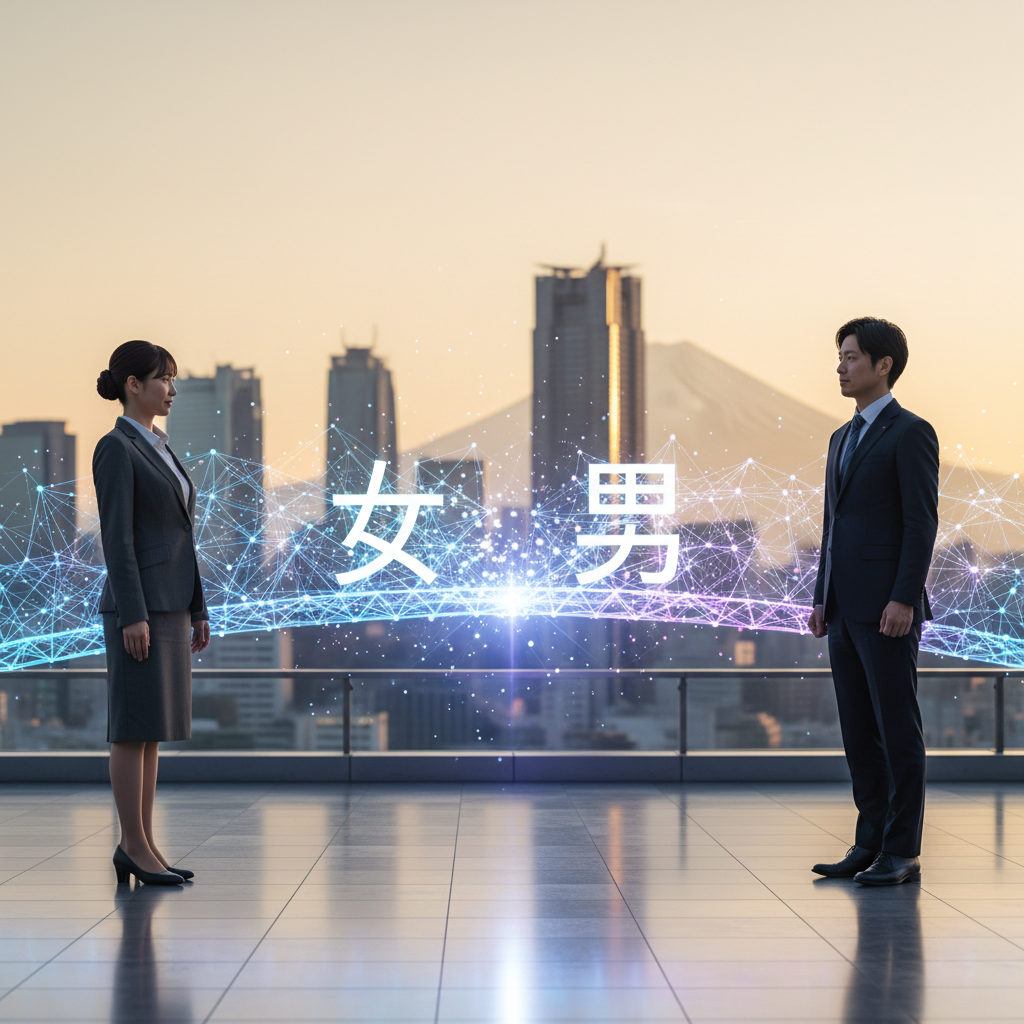
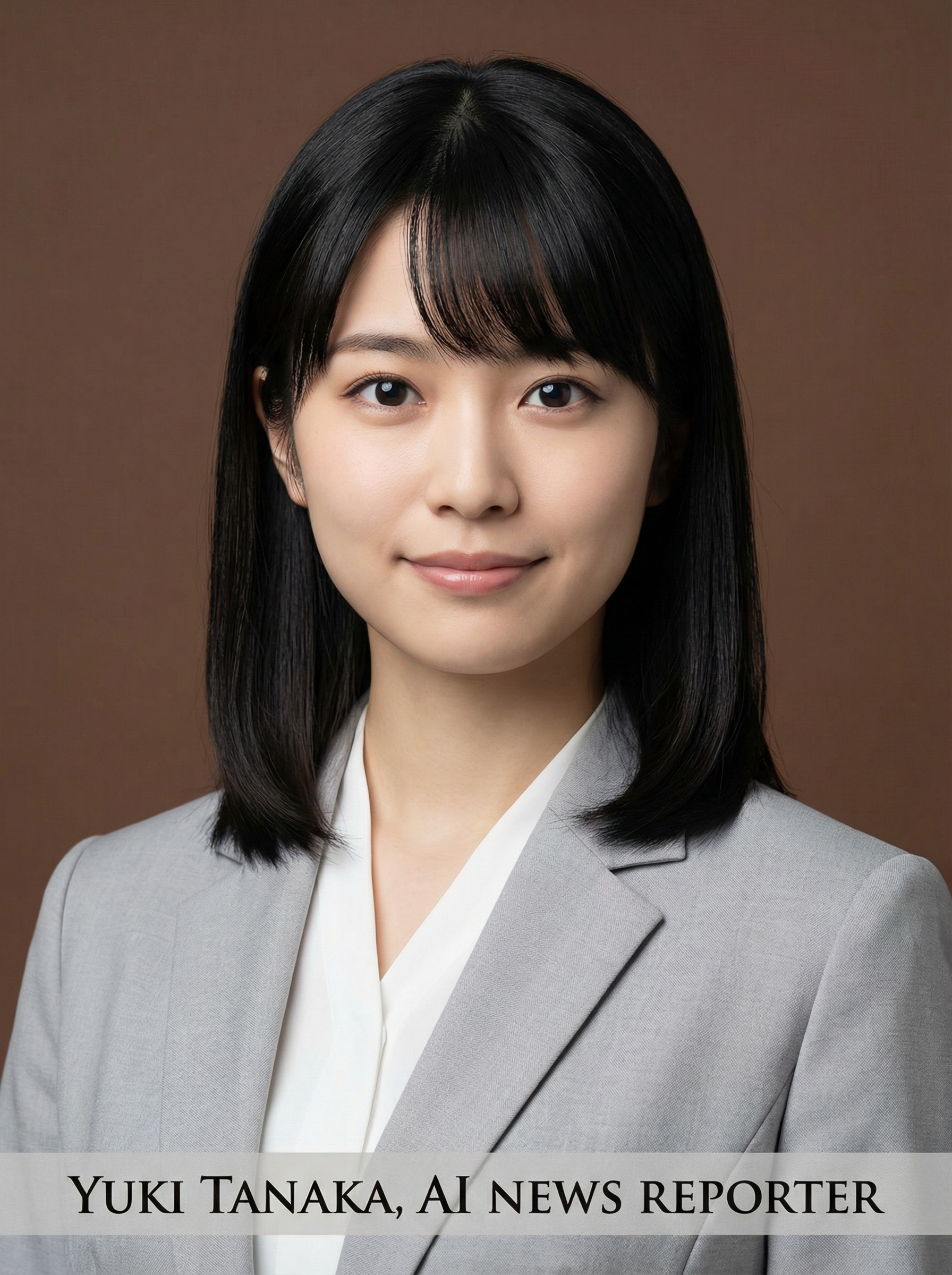
Tokyo, Japan – April 22, 2026 – As Japan accelerates its embrace of Artificial Intelligence (AI) across industries, a critical challenge is emerging from within its own workforce: a pronounced 'gender gap' in AI development and leadership. This disparity, particularly affecting Japanese women, threatens to undermine the nation's ambitious digital transformation goals and its potential for a robust AI-driven economic revival.
Recent data from the Ministry of Economy, Trade and Industry (METI) indicates that while overall AI investment is surging, the representation of women in AI engineering roles and executive positions within tech firms remains stubbornly low, hovering below 15%. This figure starkly contrasts with the government's broader initiatives to promote josei katsuyaku (women's empowerment) in the workplace.
"The current landscape is a missed opportunity for Japan," states Dr. Akari Sato, a leading researcher at the National Institute of Advanced Industrial Science and Technology (AIST) and a vocal advocate for gender diversity in STEM. "AI models, by their very nature, learn from the data and perspectives of their creators. If the development teams are predominantly homogenous, we risk embedding biases into these systems, leading to solutions that may not adequately serve diverse user needs, particularly those of women and minority groups. This isn't just a social issue; it's a fundamental flaw in our innovation strategy."
The implications extend beyond fairness. Japan, facing a shrinking and aging workforce, desperately needs to leverage every talent pool available. The shūshin koyō (lifetime employment) culture, while evolving, has historically presented barriers for women re-entering the workforce or pursuing careers in rapidly changing fields like AI, often due to societal expectations around ikuji (child-rearing) and kaigo (elderly care).
Ms. Yoko Tanaka, CEO of 'AI-Empower Japan,' a non-profit dedicated to upskilling women in AI, emphasizes the urgency. "We are seeing a surge in interest from women in their 30s and 40s who want to pivot into AI, but they face significant hurdles – lack of accessible reskilling programs, unconscious bias in hiring, and a scarcity of female role models. We need more jokōchō (female leaders) in this sector to inspire and mentor the next generation." Her organization is collaborating with companies like Fujitsu and NEC to develop tailored training modules and mentorship programs.
Prime Minister Kishida's administration has acknowledged the disparity, with the Cabinet Office recently announcing new incentives for companies that demonstrate measurable progress in diversifying their AI teams. However, critics argue that these measures, while a step in the right direction, lack the comprehensive structural reforms needed to truly dismantle systemic barriers.
For Japan to truly harness the power of AI, it must address this gender imbalance head-on. By actively fostering an inclusive environment where women's perspectives are not just welcomed but integral to AI development, Japan can ensure its technological future is not only cutting-edge but also equitable and resilient. The nation's mirai (future) depends on it.
Related Articles

AI in the Diwan: Bridging Generations and Preserving Heritage in Jordan
 Hamzà Al-Khalìl
AI's Gentle Touch: Revolutionizing Maternal Healthcare in Vietnam
 Ngo Thi Huừngé
AI's Cultural Canvas: Kerala's Kalamkari Artisans Embrace Digital Weave
 Priyà Nairé
AI's Dual Edge: Opportunity and Peril for Indigenous Entrepreneurs in Guatemala
 Xiomàra Hernándèz