
AI's Dual Edge: Opportunity and Exclusion for Mayan Women in Guatemala's Digital Economy
As AI integration accelerates across North America, Guatemala faces a critical juncture. This report examines AI's economic promise and the urgent need to bridge the digital divide for indigenous women, particularly Mayan communities, to ensure equitable growth.
Click play to listen to this article read aloud using text-to-speech.
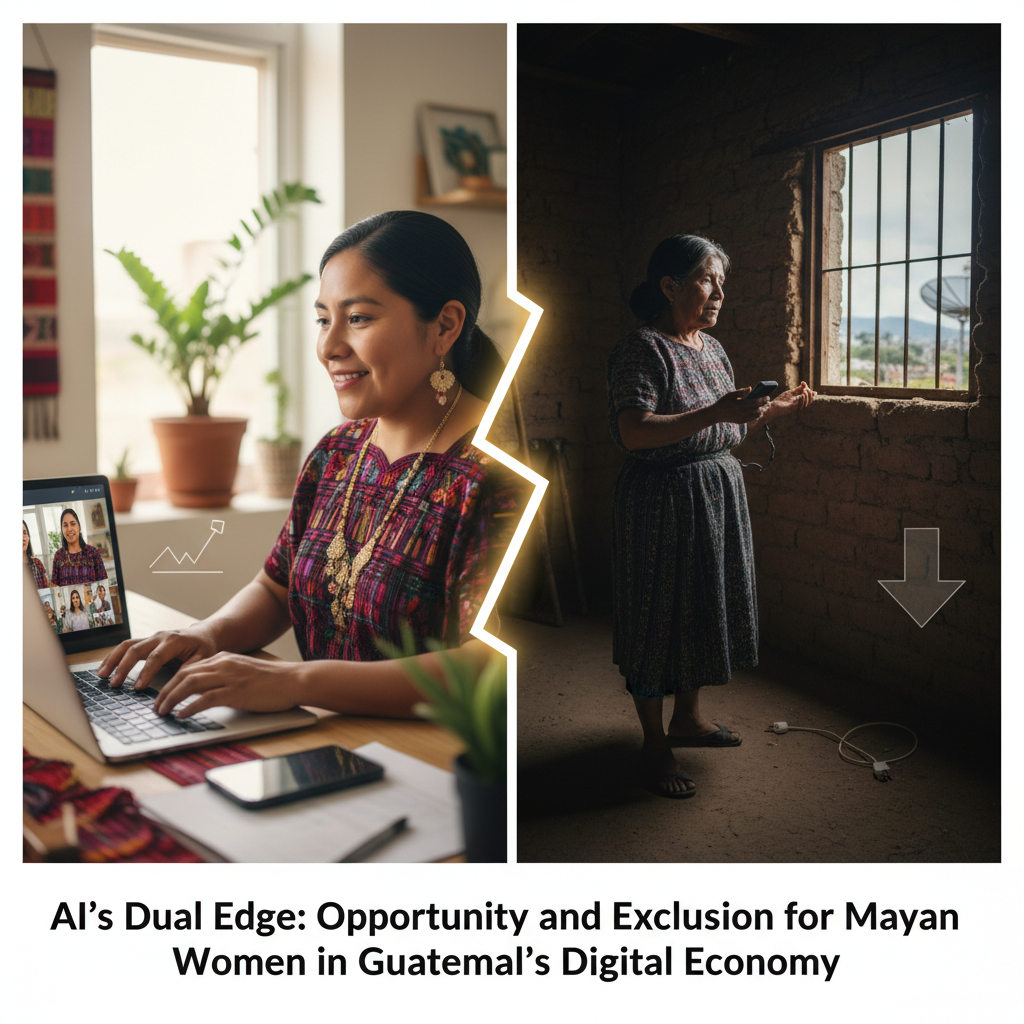

GUATEMALA CITY – The global surge in Artificial Intelligence (AI) adoption is reshaping economies, and Guatemala, while often seen through a traditional lens, is not immune. From automated customer service to predictive analytics in agriculture, AI's footprint is growing. However, for the nation's vibrant indigenous communities, particularly Mayan women, this digital transformation presents both unprecedented opportunities and profound challenges.
"We speak of 'Ixchel's Loom' – how threads of innovation weave into our ancestral patterns," explains Dr. Elena Cúmez, an economist and director at the Centro de Estudios de la Mujer Indígena (CEMIN) in Quetzaltenango. "AI offers tools for economic empowerment, from optimizing traditional crafts for global markets to improving agricultural yields through data-driven insights. But without equitable access and culturally relevant training, these threads risk becoming a snare, further marginalizing those already at the periphery."
Recent data from the Instituto Nacional de Estadística (INE) indicates that while internet penetration has increased nationally, a significant 'brecha digital' persists in rural, indigenous-majority areas. For Mayan women, this gap is exacerbated by factors like language barriers, limited access to digital literacy programs, and socio-economic constraints. "How can a woman in a remote K'iche' village leverage AI for her weaving business if she lacks reliable electricity, a smartphone, or even basic digital skills?" Dr. Cúmez queries, highlighting the fundamental infrastructure deficit.
Yet, there are nascent efforts. The Ministerio de Economía recently announced a pilot program, in partnership with the Universidad del Valle de Guatemala, to introduce AI-powered tools for small and medium-sized enterprises (SMEs) in selected departments. "Our goal is to democratize access to these transformative technologies," stated Lic. Ricardo Morales, Deputy Minister of Digital Economy. "We are particularly focused on ensuring that these initiatives reach all segments of our population, especially our indigenous communities, to foster inclusive economic growth."
However, critics argue that such programs often overlook the specific needs and cultural contexts of Mayan communities. "It's not just about providing a tablet; it's about developing interfaces in our languages, creating content that respects our cosmovision, and building trust within our communal structures," says Angelina Ajtzalam, a community leader and entrepreneur from Sololá, whose cooperative produces artisanal textiles. "We need 'tecnología con rostro humano' – technology with a human face, one that understands our 'Nawal' and supports our collective well-being, not just individual profit."
The economic implications are vast. If Mayan women, who are often the backbone of family and community economies, are excluded from the AI revolution, Guatemala risks deepening existing inequalities and stifling a significant portion of its economic potential. Conversely, empowering them with AI tools could unlock new markets, enhance productivity, and preserve cultural heritage through digital platforms.
As North America races towards an AI-driven future, Guatemala's journey will be defined by its ability to bridge this digital chasm. For Xiomàra Hernándèz, the imperative is clear: to ensure that the promise of AI serves all Guatemalans, especially those whose voices have historically been unheard, allowing them to weave their own future into the digital tapestry.
Related Articles
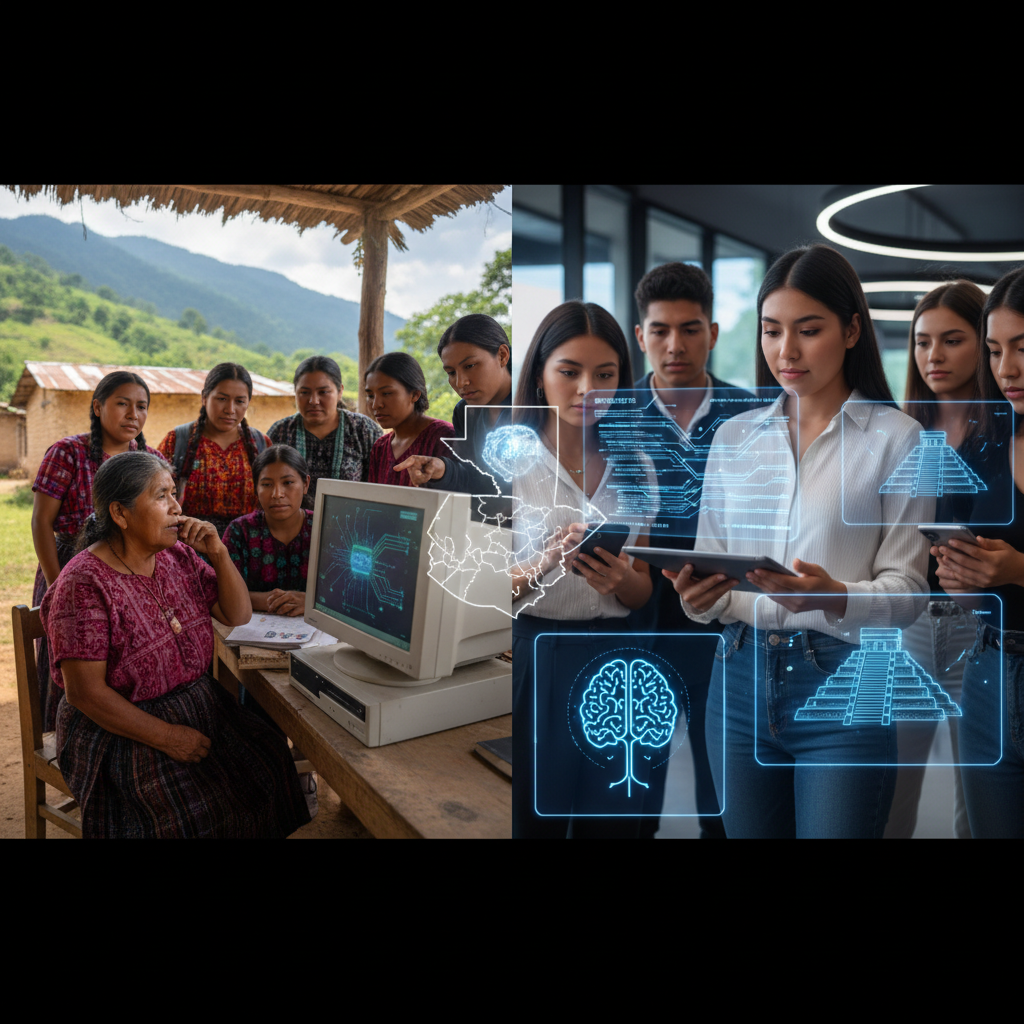
Guatemala's Digital Divide: AI's Promise and Peril for Indigenous Communities
Xiomàra Hernándèz
UAE's AI Strategy: Empowering Emirati Women in the Digital Economy
 Layla Al-Mansourì
Naija's AI Leap: Local Startups Eye Economic Transformation Amidst Global Race
 Chukwuemekà Obiechè
AI in the 'Pura Vida' Republic: Legislative Debate on Digital Ethics Heats Up
 Carlòs Ramirèz