
AI's Dual Edge: Opportunity and Exclusion for Mayan Women in Guatemala's Digital Economy
Guatemala's burgeoning AI sector presents both unprecedented opportunities and significant challenges for Mayan women, demanding inclusive strategies to bridge the digital divide and ensure equitable participation in the evolving business landscape.
Click play to listen to this article read aloud using text-to-speech.
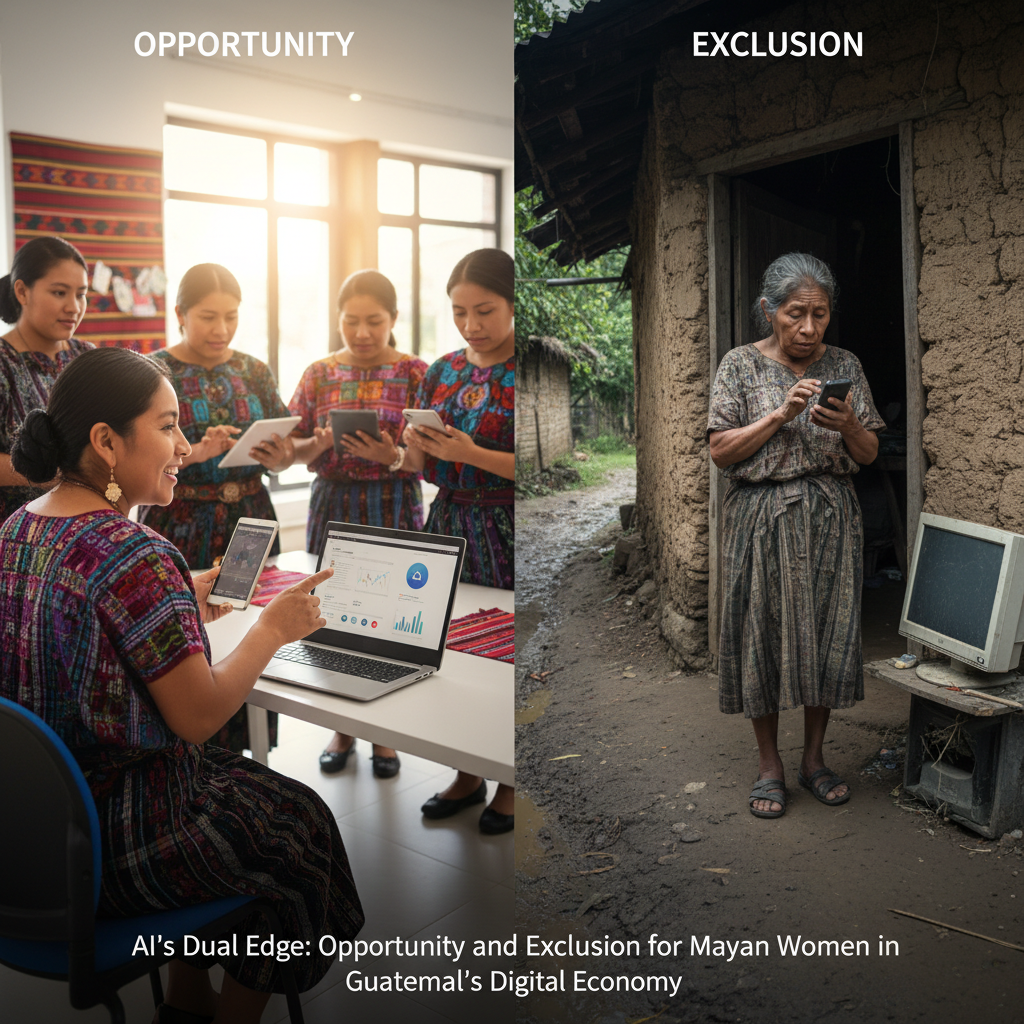

GUATEMALA CITY – As the global conversation around Artificial Intelligence intensifies, its implications for developing nations like Guatemala are coming into sharper focus. While AI promises to revolutionize industries and create new economic avenues, for the indigenous communities, particularly Mayan women, this digital transformation presents a complex landscape of opportunity and potential exclusion.
Recent discussions at the Foro de Innovación y Tecnología Maya (FITM), an annual summit organized by the Asociación de Mujeres Indígenas Emprendedoras (AMIE), highlighted the urgent need for culturally sensitive AI integration. "We see the potential for AI to enhance traditional crafts, improve agricultural yields through predictive analytics, and even preserve our K'iche' language through natural language processing tools," stated Ixchel Pop, a leading technologist and co-founder of AMIE. "However, without intentional investment in digital literacy and infrastructure in rural areas, these advancements risk widening the existing socioeconomic gaps, further marginalizing the Ixöq (women) who are the custodians of our culture and economy."
The business sector in Guatemala is slowly embracing AI, with some larger enterprises exploring automation and data analytics. Yet, the benefits often bypass the informal economy, where a significant portion of Mayan women earn their livelihoods. Dr. Mateo Cutz, an economist at the Universidad Rafael Landívar specializing in indigenous development, notes, "The digital divide is not merely about internet access; it's about digital fluency, access to relevant tools, and the cultural context of their application. An AI solution designed without understanding the communal structures or the cosmovisión (worldview) of a Mayan village is unlikely to succeed or be adopted."
One promising initiative is the Proyecto Ch'umil (Star Project), a pilot program in Sololá that uses AI-powered mobile applications to connect Mayan weavers directly with international buyers, bypassing intermediaries. The app, developed with input from local artisans, helps with inventory management, pricing based on market trends, and even offers basic translation services. "This technology empowers us to set fair prices for our tejidos (weavings) and reach customers beyond our local markets," shared Rosa Ajcalón, a weaver from San Juan La Laguna. "It's a step towards economic self-determination, but we still need better internet and training for all our sisters."
However, concerns remain about data privacy and algorithmic bias. "Who owns the data generated by these AI systems? How are our cultural patterns and artistic designs being used? These are critical questions that must be addressed with transparency and community consent, grounded in the principles of Buen Vivir (living well) and collective benefit," emphasized Pop. The FITM has called for a national strategy that prioritizes ethical AI development, investment in community-led digital hubs, and educational programs tailored to indigenous languages and learning styles. The journey towards an inclusive AI-driven economy in Guatemala is long, but the voices of Mayan women are ensuring it's a journey rooted in justice and cultural respect.
Related Articles
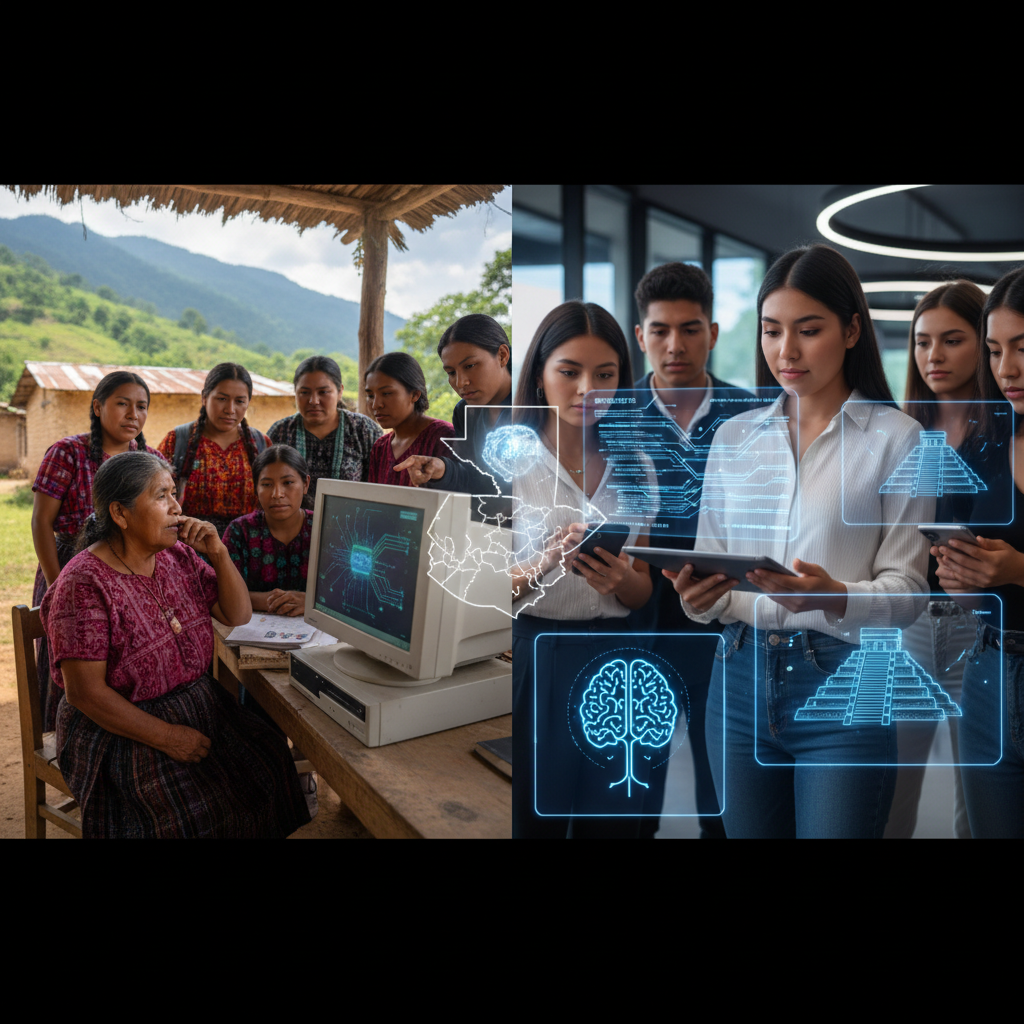
Guatemala's Digital Divide: AI's Promise and Peril for Indigenous Communities
Xiomàra Hernándèz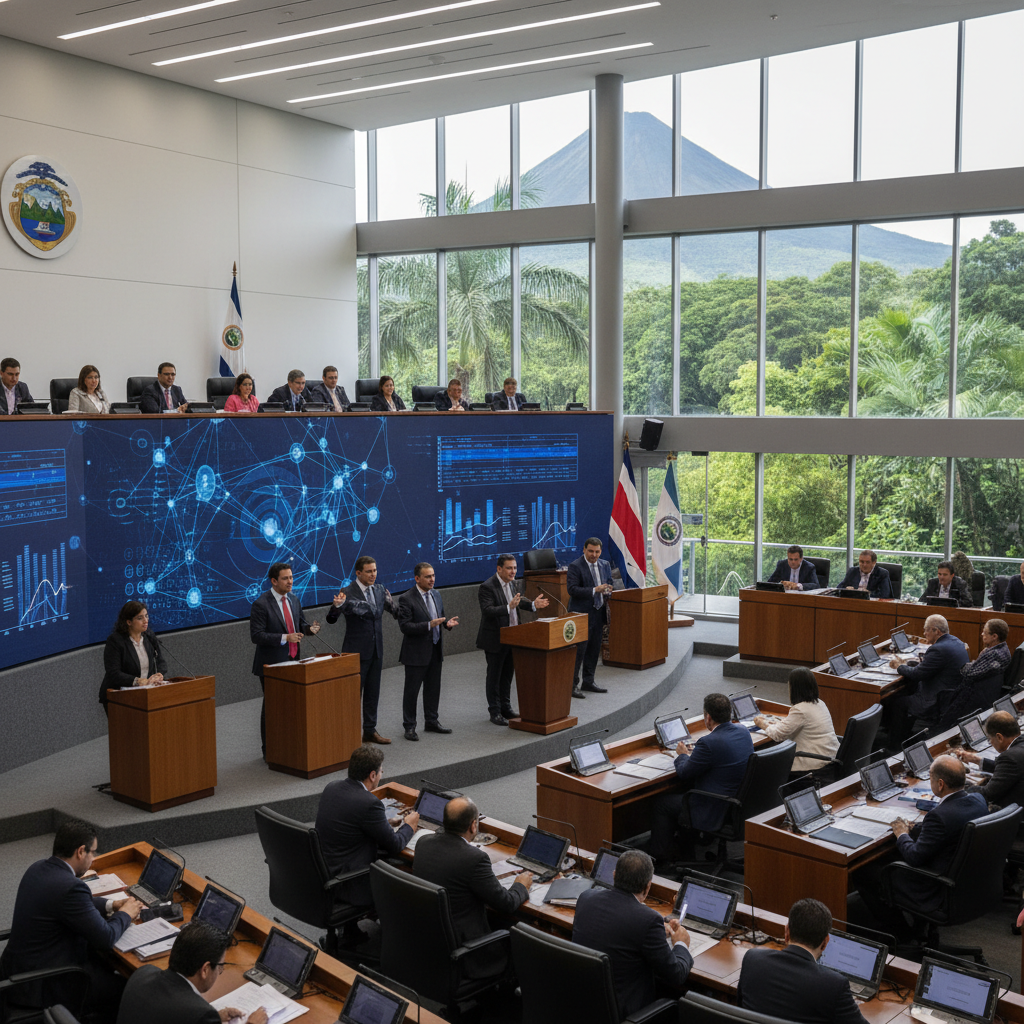
AI in the 'Pura Vida' Republic: Legislative Debate on Digital Ethics Heats Up
 Carlòs Ramirèz
AI's 'Glass Ceiling' for Women: New Study Reveals Persistent Bias in STEM
 Amèlia Whitè
AI na Favela: Nova Iniciativa Transforma Oportunidades para o Homem Brasileiro
 Luciànò Ferreiràs