
AI's Dual Edge: Opportunity and Exclusion for Guatemala's Indigenous Economies
As AI integration accelerates across North America, Guatemala faces a critical juncture. This article explores how AI could reshape indigenous economies, highlighting both potential benefits and the urgent need to bridge digital divides for Mayan communities.
Click play to listen to this article read aloud using text-to-speech.
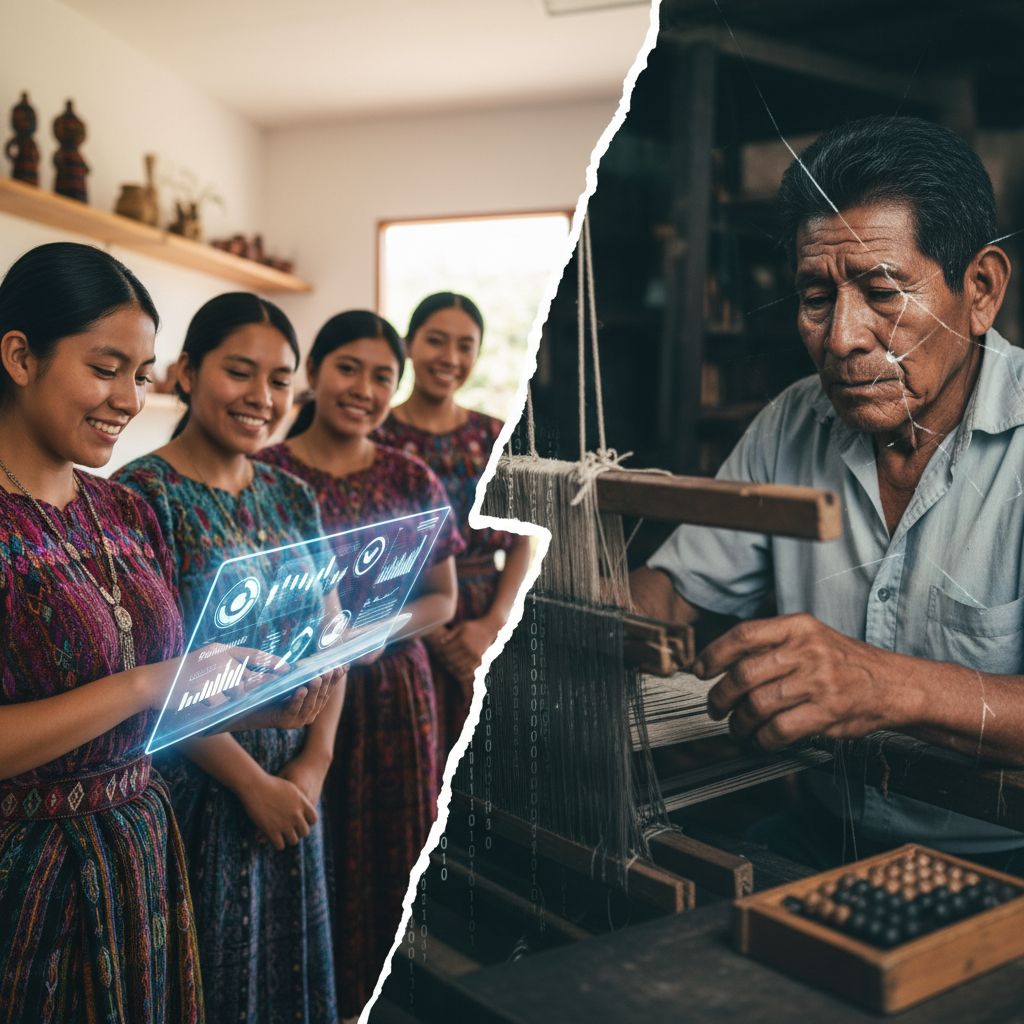

GUATEMALA CITY – The rapid ascent of Artificial Intelligence (AI) is reshaping global economies, and its ripple effects are now reaching the heart of Mesoamerica. While discussions in Silicon Valley often focus on advanced algorithms and venture capital, here in Guatemala, the conversation must pivot to how this technological wave will impact the ancestral economies of the Mayan people, particularly women, who are often the pillars of their communities.
For generations, Mayan women have been the custodians of traditional knowledge, from intricate textile weaving (tzute and huipil) to sustainable agriculture and herbal medicine. These practices, deeply rooted in the concept of Utz K’aslemal (Good Living), form the bedrock of local economies. The question now is: can AI become an ally in preserving and enhancing these traditions, or will it further marginalize communities already facing systemic inequalities?
“The digital divide is not merely about internet access; it’s about equitable participation in the future,” states Dr. Ixchel Cúmez, an economist and director at the Centro de Estudios del Pueblo Maya (CEPM) in Chimaltenango. “Without culturally relevant digital literacy programs and infrastructure investment, AI tools risk becoming another barrier, rather than a bridge, to economic empowerment for our Ixq’anil (women leaders and entrepreneurs).”
Indeed, the potential for AI in areas like predictive agriculture, market access for artisans via e-commerce platforms, or even language translation tools to preserve endangered Mayan languages is immense. Imagine AI-powered weather forecasting helping smallholder farmers optimize crop yields, or algorithms connecting artisan cooperatives directly to global buyers, bypassing exploitative intermediaries. Such innovations could significantly bolster the Ruk’u’x Achi’ (heart of the people) economies.
However, the current reality is stark. According to a recent report by the Instituto Nacional de Estadística (INE), internet penetration in rural indigenous areas remains significantly lower than in urban centers. Furthermore, the algorithms driving many AI applications are often developed with biases reflecting Western, industrialized societies, potentially overlooking or misinterpreting the unique economic and social structures of indigenous communities.
“We need AI development that is not just ‘for’ us, but ‘with’ us,” emphasizes Doña María Ajcalón, a weaver and community organizer from Sololá. “Our knowledge systems, our cosmovisión, must inform the design of these tools. Otherwise, they will be foreign bodies, not integrated solutions.”
This sentiment resonates with experts like Dr. Cúmez, who advocates for a participatory AI design approach. This would involve local Mayan communities in the conceptualization and deployment of AI solutions, ensuring they are culturally appropriate, linguistically accessible, and genuinely address local needs, rather than imposing external models.
The Guatemalan government, in partnership with international development agencies and local NGOs, has a critical role to play in fostering an inclusive digital transformation. Investing in rural broadband, developing culturally sensitive digital education, and promoting ethical AI frameworks that protect indigenous data sovereignty are paramount. Only then can AI truly serve as a tool for Q’anil (prosperity and abundance) for all Guatemalans, ensuring that the economic future is built on a foundation of equity and respect for ancestral wisdom. The alternative is a widening chasm, leaving behind those who have contributed so much to the nation's cultural and economic tapestry for millennia.
Related Articles
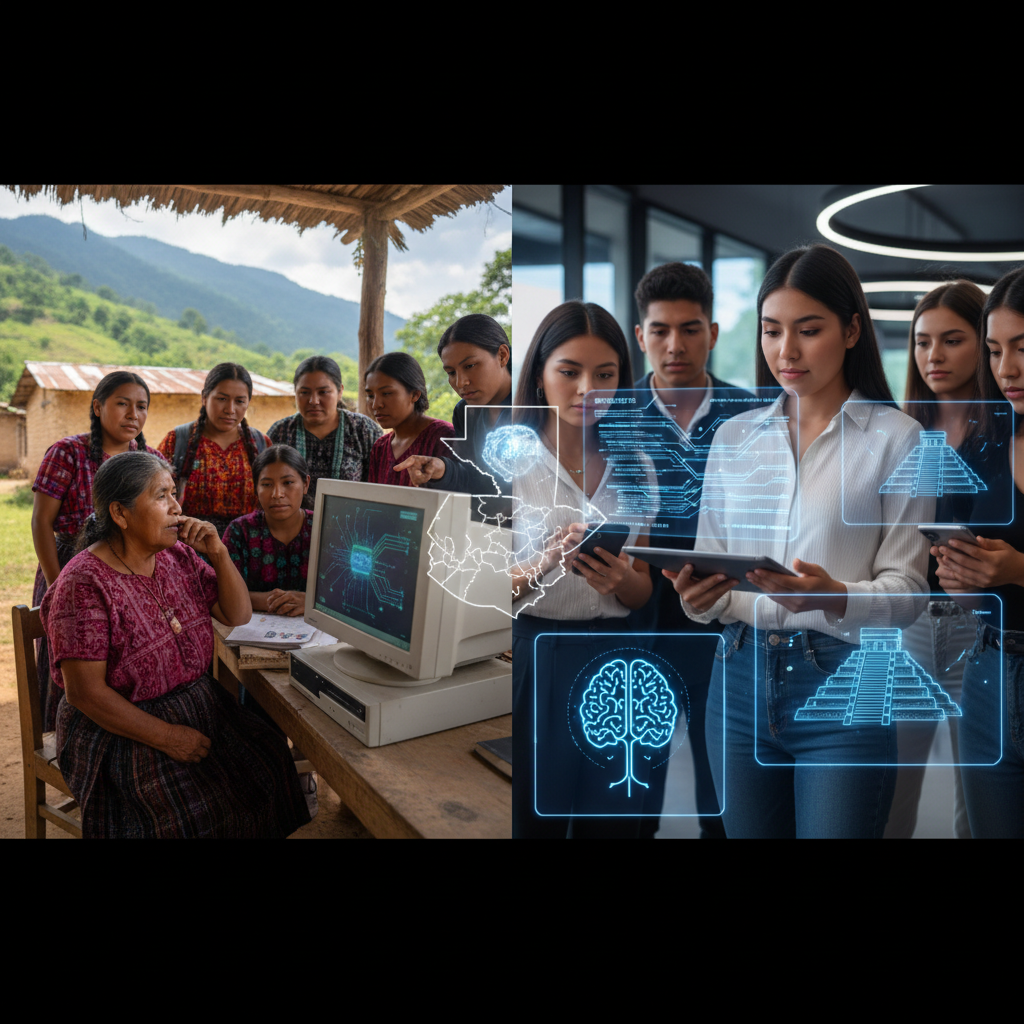
Guatemala's Digital Divide: AI's Promise and Peril for Indigenous Communities
Xiomàra Hernándèz
UAE's AI Strategy: Empowering Emirati Women in the Digital Economy
 Layla Al-Mansourì
Naija's AI Leap: Local Startups Eye Economic Transformation Amidst Global Race
 Chukwuemekà Obiechè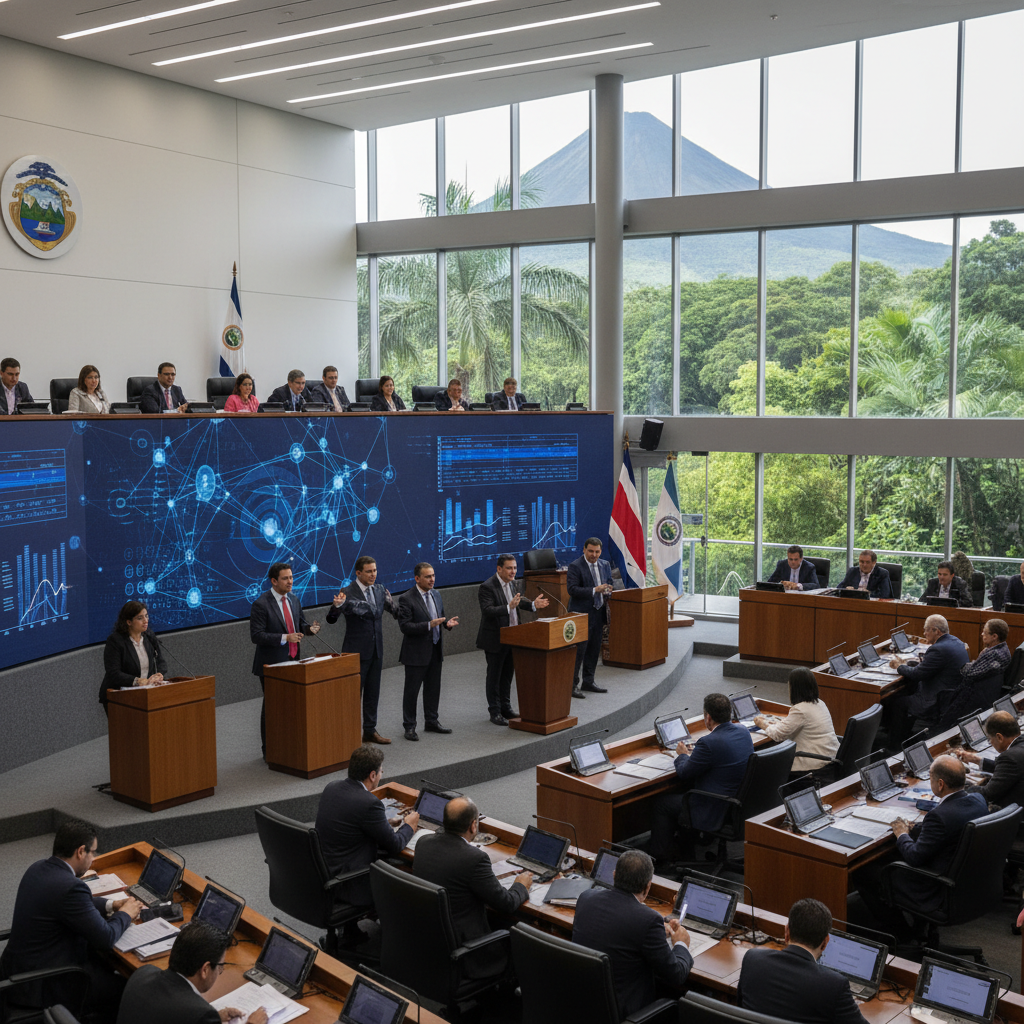
AI in the 'Pura Vida' Republic: Legislative Debate on Digital Ethics Heats Up
 Carlòs Ramirèz